
What Are the Main Types of Air Compressors and How Are They Used
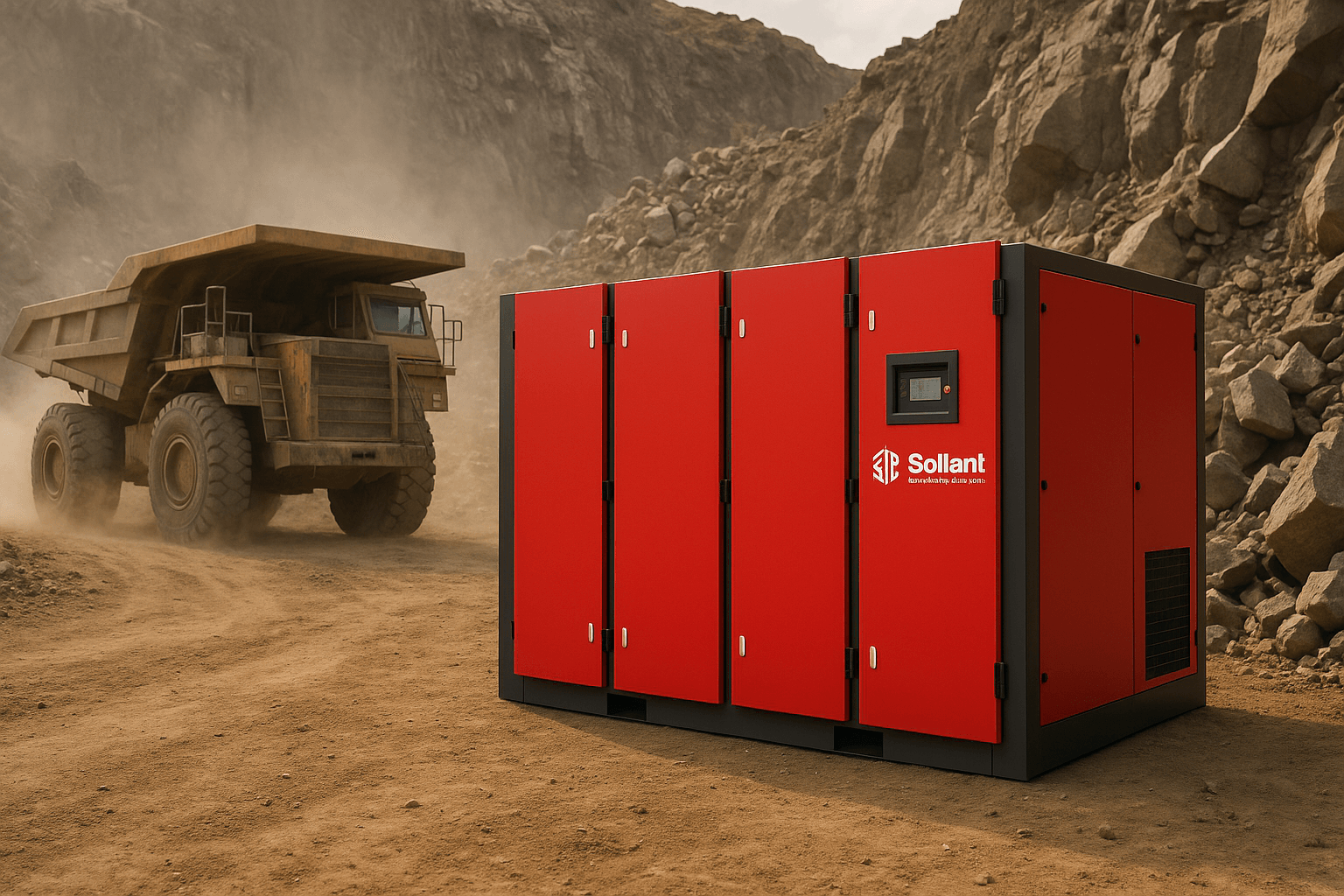
You will find several types of air compressor in workshops, factories, and even hospitals. These include reciprocating, rotary screw, centrifugal, axial, and rotary vane compressors. Each type works in a unique way and fits certain jobs. For example, rotary compressors dominate markets in automotive and food industries, while reciprocating compressors suit smaller settings like garages. You can see these machines in manufacturing, energy, and healthcare. Understanding their differences helps you pick the right compressor for your needs.
Table of Contents
Key Takeaways
Understand the main types of air compressors: reciprocating, rotary screw, centrifugal, axial, and rotary vane. Each type serves specific needs in various industries.
Choose reciprocating compressors for small tasks and intermittent use. They are durable, cost-effective, and ideal for garages and workshops.
Opt for rotary screw compressors in factories and large operations. They provide continuous air supply and are energy-efficient, making them suitable for high-volume applications.
Select centrifugal compressors for large-scale operations requiring steady airflow. They excel in power generation and HVAC systems due to their efficiency.
Consider key factors like air demand, pressure requirements, and maintenance needs when selecting an air compressor. Matching the right type to your job ensures optimal performance.
Main Types of Air Compressor
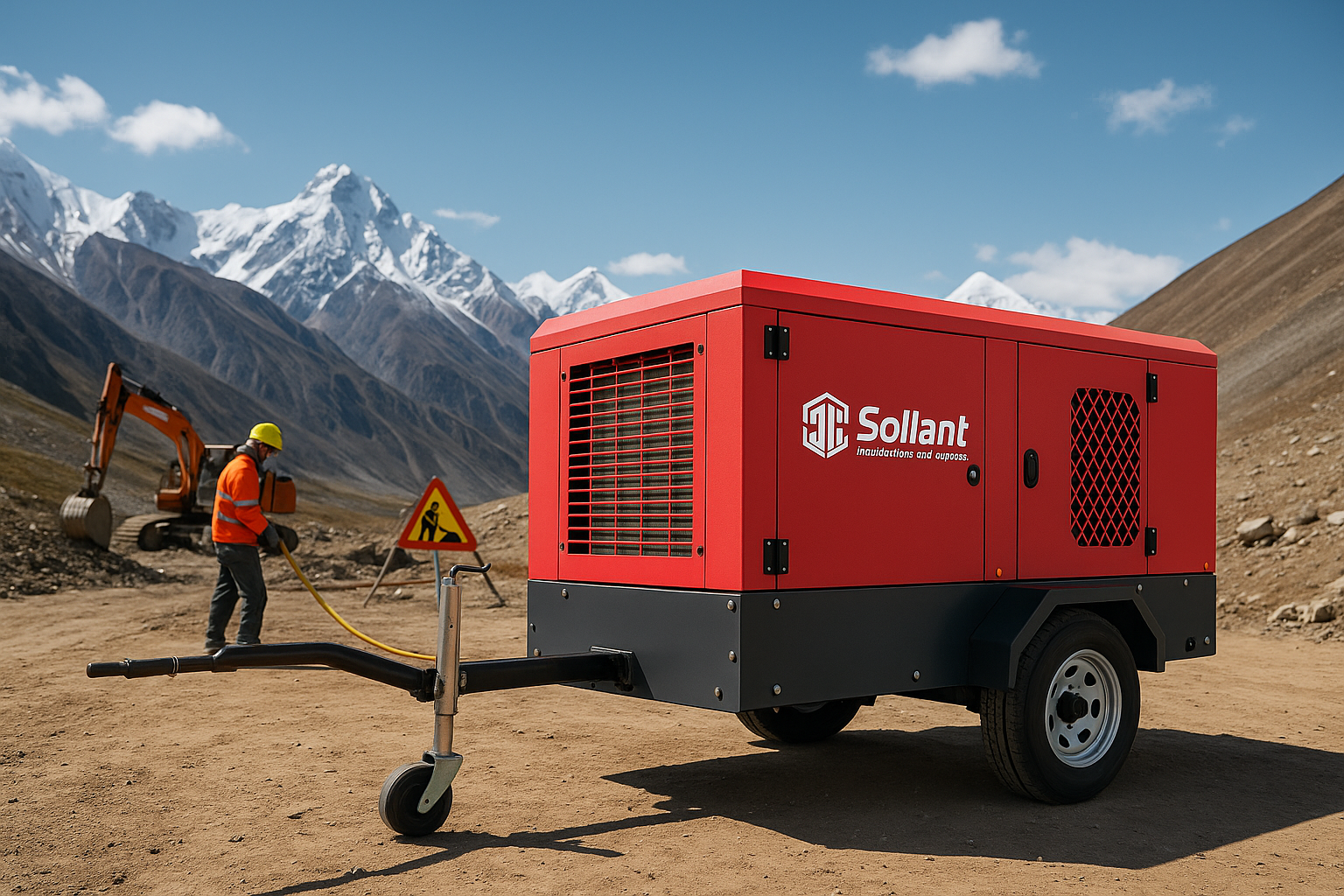
You will encounter several types of air compressor in different industries. Each type has unique features and works best in specific situations. Understanding these differences helps you choose the right machine for your needs. Below, you will find a breakdown of the main types of air compressor.
Reciprocating Compressors
Reciprocating compressors use pistons to compress air inside a cylinder. You will often see these in garages, small workshops, and remote locations.
Reciprocating compressors stand out for their durability and simple design. You can rely on them for long-lasting service with less maintenance. They offer flexibility in pressure output, making them suitable for various tasks.
Key characteristics:
Durability and robust construction
Energy efficiency when used properly
Compact and cost-effective for small operations
Wide range of pressure options
Easy to repair and maintain
You should know that reciprocating compressors can be noisy and may require frequent servicing due to their moving parts.
Disadvantages of Reciprocating Air Compressors | |
|---|---|
High-pressure generation capability. | High maintenance due to moving parts. |
Suitable for intermittent and heavy-duty operations. | Produces pulsating air flow. |
Compact size compared to other compressors. | Generates high noise and vibrations. |
Low initial investment cost. | Requires a lubrication system. |
Can handle a variety of gases apart from air. | Limited efficiency at continuous high-load operations. |
Efficient for small-scale applications requiring high pressure. | Bulkier than rotary compressors for the same capacity. |
Works well in remote areas where continuous electricity supply is unavailable. | N/A |
Rotary Screw Compressors
Rotary screw compressors use two rotors that spin in opposite directions to compress air. You will find these compressors in factories, manufacturing plants, and large workshops.
Feature | Description |
|---|---|
Designed for 100% duty cycle, providing a continuous supply of compressed air. | |
Efficiency | More energy-efficient compared to piston compressors, suitable for high-volume applications. |
Noise Levels | Operates at 65-75 dBA, quieter than many other compressor types. |
Clean Air Output | Low oil carryover (~3 ppm), resulting in cleaner air compared to typical piston compressors. |
Vibration | Generates less vibration, contributing to quieter operation. |
Rotary screw compressors work well for continuous operation. You can use them in places where you need a steady flow of air. Many modern models include variable speed drives, which help save energy during periods of low demand.
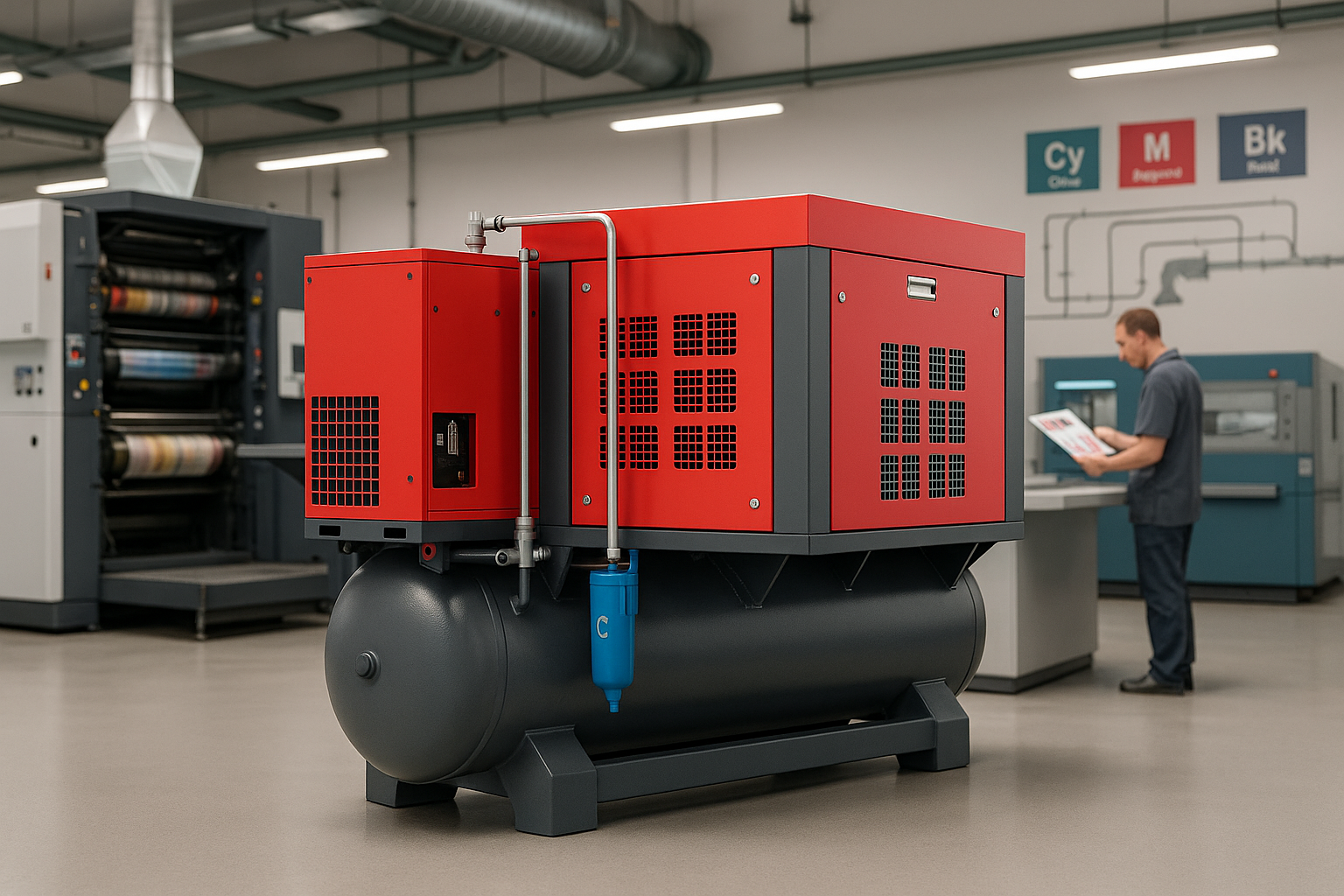
Centrifugal Compressors
Centrifugal compressors use high-speed rotating impellers to move and compress air. You will see these in large-scale facilities, such as power plants and chillers.
Description | |
|---|---|
Case (Casing/Housing) | Houses stationary components and rotor; contains nozzles for flow introduction and extraction. |
Rotor Assembly | Comprises impellers that impart velocity to the gas; blade design affects efficiency and performance. |
Stationary Components | Directs gas flow to the impeller with minimal pressure drop. |
Bearings and Seals | Support rotor and maintain its position; crucial for operational stability. |
Flow Control Mechanisms | Manage discharge pressure and flow capacity, ensuring consistent performance across varying conditions. |
You should choose centrifugal compressors for applications that need high air volumes and low pressure. These machines handle large cooling loads with minimal energy use and require less maintenance.
Centrifugal compressors are ideal for chillers and large cooling systems.
You will benefit from their efficiency at full load.
Axial Compressors
Axial compressors move air in a straight line along the axis of rotation. You will find these in jet engines, power plants, and some industrial settings.
Feature | Description |
|---|---|
Air moves continuously and in an axial direction, parallel to the axis of rotation. | |
Design | Elongated and compact geometry with multiple stages of fixed blades. |
Stages | Composed of alternating rotating discs (rotors) and stationary discs (stators). |
Application | High rotational speed makes them suitable for gas turbines in electricity generation and aircraft propulsion. |
Axial compressors work best in situations that need high airflow and efficiency. You will see them in aerospace and power generation because they handle large volumes of air quickly.
Industry | Application Description |
|---|---|
Aerospace | Used in jet engines for high airflow requirements. |
Power Generation | Employed in power plants for efficient air compression in energy production processes. |
Industrial | Suitable for various demanding applications requiring high efficiency and airflow rates. |
Rotary Vane Compressors
Rotary vane compressors use a drive shaft with adjustable vanes to compress air. You will find these in food and beverage processing, biotech labs, and small data centers.
Feature | Rotary Vane Compressors | Rotary Screw Compressors |
|---|---|---|
Design | Eccentrically positioned drive shaft with adjustable vanes | Two meshed male and female rotors rotating in opposite directions |
Compression Mechanism | Vanes slide in and out to form varying chamber sizes | Traps refrigerant between rotors with decreasing volume |
Applications | Food & beverage, biotech labs, small-scale data centers | Energy facilities, manufacturing plants, data centers |
Control Systems | Simple on/off controls, advanced may require sensors | Requires control panels with capacity modulation |
Maintenance | Generally lower maintenance due to simpler design | Requires oil management systems and predictive maintenance monitoring |
You will appreciate rotary vane compressors for their simple controls and lower maintenance needs. Regular tasks include draining condensate, checking oil levels, and cleaning intake vents. These compressors suit small-scale operations that need reliable and steady air supply.
How Each Type Works
Reciprocating
You will see reciprocating compressors use a piston that moves back and forth inside a cylinder. The piston compresses air by reducing its volume. This motion allows the compressor to use energy efficiently and produce a steady supply of compressed air. The timing of the piston’s movement keeps the pressure consistent, which is important when you need reliable airflow for your tools or machines.
Tip: Reciprocating compressors work best when you need high pressure for short periods, such as in small workshops or garages.
Compressor Type | Compression Mechanism | Applications |
|---|---|---|
Reciprocating Compressors | Uses a piston driven by a crankshaft to compress air in a cylinder. | Ideal for intermittent use in workshops and smaller industrial settings. |
Rotary Screw
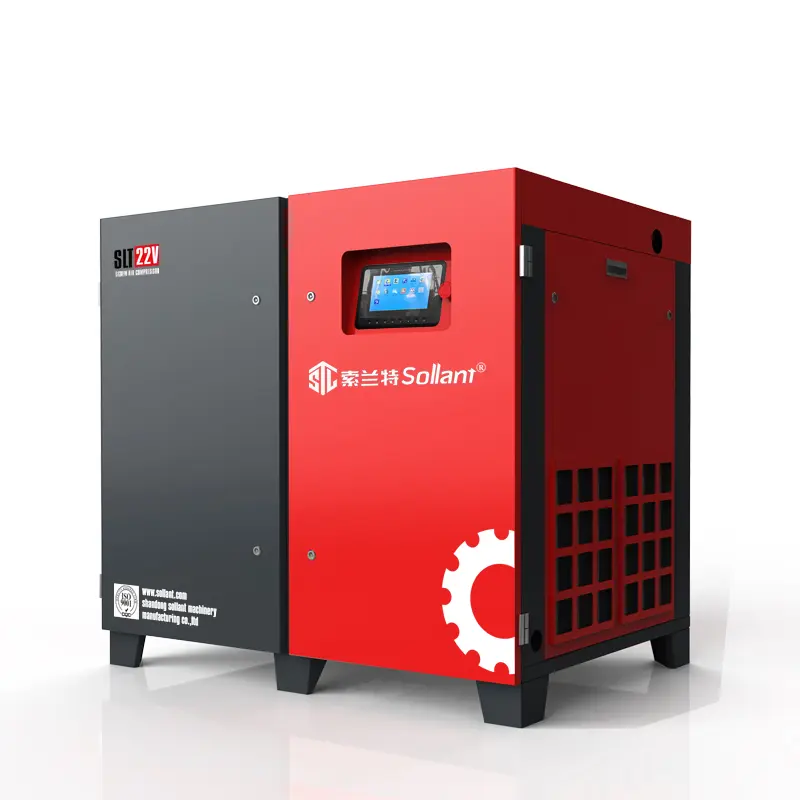
You will find rotary screw compressors use two helical rotors that spin in opposite directions. These rotors trap air and squeeze it as it moves through the chamber. Here are the main steps:
Air enters through an inlet valve.
Rotors trap and compress the air.
Oil cools and lubricates the rotors.
The air-oil mixture separates in a tank.
Compressed air cools and dries.
Clean air is delivered for use.
Oil is filtered and reused.
Rotary screw compressors provide a continuous flow of air, making them perfect for factories and places where you need air all day.
Centrifugal
You will notice centrifugal compressors use a spinning impeller to increase the speed of air. The fast-moving air then passes through a diffuser, which turns the speed into pressure. This process creates a steady stream of compressed air for large-scale operations.
Compressor Type | Compression Mechanism | Applications |
|---|---|---|
Centrifugal Compressors | Utilizes a high-speed rotating impeller to increase air velocity and convert it into pressure through a diffuser. | Continuous operation in industries like oil and gas, chemical processing, and large-scale manufacturing. |
Axial
Axial compressors move air straight along the axis of rotation. You will see rows of blades, called rotors and stators, that push and squeeze air as it travels through the compressor. This design lets you handle large volumes of air quickly and efficiently. Axial compressors work best in jet engines and power plants where you need high airflow.
Note: Axial compressors are not common in everyday shops. You will mostly find them in specialized industries.
Rotary Vane
You will find rotary vane compressors use a rotor with sliding vanes inside a housing. As the rotor turns, the vanes move outward and create chambers that get smaller, squeezing the air and raising its pressure. The lubrication system reduces friction and helps the compressor last longer.
Feature | Contribution to Performance |
|---|---|
Rotor and vanes design | Creates progressively smaller chambers for effective compression |
Continuous flow | Minimizes pulsation, enhancing reliability |
Radial movement of vanes | Sustains pressure against the housing |
Lubrication system | Reduces friction, increases lifespan, and improves vacuum depth |
You will appreciate how rotary vane compressors deliver a smooth, reliable flow of air with less vibration. This makes them a good choice for labs and small processing plants.
You can see that the types of air compressor each use a different method to compress air, which affects how they perform in different settings.
Uses and Applications
Reciprocating
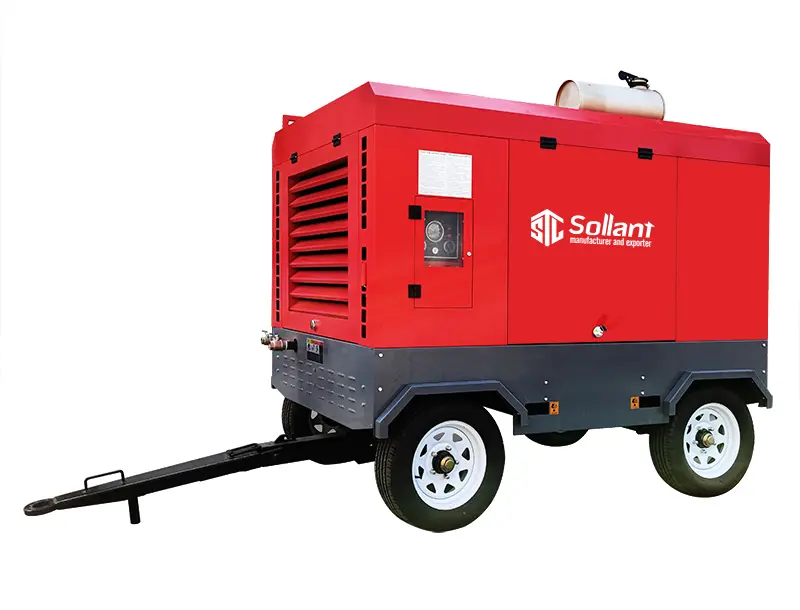
You will find reciprocating compressors in many places where you need reliable and flexible air power. These compressors work well for jobs that require different pressure levels or short bursts of air.
Handheld pneumatic tools: You can use them to power drills, nail guns, and other tools.
Small workshops and garages: They help with inflating tires and running small air tools.
Construction sites: You will see them powering jackhammers and impact wrenches.
Manufacturing and industrial lines: They support machines in metalworking and assembly.
Spray painting: You can use them for airbrushes and spray guns to get smooth, even coats.
Tip: Reciprocating compressors are a smart choice for portable and on-demand air supply.
Rotary Screw
Rotary screw compressors serve as the backbone in many industries. You will see them in manufacturing, where they run pneumatic tools, conveyor belts, and robotic arms. In food processing, they help with air-jet sorting, drying, and packaging. Agriculture uses them for spraying, aerating tanks, and ventilating greenhouses. Oil and gas companies rely on them for drilling and gas management. You will also find them in automotive shops for spray painting and tire inflation, as well as in healthcare for powering ventilators and dental tools. Construction sites use them for jackhammers and cement sprayers, while textile factories depend on them for running looms and sewing machines.
Centrifugal
Centrifugal compressors handle large-scale operations where you need a steady flow of air. You will find them in these industries:
Industry | Applications |
|---|---|
Oil and Gas | Gas processing, injection, and treatment plants |
Petrochemical and Chemical | Ammonia synthesis, refrigeration, air separation |
Power Generation | Gas turbines, compressed air energy storage |
Aerospace | Jet engines, auxiliary power units |
HVAC | Industrial cooling and refrigeration |
Automotive | Turbochargers, fuel cells |
Mining | Ventilation, drilling, and blasting |
Wastewater Treatment | Aeration systems |
Note: Centrifugal compressors are best for high-volume, continuous air supply.
Axial
You will see axial compressors in places that need to move a lot of air quickly. Jet engines and power plants use them because they can handle very high airflow. These compressors push air through many rows of blades, making them efficient for large machines. In aerospace, you will find them in jet engines. Power plants use them to help generate electricity. Axial compressors are not common in small shops, but they are vital for big, high-speed machines.
Rotary Vane
Rotary vane compressors work best when you need a steady and reliable flow of air. You will find them in automotive shops for tasks like tire inflation and spray painting. They also fit well in dry cleaning businesses and light manufacturing. These compressors help keep machines running smoothly in places where you need constant airflow.
If you want a compressor for steady, low-maintenance operation, rotary vane models are a good pick.
You can see that each of the main types of air compressor fits certain jobs and industries. Knowing where each type works best helps you choose the right one for your needs.
Choosing the Right Air Compressor
Comparison Table
You need to compare the main types of air compressor before you make a decision. The table below shows how each type matches different needs. You can use this as a quick guide to find the best fit for your job.
Compressor Type | Best For | Pressure Range | Duty Cycle | Maintenance | Noise Level | Common Uses |
|---|---|---|---|---|---|---|
Reciprocating | Small shops, garages | High | Intermittent | Moderate | High | Tools, tire inflation |
Rotary Screw | Factories, large workshops | Medium-High | Continuous | Low | Low | Manufacturing, food, auto |
Centrifugal | Large plants, chillers | Low-Medium | Continuous | Low | Low | Power, HVAC, chemical |
Axial | Jet engines, power plants | Medium-High | Continuous | High | High | Aerospace, energy |
Rotary Vane | Labs, small processing | Medium | Continuous | Low | Low | Food, biotech, auto shops |
Tip: You should match the compressor type to your work environment and the amount of air you need.
Key Factors
You must consider several important factors when you choose an air compressor. Each factor helps you find the right machine for your tasks.
Air Demand
You need to know how much air your tools or machines use. Choose a compressor that meets or exceeds this demand.Pressure Requirements
Check the pressure your equipment needs. Some jobs need high pressure, while others work with less.Duty Cycle
Decide if you need the compressor to run all day or just sometimes. Continuous jobs need rotary screw or centrifugal types.Space and Portability
Look at the space you have. Small shops may need compact compressors. If you move the compressor often, pick a portable model.Noise Level
Think about where you will use the compressor. Quiet models work better in offices or labs.Maintenance
You should choose a compressor that matches your ability to maintain it. Some types of air compressor need more care than others.Budget
Set your budget before you shop. Some compressors cost more up front but save money over time.
Note: You should always check the manufacturer’s guidelines for safety and performance.
You have learned about the main types of air compressors and where each works best. When you choose a compressor, match the type to your job. For example, manufacturing needs high-capacity systems, while food processing requires oil-free models. Look for features like cooling, safety, and moisture control.
Avoid mistakes such as ignoring leaks or skipping regular checks.
Use preventive and predictive maintenance to keep your compressor running well.
If you need help, contact service providers with trained technicians and local support.
FAQ
What type of air compressor should you use for home projects?
You should use a reciprocating compressor for home projects. It works well for small tasks like inflating tires or powering basic tools. You can move it easily and maintain it without special skills.
How often should you service your air compressor?
You should check your compressor every month. Clean the intake vents, drain moisture, and inspect for leaks. Regular service helps your compressor last longer and work safely.
Can you use one air compressor for different tools?
You can use one compressor for many tools if it meets the air and pressure needs. Always check the requirements for each tool before you connect it. This keeps your tools working well.
What safety tips should you follow when using air compressors?
Always wear safety goggles and ear protection.
Check hoses for damage before you start.
Never exceed the recommended pressure.
Turn off the compressor when you finish your work.
Request a Quick Quote Now
How to do my business well ?
- Market situation
- Technology configuration
- Strike Price
- exclusive agency
- Import and export assistance
- More…

