
How to Choose the Right Two-Stage Screw Air Compressor for Your Needs

Selecting the right two stage screw air compressor begins with understanding your specific requirements. Consider your work environment and intended applications before making a decision. You need a reliable guide to help you choose the best two-stage-air-compressor for your needs. Sollant offers robust and dependable solutions for demanding tasks. Their two-stage-air-compressor models, including the 7.5 kw two-stage-air-compressor, 11 kw two-stage-air-compressor, and 15 kw two-stage-air-compressor, can deliver up to 25% energy savings. These compressors are designed for enhanced reliability and longer service life.
Advantage | Description |
|---|---|
Higher Efficiency | The two stage screw air compressor splits compression into two steps, reducing energy use and saving money. |
Extended Lifespan | Generates less heat, so components in the two-stage-air-compressor wear out slower and last longer. |
Greater Versatility | Offers higher pressure, making the 7.5 kw two-stage-air-compressor, 11 kw two-stage-air-compressor, and 15 kw two-stage-air-compressor suitable for a wide range of applications. |
Improved Reliability | Operates at cooler temperatures, so the two-stage-air-compressor is less likely to overheat. |
Table of Contents
Key Takeaways
Know how much air you need before picking a compressor. Figure out the CFM and PSI your tools need. This helps your tools work their best.
Two-stage compressors use less energy and save money. They work better than single-stage models. This makes them a good choice for the future.
Think about how long the compressor will last and how often it needs care. Two-stage models last longer because they stay cooler. They also need less fixing.
Pick the right kind for your job. Two-stage compressors are best for big jobs in factories. Single-stage models are better for smaller jobs.
Make sure the compressor works with your power supply. Check if it matches your voltage and phase needs. This helps you avoid problems when using it.
Two Stage Screw Air Compressor Overview
How It Works
A two stage screw air compressor gives you strong, steady air. It works in two main steps to do its job well. First, gas goes into the first chamber. A piston pulls the gas in and squeezes it. Then, the gas moves to a cooling area. Here, water and oil get taken out. This keeps the system safe and makes the air cleaner. After cooling, the gas goes to the second chamber. The compressor pushes the pressure even higher. At the end, the air leaves the system. Sometimes, it gets extra cleaning to meet standards.
Step | Description |
|---|---|
Gas goes into the first chamber. A piston squeezes it. | |
Cooling and Separation | The gas cools down. Water and oil are removed before the next step. |
Second level of compression | The cooled gas is squeezed again. Pressure goes up more. |
Emissions and circulation | The gas leaves the system. It may get extra cleaning for quality. |
Tip: Take care of your compressor often. Check for shaking and clean the cooling parts. This helps your two stage screw air compressor last longer and work better.
Key Benefits
Two stage air compressors have many good points over single-stage ones. They use less energy, especially when you need steady air flow. The air end lasts longer because the design lowers stress and makes compression better. You save money on power, since energy costs can be most of what you pay to own one.
Benefit | Description |
|---|---|
Two-stage compressors use less energy, especially with steady air flow. | |
Longer Air End Life | They last longer because they have less stress and better compression. |
Lower Power Costs | Power costs can be most of your total cost. Two-stage compressors save you money over time. |
If you take care of your compressor often, it works well and breaks down less. Check the motor, look inside every year, and write down what you do. This stops surprise problems and keeps your two-stage air compressor working its best.
Single vs. Two-Stage Air Compressor
Main Differences
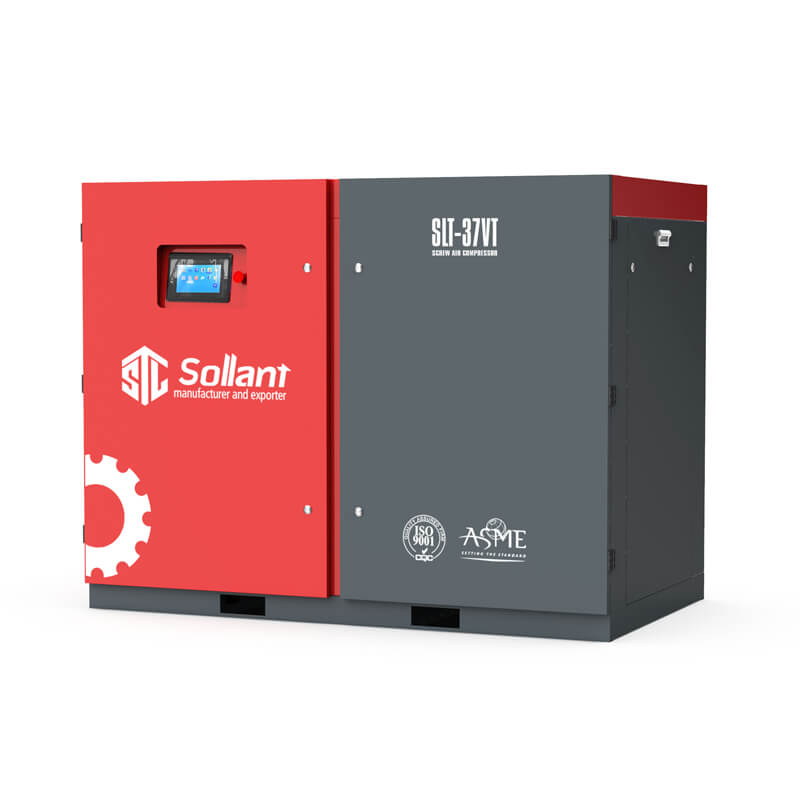
When you look at air compressors, you see big changes between single-stage and two-stage models. A single-stage compressor squeezes air once before storing it. This type works well for jobs needing less than 100 PSI. You can use it for things like filling tires or running small tools. A two stage screw air compressor squeezes air twice. This lets it reach higher pressure and flow. It is good for tough jobs.
Feature | Single-Stage Compressors | Two-Stage Compressors |
|---|---|---|
Design | Simpler, less expensive | More complex, higher cost |
Pressure Capabilities | Up to 175 psi or more | |
Efficiency | Less efficient at higher pressures | More efficient, reduces energy use |
Applications | Moderate pressure tasks | Heavy-duty, industrial tasks |
Lifespan | Shorter due to more heat | Longer due to cooler operation |
Maintenance | Easier maintenance | More complex maintenance |
Note: Two-stage air compressors cost more at first, but you save money later. They use less energy and need less fixing, so you get your money back in one or two years.
Application Scenarios
You should pick a compressor that fits your job. Single-stage air compressors are best for easy jobs. You use them in home garages or small shops. Two stage air compressors are better for big places. They work well for long use and tools needing over 100 PSI. You find two-stage air compressors in petrochemical plants, metalworking shops, and food factories. These places need high pressure and lots of air every day.
Application Area | Reason for Preference |
|---|---|
Petrochemicals | Needs high pressure and lots of air |
Metalworking | Works well for tough jobs with high pressure |
Food Processing | Needs clean air and follows rules |
Big factories
Jobs that run all day
Tools needing more than 100 PSI
A two-stage air compressor can reach about 200 PSI. It cools the air between steps, which helps it work better and keeps it safe. You get better results and lower bills when you pick the right compressor.
Air Compressor Buying Guide: Application & Capacity
Assessing Air Requirements
When you start looking for an air compressor, first find out how much air your tools need. Think about what you want your two stage screw air compressor to do. Decide which jobs you will use it for and how often you will use it. Check the operating pressure for each tool you have. Some tools need more pressure, and some need less.
Look at the total air flow, which is measured in cubic feet per minute (CFM). Add a little extra to make sure you always have enough air. Noise level is important if you work in a quiet place. Pick a compressor that does not make too much noise. Strong materials and good build quality help your compressor last longer. Choose a model that is made well and built to last.
Extra features and accessories can help you work better. Look for options that match what you need. Brand reputation and customer support matter too. Pick a company that people trust and that helps customers. Set a budget, but make sure your compressor does everything you need.
Operating pressure (PSI)
Air flow (CFM) with safety buffer
Noise level
Durability and build quality
Extra features and accessories
Brand reputation and support
Budget considerations
Tip: Think about the future. If you might need more air later, pick a two-stage air compressor with extra capacity.
Determining Capacity (CFM, PSI)
Match your compressor’s capacity and flow rate to your project. Start by listing all your tools and equipment. Write down the lowest and highest CFM and PSI for each one. If you already have a setup, record how long your compressor runs and how often it turns on. You can use flow meters or data logging to get exact numbers.
To find the average air demand, use this formula:
C = V(P1 – P2) / tP0
Where:
C is air demand in CFM
V is receiver volume in cubic feet
P1 is high pressure in psig
P2 is low pressure in psig
t is time in minutes
P0 is standard atmospheric pressure (14.7 psia)
CFM tells you how much air your compressor gives. PSI shows how much pressure your tools need. If you need more pressure, you might get less air flow. If you need more air flow, you might get less pressure. Use the tank pump-up time method to estimate CFM. Measure how long it takes to fill your air tank from a low pressure to a high pressure.
List all equipment with CFM and PSI needs
Record compressor run times and cycles
Use flow meters for accurate readings
Calculate CFM using the tank pump-up time method
Note: The right size stops overheating and too much cycling. This helps your two stage air compressors last longer and work better.
Space Requirements: Horizontal vs. Vertical Tanks
Think about how much space you have in your workshop or factory. Vertical tanks are good for small spaces because they use less floor space. They are easy to move in tight spots. Horizontal tanks are better for big areas and are more stable. They hold more air, which is good for large projects.
Tank Orientation | Best For | Advantages |
|---|---|---|
Vertical | Compact, portable | |
Horizontal | Large, open areas | Higher capacity, stable |
The way the tank sits does not change how the compressor works. It only changes how much room you need.
Matching Compressor Type and Capacity to Intended Use
Pick the right compressor type and size for your job. If your compressor is too small, your tools may not work well. If it is too big, you waste energy and money. The right size keeps your system cool, saves energy, and stops wear and tear.
Efficient units lower energy bills
The right type ensures reliable performance
Common mistakes are not checking air needs, forgetting about air quality, and picking the wrong compressor type. Always think about installation space, maintenance, and total cost. Plan for future growth so you do not need a new compressor soon.
Temperature and environment also affect how your compressor works. Manufacturers set safe temperature ranges. Too much heat or cold can hurt your compressor and make it wear out faster. Keep your workspace in the right temperature range for best results.
Your air compressor buying guide should help you pick a two stage screw air compressor that fits your needs. Focus on capacity, flow rate, space, and what you want to use it for. This helps you get the best performance and longest life from your compressor.
Rotary Screw Compressor Features
Oil-Free vs. Oil-Injected
You need to pick oil-free or oil-injected rotary screw compressors. This choice changes air quality, how much you fix it, and what you pay over time.
Oil-injected compressors put a little oil in the air. The air is not as clean as oil-free models. Oil-free compressors give you very clean air.
Oil-injected models need you to change and clean the oil often. Oil-free compressors do not need oil changes. You save time and money on fixing them.
Only real oil-free rotary screw compressors reach Class 0 air quality. This means no oil gets in the air. Oil-injected compressors can only get to Class 1, even with good filters.
Oil-injected compressors cost less when you buy them. But you pay more later for fixing and oil. Oil-free compressors cost more at first but need less fixing over time.
Tip: If you work with food, electronics, or medicine, pick an oil-free two-stage air compressor. It meets strict rules for clean air.
Noise & Efficiency
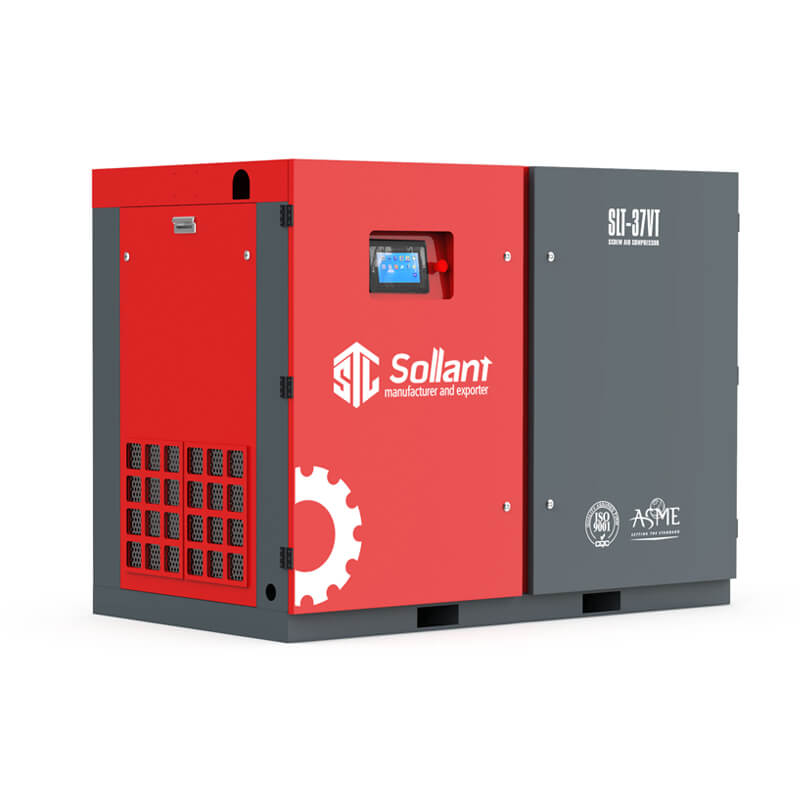
Rotary screw compressors are quiet and work well. They are quieter than piston compressors. This helps people talk and work better.
Rotary screw compressors make less noise than piston ones. This is good for places where people need quiet.
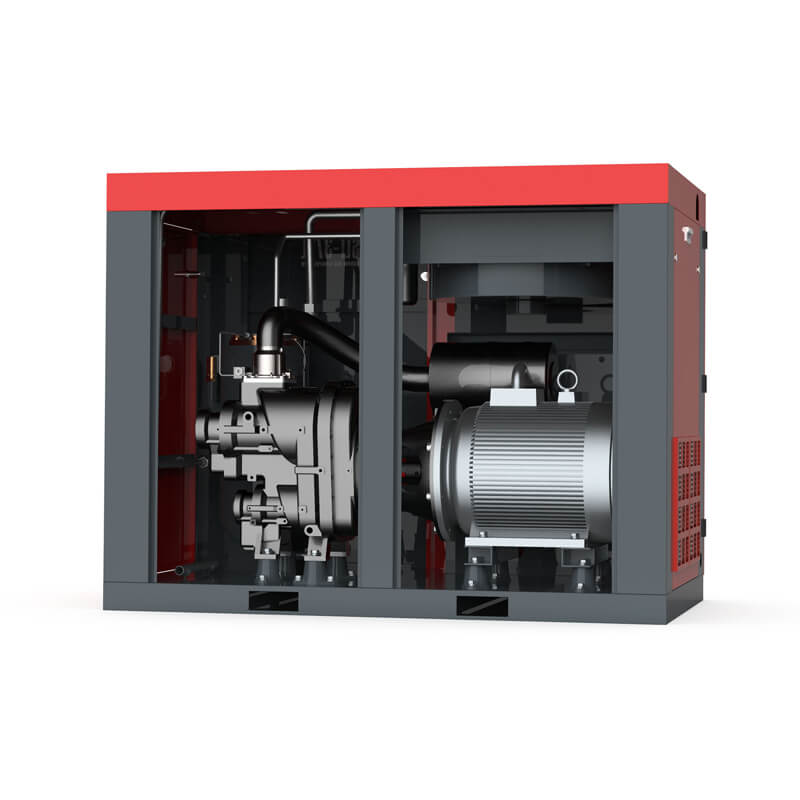
The rotary design has fewer moving parts. This lowers noise and shaking.
Many rotary screw compressors have special cabinets. These cabinets make them even quieter.
Reciprocating compressors have more parts that move. They shake and make more noise.
Rotary screw compressors move smoothly. This means less noise and better work. You can use them where quiet is important.
Rotary screw compressors are also very efficient.
The best rotary screw compressors reach about 92% efficiency. Some models are lower, around 50%. Most big units over 100 HP work better.
High efficiency means you use less energy. You save money because you need less power for the same air.
If you pick a two stage screw air compressor from Sollant, you get quiet and strong performance. This makes your workplace better and saves you money on energy.
Electrical Compatibility
Power Supply Types
Check your power supply before buying a two-stage screw air compressor. Compressors need different types of electricity. Most industrial compressors use single-phase or three-phase power. Single-phase power works for small shops and homes. Three-phase power is better for big factories and workshops. Sollant’s two-stage air compressors work best with three-phase power. Three-phase power gives steady energy. It helps your compressor run well.
Power Supply Type | Best For | Features |
|---|---|---|
Single-Phase | Small shops, garages | Lower power, easy setup |
Three-Phase | Factories, big plants | High power, stable performance |
Tip: Check your building’s wiring before you buy a compressor. Using the wrong power supply can break your compressor.
You also need to check the frequency of your power supply. Most places use either 50 Hz or 60 Hz. Sollant’s two-stage air compressors can work with both. Pick the right model for your area.
Voltage Considerations
Voltage is important when you set up a two-stage screw air compressor. Match the compressor’s voltage to your local supply. Common voltages are 220V, 380V, and 415V. Factories use 380V or 415V for big machines. Small shops often use 220V. Sollant has models for all these voltages.
Check your local voltage before you buy.
Choose a compressor that matches your supply.
Ask an electrician if you are not sure.
Using the wrong voltage can hurt your compressor. It can also cancel your warranty. Always read the manual and follow the guide.
Note: Sollant’s two-stage air compressors have clear voltage labels. You can ask Sollant’s experts for help with electrical compatibility.
Choosing the right power supply and voltage keeps your workspace safe. It helps your compressor last longer. This step helps you avoid mistakes and downtime. If you want to grow your shop or factory, pick a compressor that fits future power needs.
Sollant Two-Stage Screw Air Compressor Models
Model Comparison
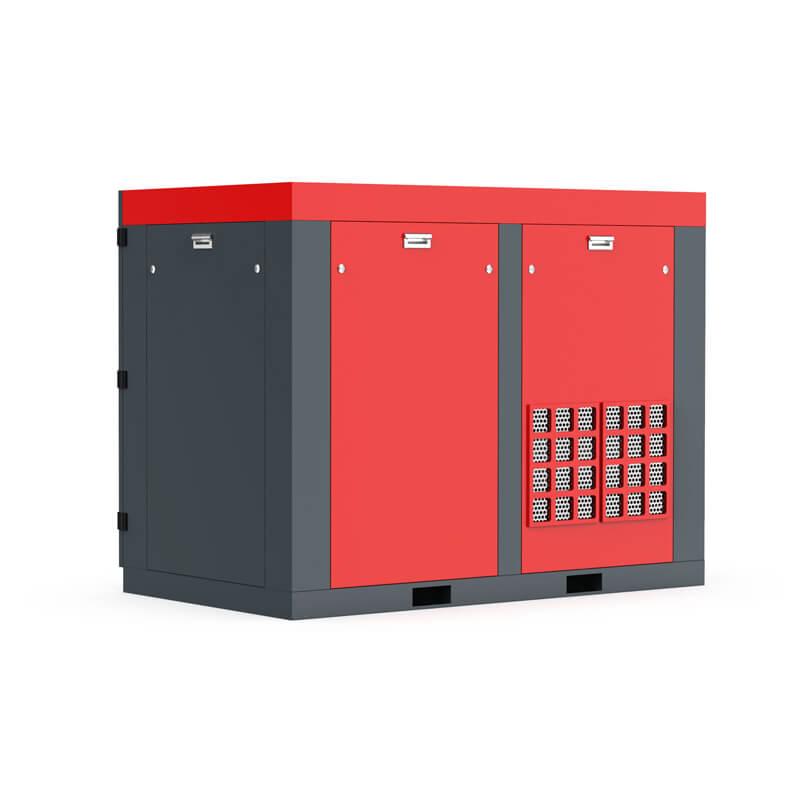
When you pick air compressor equipment for your business, you want simple choices. Sollant has many two-stage screw air compressors for different jobs. These models have power from 22 kW to 315 kW. They work well for tough jobs like industrial refrigeration, chemical plants, and big factories.
Here is a quick look at some main Sollant models:
Model | Power (kW) | Working Pressure (bar) | Capacity (m³/min) | Dimensions (LWH mm) | Cooling Method | Warranty |
|---|---|---|---|---|---|---|
37 | 8, 10, 13 | 1.85-43 | 186011801430 | Air Cooled | 2 years | |
Sollant Two-Stage Centrifugal Compressor | 22-250 | 6, 7, 8, 10, 13 | N/A | 216013501750 | N/A | 1 year |
General Two-Stage Screw Air Compressor | 22-315 | 7-13 | 3.2-62 | N/A | N/A | N/A |
Sollant compressors let you change the pressure. They save energy and are small in size. For example, the 15 kW rotary screw air compressor can work from 7 to 12 bar. It can cut your electricity bill by up to 40%. These compressors are light and easy to set up. This helps you get started faster.
Sollant gives strong warranties for your purchase. You get up to 36 months on the air end and 24 months on the whole machine. You also get lifetime technical help. This keeps your business running without problems.
Sizing Tools & Expert Advice
Picking the right model can seem hard. Sollant gives expert help and sizing tools to make it easier. You should:
Find out how much CFM your tools need.
Make sure the compressor gives enough pressure.
Pick energy-saving models to lower your bills.
Choose the right voltage for your building. 5. Get a tank size that fits how you use air.
Sollant’s team can help you with every step. You can also use online tools to match your needs to the right compressor. This helps you get good results and avoid mistakes.
Sollant sends air compressors to many places, like factories and chemical plants. Fast delivery and good support help you finish your projects on time. Sollant also gives spare parts, manuals, and online help to make sure you are happy.
Tip: If you do not know which model is best, ask Sollant’s experts. They can help you pick the right compressor and make sure delivery goes well.
Picking the right two-stage screw air compressor means you need to match its specs to your job and workspace. Look at these important things:
How much air you use now and total CFM
If you plan to grow in the future
Your space and how noisy it is
When you will use the compressor
Think about these points too:
How much energy it uses and how efficient it is
How often you need to fix or check it
If you can get parts easily
Sollant has two-stage air compressors you can trust and gives good help. If you are not sure what to pick, ask experts or use sizing tools so you do not make expensive mistakes. For help that fits you, talk to Sollant’s team or look at their products today.
FAQ
What makes Sollant two-stage screw air compressors different from single-stage models?
Sollant two-stage screw air compressors squeeze air two times. This gives you more pressure and saves energy. These compressors are good for tough jobs. They last longer than single-stage compressors.
How do I choose the right size for my application?
Write down all your tools and their CFM and PSI needs. Sollant experts can help you pick the best compressor. This way, you do not get one that is too big or too small.
Are Sollant two-stage screw air compressors suitable for food or medical industries?
Sollant oil-free two-stage screw air compressors work for food and medical jobs. These models give clean air and meet strict rules. Your products stay safe and you follow safety standards.
What maintenance do Sollant two-stage screw air compressors require?
Check filters, oil levels, and cooling systems often. Sollant gives manuals and support to help you. Regular care keeps your compressor working well and stops problems.
Can I get technical support and spare parts for Sollant compressors?
Sollant gives lifetime technical support and quick spare parts delivery. You get help with setup, fixing issues, and repairs. Sollant makes sure your compressor stays strong and works well.
Request a Quick Quote Now
How to do my business well ?
- Market situation
- Technology configuration
- Strike Price
- exclusive agency
- Import and export assistance
- More…

