
Compressor for Laser Cutting: Simple Guide for Everyone
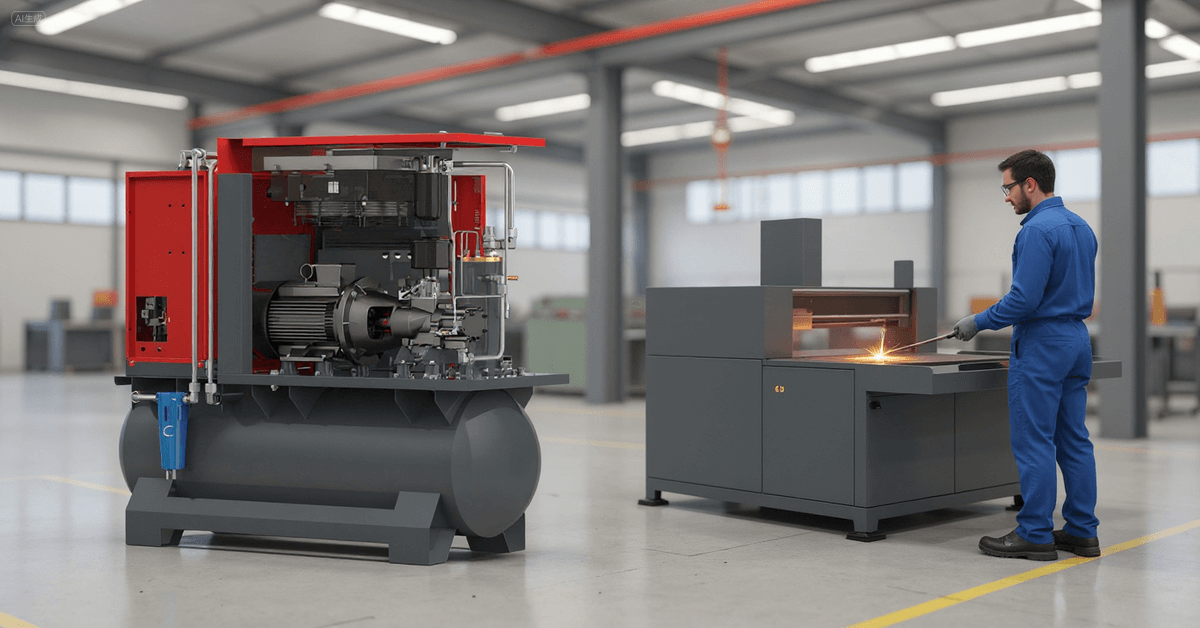
If you want the best results from your laser cutting machine, you need the right compressor for laser cutting. Most factories choose screw air compressors because they give stable pressure and quiet operation. Clean, dry air keeps your machine safe and helps you get smooth cuts every time. Good air filtration and regular maintenance protect your equipment and save energy. Sollant’s four-in-one compressor makes it easy for laser cutting factories by combining compression, drying, and filtration in one reliable system.
Table of Contents
Key Takeaways
Choose a screw air compressor for laser cutting. It provides stable pressure, clean air, and energy efficiency, ensuring smooth and accurate cuts.
Maintain air purity with good filtration systems. Clean, dry air protects your equipment and improves cutting quality, reducing maintenance costs.
Understand the specific needs of your laser cutting process. Match the compressor type and specifications to your machine’s requirements for optimal performance.
Consider a four-in-one compressor for convenience. This system combines compression, drying, and filtration, saving space and simplifying your setup.
Regular maintenance is key. Check filters, drain moisture, and perform routine checks to keep your compressor running smoothly and extend its lifespan.
Why Use a Compressor for Laser Cutting
Essential Role in Laser Cutting
When you use a laser cutting machine, you need more than just the laser itself. A compressor for laser cutting plays a key role in making sure your cuts are clean, fast, and safe. Here’s how an air compressor for laser cutting helps you:
Air assist blows away dust, residue, and carbonized particles from the cutting area. This keeps the laser path clear and helps you get faster, cleaner cuts.
The compressor supplies high-pressure air, which improves cutting performance and helps you work with different materials.
You can control the gas flow precisely, which keeps your cuts stable and accurate.
Tip: Using clean, dry air from an industrial air compressor protects your laser’s lens and extends the life of your equipment.
If you use contaminated or wet air, you risk damaging your machine and getting poor-quality cuts. Upgrading to a system with good filtration ensures you get burr-free edges and avoid costly repairs.
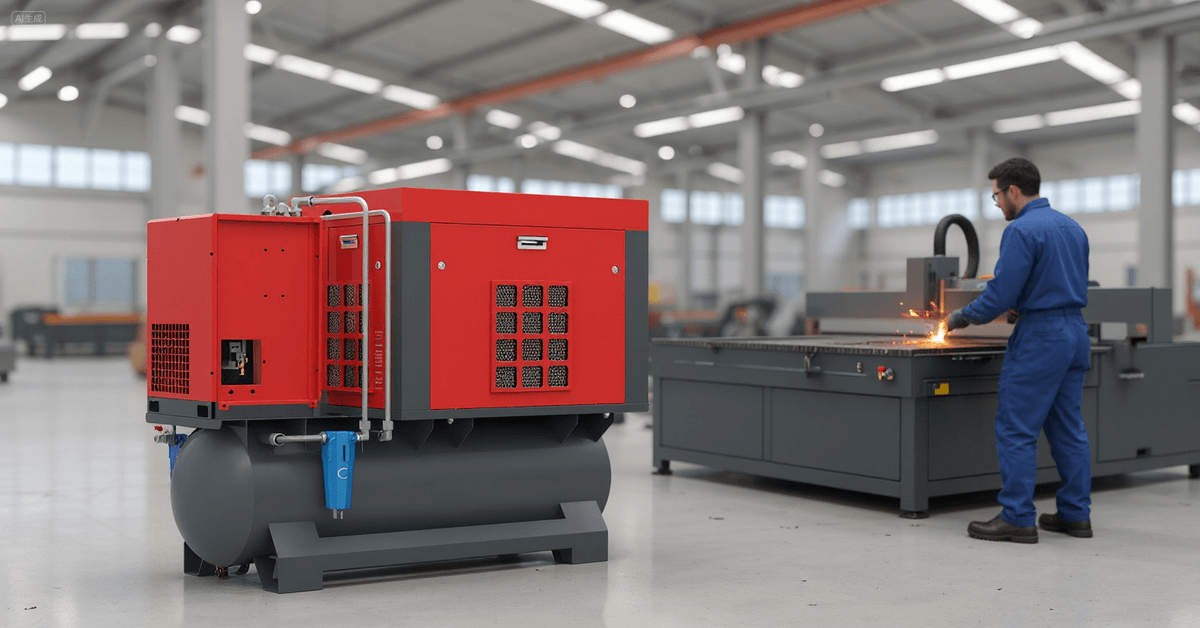
What Makes a Good Compressor
Not all compressors are the same. To get the best results, you need a compressor that meets the needs of your laser cutting process. The most important features include:
Feature | Benefit |
|---|---|
Gives you smooth, accurate cuts and better edge quality. | |
Clean and dry air output | Protects your equipment and keeps your cuts sharp and precise. |
Energy-efficient motor | Lowers your energy bills and keeps your workshop safe and efficient. |
You should also look at the technical specs:
Air Pressure Type | Purpose | Impact on Cutting Results |
|---|---|---|
Blows away slag and reduces oxidation. | Too low: poor slag removal; too high: possible equipment damage. | |
Auxiliary Air Pressure | Protects the laser head and keeps optics clean. | Keeps the laser stable and prevents dust from interfering with the beam. |
Choosing the right compressor for laser cutting means you get better results, safer operation, and longer machine life.
Main Types of Compressors
When you choose a compressor for laser cutting, you will find several main types. Each type has its own strengths and weaknesses. Understanding these differences helps you pick the best option for your needs.
Oil-Free Compressors
Oil-free compressors use special materials and designs to avoid oil in the air system. You get 100% clean, dry air, which is important for laser cutting technology. These compressors are easy to install and operate. They also help protect the environment because they do not risk oil leaks or spills.
Here is a quick look at the advantages and disadvantages:
Advantages | Disadvantages |
|---|---|
Higher Initial Cost | |
Low Maintenance & Environmentally Friendly | Lower Displacement and Pressure |
Stable Output – Pressure and Flow Consistency | Not Ideal for Large-Scale Continuous Use |
Corrosion-Resistant Design | |
Easy Installation and Operation |
You will also notice some extra benefits:
Improved efficiency because there is no oil to heat up the system.
Energy savings since these compressors use less energy.
No risk of oil leaks, so they are safer for your workspace.
Oil-free compressors work well for small to medium laser cutting jobs where air purity is critical. If you run a large factory or need high pressure for long periods, you may want to look at other options.
Oil-Lubricated Compressors
Oil-lubricated compressors use oil to cool and seal the moving parts. This design helps the machine last longer and run quietly. However, the air from these compressors can contain oil mist and moisture. For laser cutting, this can cause problems.
Air quality is very important for laser cutting. Moisture, oil mist, and particles can contaminate your laser lens and reduce cutting precision.
If you use air with too much oil or water, you may damage the optical system and increase your maintenance costs.
These compressors often need extra equipment like air storage tanks, dryers, and filters. This makes maintenance more complex.
Oil-lubricated compressors can be a good choice for general industrial use. For laser cutting, you must add extra filtration and drying systems to keep the air clean. This can make your setup more complicated and expensive.
Screw Compressors
Screw air compressors are the top choice for most laser cutting applications. They use two rotating screws to compress air. This design gives you a steady flow of clean, dry air, which is perfect for laser cutting.
You will find several reasons why a screw air compressor stands out:
It delivers a continuous supply of compressed air, so your laser cutting machine works smoothly.
The advanced technology in screw air compressors helps you save energy and reduce noise.
These compressors work well in many environments, from small workshops to large factories.
Maintenance is simple, and the machines are reliable.
A screw air compressor meets the airflow and pressure needs of modern laser cutting technology. You get high air quality, low noise, and strong energy efficiency. Most factories choose a screw air compressor because it improves performance and reduces downtime.
Note: If you want the best results from your compressor for laser cutting, a screw air compressor is usually the best investment.
Diaphragm Compressors
Diaphragm compressors use a flexible membrane to compress air. They do not use oil, so the air stays very clean. These compressors are often used for special applications where you need ultra-pure air.
You may find diaphragm compressors in labs or medical settings. For laser cutting, they are less common. They usually have lower airflow and pressure compared to screw air compressors or oil-lubricated models. If you need a small, clean air supply for a special project, a diaphragm compressor can work. For most industrial air compressor needs in laser cutting, other types are more practical.
Tip: Always match the compressor type to your laser cutting needs. For most users, a screw air compressor gives the best mix of performance, reliability, and air quality.
Compressor for Laser Cutting: Comparison
Features and Performance
When you compare compressors for laser cutting, you need to look at several important features. These include efficiency, pressure output, maintenance needs, and cost. You want a compressor that matches your laser cutting technology and keeps your workflow smooth.
Here is a table that shows how single-stage and two-stage compressors perform:
Metric | Single-Stage Compressors | Two-Stage Compressors |
|---|---|---|
Efficiency | Less efficient, higher energy use | More efficient, lower energy use |
Pressure Output | May struggle with high pressures | Achieves higher and steady pressure |
Maintenance | Easier and cheaper to maintain | Needs more frequent maintenance |
Cost | Lower upfront cost | Higher initial cost, but saves money long-term |
You also need to consider energy consumption, noise levels, and how often you need to service the compressor. The table below compares the main types you might use in a laser cutting factory:
Compressor Type | Energy Consumption | Noise Levels | Maintenance Frequency |
|---|---|---|---|
Piston Air Compressor | High | High | Frequent, low-cost maintenance |
Screw Air Compressor | Low | Low | Simple, long intervals |
Centrifugal Air Compressor | Energy-efficient | Low | Longer service, higher cost |
Scroll Air Compressor | Energy-efficient | Low | Minimal maintenance |
Oil-Free Air Compressor | Higher maintenance cost | N/A | N/A |
A screw air compressor stands out for its low energy use, quiet operation, and easy maintenance. You get steady air pressure, which is essential for industrial air compressor applications in laser cutting.
Tip: If you want reliable performance and less downtime, choose a screw air compressor for your laser cutting factory.
Pros and Cons
Each compressor type has its own strengths and weaknesses. You need to match the right compressor to your needs for the best results.
Compressor Type | Advantages | Disadvantages |
|---|---|---|
Permanent Magnetic 2-Stage Compression | High efficiency, energy savings, better compression | Higher initial cost |
Compact Rotary Screw Air Compressor | Small size, easy to install and maintain | Lower max output |
Oil-Free Intelligent Screw Air Compressor | No oil contamination, great for high-precision work | Higher maintenance |
Piston Air Compressor | Affordable, simple design | Noisy, less efficient |
Centrifugal Air Compressor | Quiet, energy-efficient | Expensive, complex |
Scroll Air Compressor | Quiet, minimal maintenance | Limited capacity |
A screw air compressor gives you a good balance of efficiency, reliability, and air quality. You avoid oil contamination, which protects your laser cutting technology and keeps your cuts sharp.
Note: You should always check if the compressor can deliver clean, dry air. This protects your equipment and improves your cutting results.
Best Use Cases
You need to choose a compressor based on your specific application. Here are some common scenarios:
If you run a small workshop and need a simple setup, a compact rotary screw air compressor works well.
For high-precision laser cutting technology, an oil-free intelligent screw air compressor gives you pure air and protects your equipment.
Large factories benefit from permanent magnetic two-stage screw air compressors. You get high efficiency and energy savings for continuous operation.
Piston air compressors suit basic tasks but may not meet the demands of modern industrial air compressor systems.
Centrifugal and scroll compressors fit specialized needs, such as quiet environments or minimal maintenance.
A screw air compressor is the top choice for most laser cutting factories. You get stable pressure, low noise, and easy maintenance. This helps you achieve better results and reduces your operating costs.
👍 Choose a screw air compressor if you want the best mix of performance, reliability, and air purity for your laser cutting factory.
Choosing the Right Compressor
Air Purity and Filtration
You need clean, dry air for laser cutting technology. Impurities in the air can damage your equipment and lower cutting quality.
High-purity gases are essential for optimal cutting quality. Impurities can lead to equipment damage and increased maintenance costs.
The stability of the gas source system directly affects the cutting quality and equipment life. The gas source filter removes impurities and separates oil and water. Regular maintenance, including timely drainage and filter replacement, keeps your system efficient and extends its life.
Pressure and Flow
The right pressure and flow rate help you achieve smooth, precise cuts. If you use a screw air compressor, you get stable pressure for consistent results.
Laser Type | Material Type | Thickness (mm) | |
|---|---|---|---|
CO2 Laser | Non-metallic | < 1 | 4 |
CO2 Laser | Non-metallic | 5 – 10 | 4 – 6 |
Fiber Laser | Metals | < 1 | 6 – 12 |
Fiber Laser | Metals | > 10 | 10 – 12 |
Insufficient air volume or pressure can compromise cutting quality. You may see rough edges or incomplete cuts.
Maintenance and Reliability
A screw air compressor needs less maintenance than other types. You only need routine fluid and filter changes.
Compressor Type | Maintenance Needs | Reliability Rating |
|---|---|---|
Reciprocating Piston Compressor | Higher maintenance due to more moving parts | Moderate |
Rotary Screw Compressor | Lower maintenance; routine fluid/filter changes needed | High |
Centrifugal Compressor | Minimal routine maintenance | Very High |
Regular maintenance increases equipment longevity and keeps your industrial air compressor running smoothly.
Noise and Energy Efficiency
You want a quiet workspace and low energy bills.
Noise levels of box-type screw air compressors range from 60 dB to 85 dB.
Advanced insulation and optimized layouts help reduce noise.
Variable frequency technology in screw air compressors saves energy and lowers noise by adjusting speed to demand.
Cost and Budget
You should balance initial cost with long-term savings. A screw air compressor may cost more upfront, but you save money on energy and maintenance over time. Consider tank size, power source, and portability when planning your budget.
Compatibility with Laser Cutters
Follow these steps to ensure your compressor matches your laser cutter:
Determine your laser cutting machine’s air requirements, including purity, pressure, and flow rate.
Use supporting equipment like air dryers, receiver tanks, and filtration systems to maintain air quality.
Consult with your laser cutting equipment manufacturer for specific air consumption and pressure needs.
A good ventilation system removes smoke and harmful gases, protects operator health, and prevents corrosion of optical devices.
Practical Tips for Beginners:
Choose a screw air compressor for stable pressure and easy maintenance.
Check air purity and filtration systems regularly.
Match compressor specs to your laser cutting technology.
Plan for routine maintenance to avoid downtime.
Ask your manufacturer for advice on compatibility.
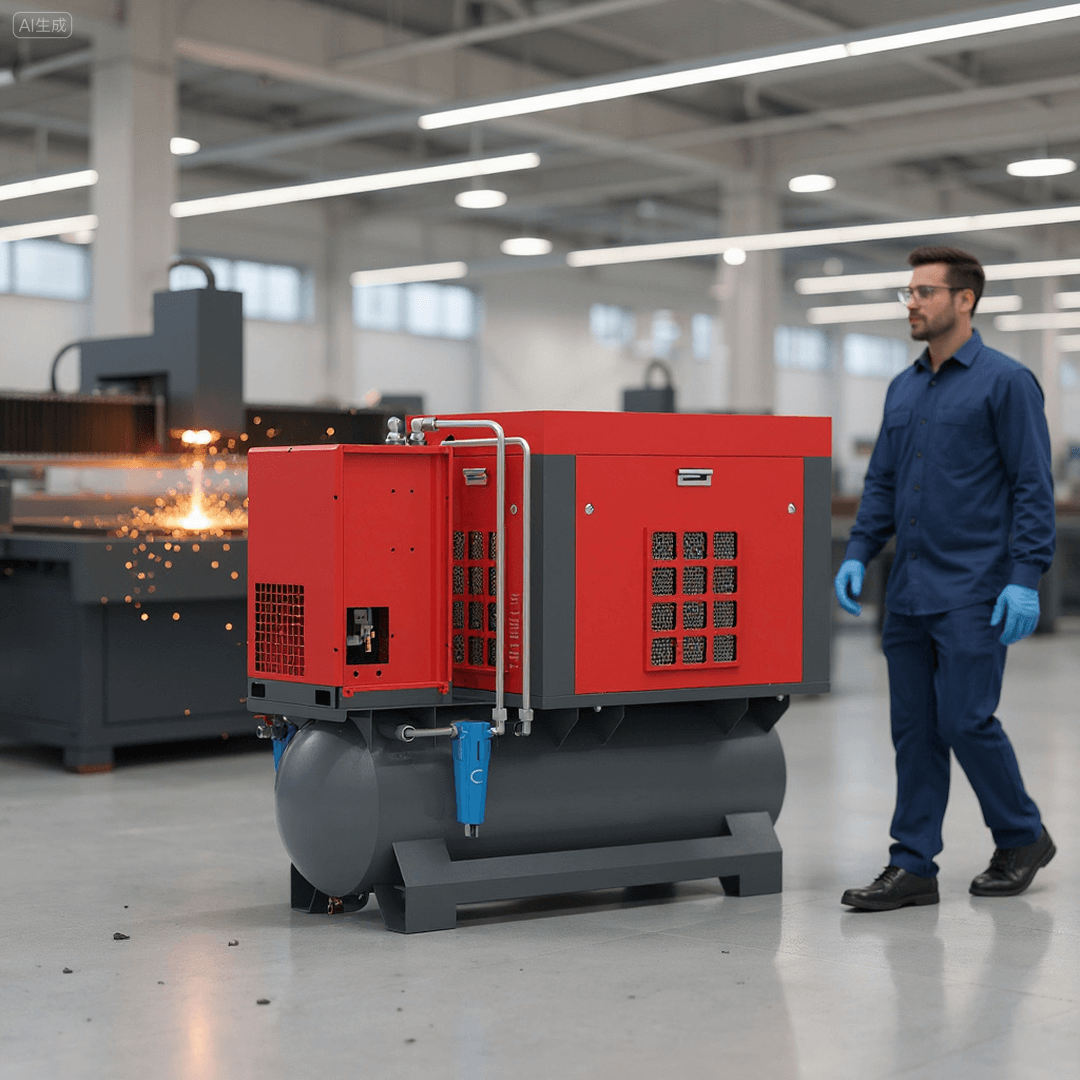
Sollant Four-in-One Compressor
What Is a Four-in-One Compressor
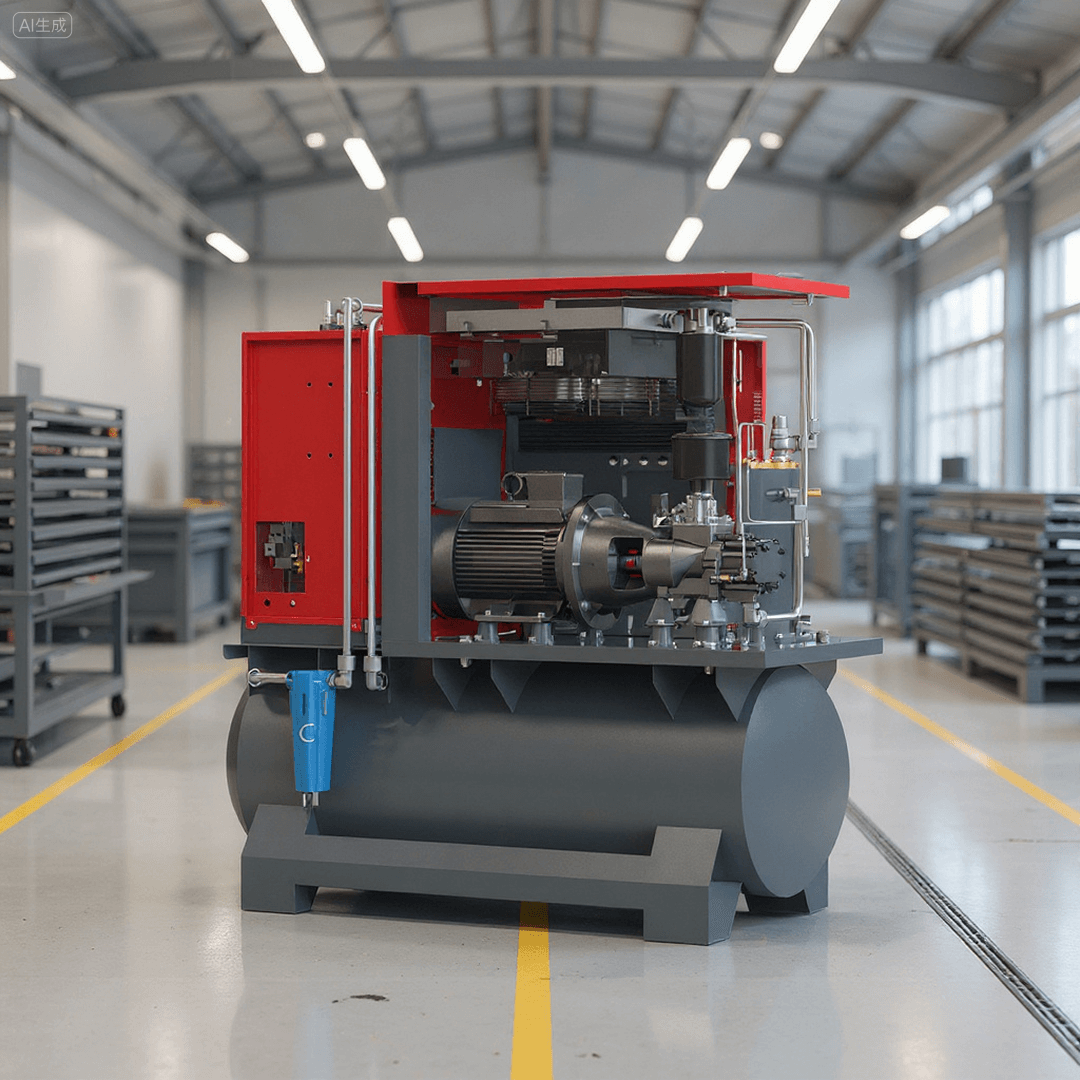
A four-in-one compressor combines four essential functions into one compact system. You get everything you need for laser cutting in a single unit. This design saves space and makes your setup simple. Here is what you find inside a four-in-one compressor:
Feature | Description |
|---|---|
Screw Air Compressor | Delivers efficient, stable air for your laser cutting machine. |
Plate-Type Cold Dryer | Cools the air and removes moisture, keeping your air supply dry and clean. |
Air Storage Tank | Stores compressed air, so you always have a steady supply during cutting operations. |
Precision Filter | Removes dust, oil, and other particles, protecting your laser head and workpiece. |
You do not need to buy separate machines for each function. The four-in-one design gives you a complete air solution for your laser cutting needs.
Benefits for Laser Cutting Factories
When you use a four-in-one compressor in your factory, you see many advantages over traditional setups. You save time, money, and space. The table below shows how this system helps you:
Benefit | Description |
|---|---|
Enhanced Performance and Versatility | Combines compressor, dryer, filter, and tank for maximum efficiency and flexibility. |
Streamlined Workflow and Efficiency | Reduces downtime by removing the need for separate equipment, so your production runs smoothly. |
Precise Air Regulation and Quality | Delivers a constant supply of clean, dry air for high-precision laser cutting. |
Cost-Effectiveness and Space Saving | Uses less floor space and lowers costs compared to buying and maintaining multiple machines. |
You can focus on your work without worrying about air quality or equipment compatibility. This system helps you achieve better cutting results and keeps your factory organized.
Why Choose Sollant
Sollant stands out as a top choice for laser cutting factories. You benefit from advanced technology and reliable support. Sollant compressors use high-efficiency IE4 motors and new 20CrMrTi alloy steel rotors. These features help you save more than 20% on energy costs. Sollant also uses UL-certified electrical parts and ASME-certified air tanks, so you meet international safety standards.
You get even more advantages:
High-efficiency and energy-saving IE4 motor
Two-stage rotor made from durable alloy steel
External oil separation core for easy maintenance
MAN brand oil separation core for better air purity
Sollant compressors include high-quality refrigerated air dryers. These dryers keep your compressed air dry, which extends the life of your equipment and improves your production quality. You spend less on maintenance and enjoy higher efficiency.
Sollant offers global support and can customize solutions for your factory. You can trust Sollant to help you increase productivity and reduce costs.
For more details, visit Sollant’s official website: https://www.sollant.biz/
When you choose a compressor for laser cutting, screw compressors stand out for their performance, stable quality, and energy efficiency. You get reliable results for different materials and cutting needs.
Feature | Benefit |
|---|---|
Performance | Excellent for laser cutting |
Energy Efficiency | Reduces operational costs |
Quality | Consistent, stable results |
Suitability | Adapts to various applications |
You should focus on air quality, energy savings, and reliability. Clean, high-pressure air ensures smooth, burr-free cuts. Consider integrated solutions like Sollant’s four-in-one compressor for a simple, cost-effective setup. For more details, visit Sollant’s website for technical information and custom options.
FAQ
What type of compressor works best for fiber laser cutting?
You should use a screw air compressor for fiber laser cutting. This type gives you stable pressure and clean air. It helps you get smooth, accurate cuts. Many factories choose screw compressors for fiber laser cutting because they are reliable and easy to maintain.
Why is air purity important in fiber laser cutting?
Air purity matters in fiber laser cutting. Clean air keeps your machine safe and your cuts sharp. If you use dirty air, you risk damaging your fiber laser cutting equipment. Clean, dry air also helps you avoid extra maintenance and costly repairs.
How does air pressure affect fiber laser cutting quality?
Proper air pressure is key for fiber laser cutting. High-pressure air compressors give you the force needed to blow away debris. This keeps the cutting area clear. If you use the wrong pressure, your fiber laser cutting results may look rough or incomplete.
Can I use low-pressure air compressors for fiber laser cutting?
You should not use low-pressure air compressors for fiber laser cutting. They do not provide enough force to support the process. Fiber laser cutting needs steady, high-pressure air to keep the cut clean and protect the machine.
How often should I maintain my compressor for fiber laser cutting?
You should check your compressor for fiber laser cutting regularly. Clean or replace filters and drain moisture often. Regular maintenance keeps your fiber laser cutting system running smoothly. This also helps you avoid downtime and get the best results every time.
Request a Quick Quote Now
How to do my business well ?
- Market situation
- Technology configuration
- Strike Price
- exclusive agency
- Import and export assistance
- More…

