
Complete Maintenance Guide for Screw Air Compressors: Daily to Annual Tasks for Reliable Operation
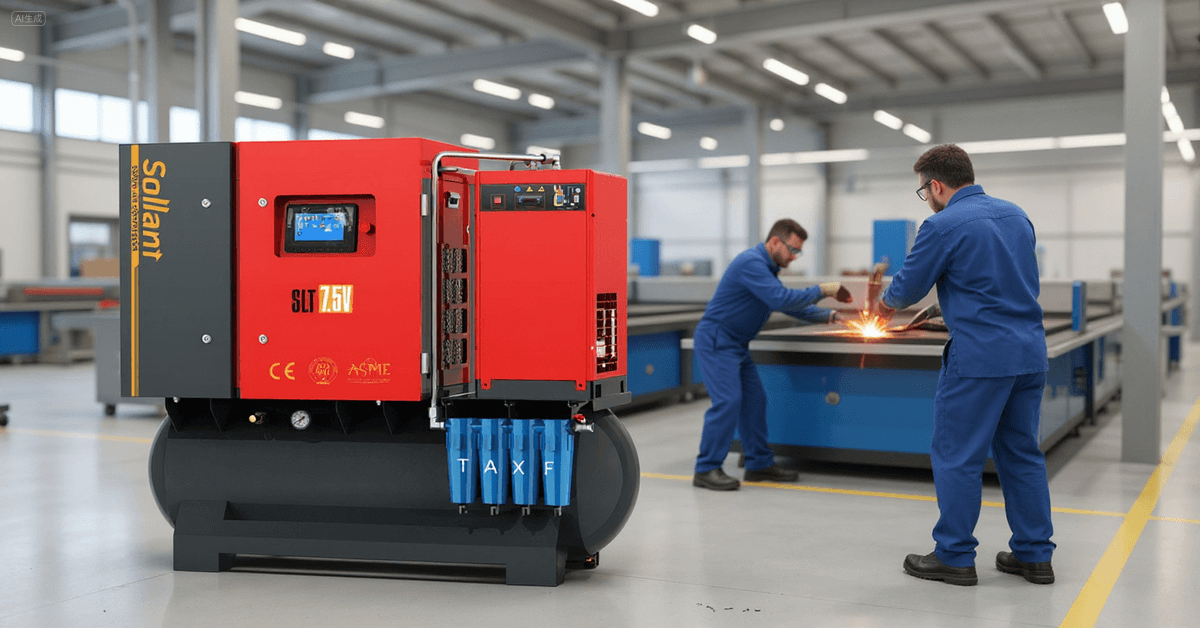
Screw air compressors are often described as the “power core” of industrial production. However, long-term high-load operation inevitably leads to component wear, reduced efficiency, and unexpected shutdowns. A scientific and systematic maintenance plan not only extends the lifespan of the equipment, but also ensures stable air supply and reduces operating costs.
This guide summarizes a four-level maintenance system—daily, monthly, quarterly, and annual inspections—to help industries establish a practical, reliable, and standardized service routine for screw air compressors.
Table of Contents
1. Daily Maintenance: A 5-Minute Routine to Prevent Hidden Risks
Daily inspection is the first line of defense for safe compressor operation. It should be performed before startup, during operation, and after shutdown, focusing on components that are easy to observe and quick to assess.
1. Pre-Start Inspection (3 minutes)
-
Visual check: Look for oil or air leaks on the unit surface, damaged cables, or loose emergency stop buttons.
-
Parameter confirmation:
-
Oil level must be between the MIN and MAX marks (low oil increases operating temperature; high oil may cause oil carry-over).
-
Ensure the pressure gauge returns to zero and that the control panel displays no fault codes.
-
2. Real-Time Monitoring During Operation
-
Data logging:
-
Discharge pressure: typically 0.6–0.8 MPa
-
Discharge temperature: ≤100°C (high-temp models ≤120°C)
-
Motor current: must not exceed rated value
-
-
Abnormality check:
-
Listen for unusual noises (e.g., humming or grinding may indicate bearing wear).
-
Touch the casing—temperature should not exceed ambient + 40°C.
-
Stop the unit immediately if abnormal vibration, overheating, or alarms appear.
-
3. Post-Shutdown Inspection (2 minutes)
-
Cleaning: Remove dust from the control panel and casing. Clean debris from the radiator to avoid heat dissipation issues.
-
Final check: Cut off the power supply and drain condensate from the air tank to prevent moisture from entering the system.
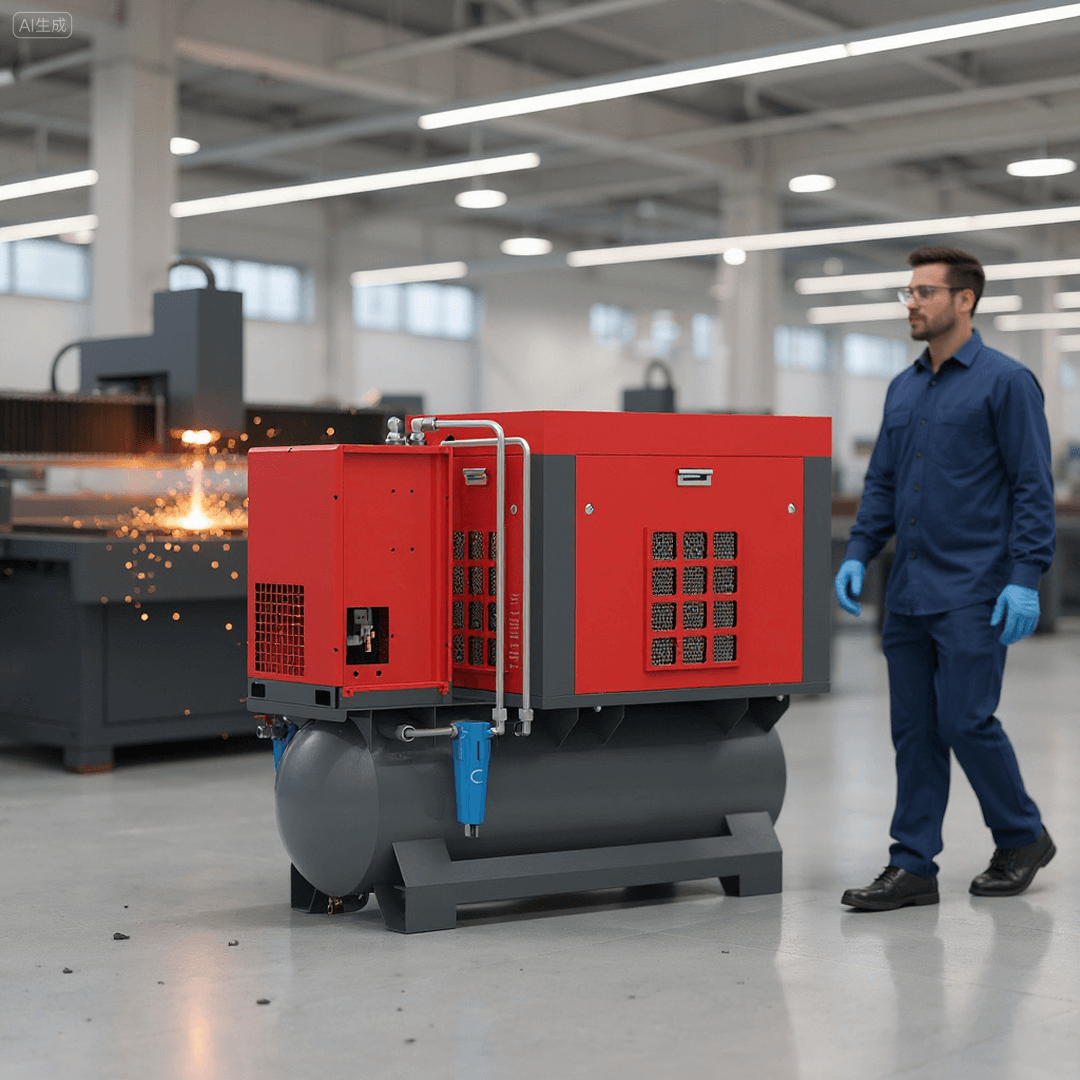 2. Monthly Maintenance: Focus on Wear, Sealing, and Lubrication
Monthly inspections should be performed by trained maintenance personnel. These tasks target components that directly influence performance and energy efficiency.
Lubrication System
-
Oil analysis:
-
Normal oil should appear light yellow.
-
Replace oil immediately if it appears darkened or emulsified.
-
Even if the oil looks normal, change both lubricant and oil filter every 500 hours of operation.
-
Air System Maintenance
-
Inlet valve inspection:
-
Clean carbon deposits on the valve core to prevent leakage and higher energy consumption.
-
Apply special lubricant to ensure smooth operation.
-
-
Seal check:
-
Inspect inlet hoses and discharge flange gaskets for aging or cracks.
-
Air leakage over 5% significantly increases operating cost.
-
Electrical System
-
Tighten terminals: Loose terminals in motors or contactors may cause arcing or overheating.
-
Clean electrical components: Blow dust from relays and contactors with compressed air (≤0.4 MPa) to avoid poor contact.
3. Quarterly Maintenance: Deep Inspection of Core Components and Safety Devices
Quarterly service focuses on performance-critical parts and safety protection systems. Ideally performed during production downtime.
1. Compressor Airend & Motor
-
Bearing inspection:
-
Use a stethoscope to detect “sand-like” friction noise.
-
If bearing clearance exceeds 0.1 mm, replacement is necessary.
-
-
Motor maintenance:
-
Clean cooling fan and housing.
-
Lubricate bearings with lithium grease (filling 1/2–2/3 of bearing cavity).
-
Test motor insulation resistance (≥0.5 MΩ).
-
2. Safety Device Calibration
-
Safety valve test:
-
Press the manual test button to ensure proper relief and reseating.
-
-
Pressure gauge calibration:
-
If deviation exceeds ±5%, send for calibration or replace.
-
3. Auxiliary System Inspection
-
Cooling system:
-
For water-cooled units: descaling of cooling tower and condenser to maintain heat exchange efficiency.
-
For air-cooled units: clean radiator fins using appropriate cleaning tools.
-
-
Dryers and filters:
-
Replace desiccant in adsorption dryers every 2000 hours.
-
Replace precision filter elements when pressure drop exceeds 0.1 MPa.
-
4. Annual Maintenance: Full-Scale Evaluation to Prevent Failures
Annual maintenance is equivalent to a complete physical examination for the compressor. It should involve technicians and, where required, certified third-party inspectors.
Core Component Overhaul
-
Airend rotor inspection:
-
Check for wear, scratches, and measure rotor clearance.
-
If the value exceeds the manufacturer’s limit by 10%, repair or replace the rotor.
-
-
Oil-gas separator:
-
Replace if contaminated, damaged, or showing high oil carry-over.
-
A failing separator increases downstream oil contamination and energy consumption.
-
Performance Testing & Calibration
-
Energy efficiency test:
-
Measure specific power (target value ≤ 7.5 kW/m³/min).
-
If energy consumption increases by over 15%, inspect for leaks and declining airend efficiency.
-
-
Control system calibration:
-
Reset pressure and temperature protection settings (e.g., high-temperature shutdown at 110°C).
-
Verify load/unload cycling accuracy.
-
Safety & Compliance Checks
-
Ground resistance test: Must be ≤4Ω for electrical safety.
-
Documentation:
-
Update maintenance logs, replacement records, and calibration certificates.
-
Ensure compliance with regional safety regulations for compressed air systems.
-
Conclusion: Preventive Maintenance Extends Equipment Life and Lowers Costs
Effective screw air compressor maintenance is not about reacting to failures, but about preventing them. From a quick daily inspection to a detailed annual overhaul, every maintenance action is an investment in equipment reliability.
By implementing a clear responsibility system, creating traceable maintenance records, and following a proactive preventive strategy, companies can achieve:
-
Longer equipment lifespan
-
Reduced downtime
-
Stable air supply
-
Lower energy and maintenance cost
A well-maintained screw air compressor will always deliver consistent and efficient performance—keeping your production line running smoothly.
Request a Quick Quote Now
How to do my business well ?
- Market situation
- Technology configuration
- Strike Price
- exclusive agency
- Import and export assistance
- More…

