
How to Choose the Best Air Compressor with Dryer for Your Workshop
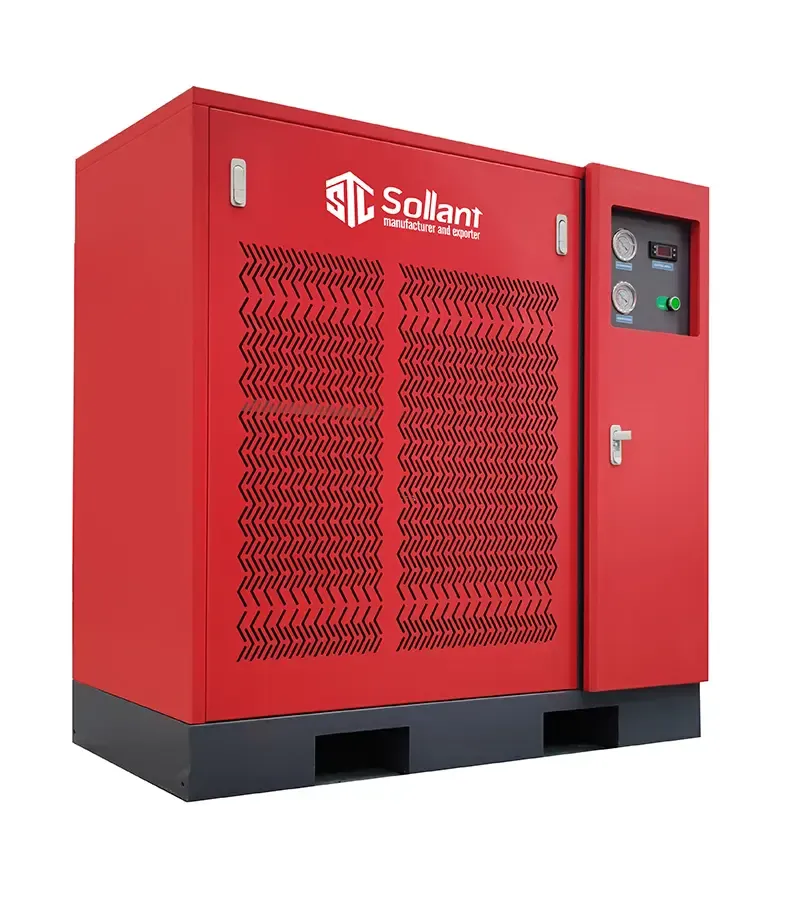
You want the best air compressor with dryer for your workshop. Start by matching the compressor and dryer features to your tools and space. If you pick the wrong size or settings, you might have problems. You could get water in the compressed air. You might not dry the air enough. You could also pay more for energy. Look at the table below for common problems and how to fix them. Sollant gives you good solutions and new technology. This helps your workshop work well.
Problem | Causes | Solutions |
|---|---|---|
Insufficient drying | Dirty filters, wrong settings | Change filters, fix settings |
Water in compressed air | Dryer too small, bad drain valve | Check dryer size, take care of drain valve |
Increased energy use | Dirty parts, old equipment | Clean parts, get new equipment |
Table of Contents
Key Takeaways
Pick an air compressor with dryer that fits your tools’ CFM and PSI. This helps your tools work well.
Choose the right tank size for your workshop. Bigger tanks let you use tools longer. They also keep the pressure steady.
Think about how loud the compressor is. Try to get one under 85 dB. This makes your workspace more comfortable.
Take care of your compressor often. Check for leaks, clean filters, and change oil on a schedule. This helps your compressor last longer.
Look at how much energy the compressor uses. Think about how much it costs to own. A good compressor saves money on energy and repairs over time.
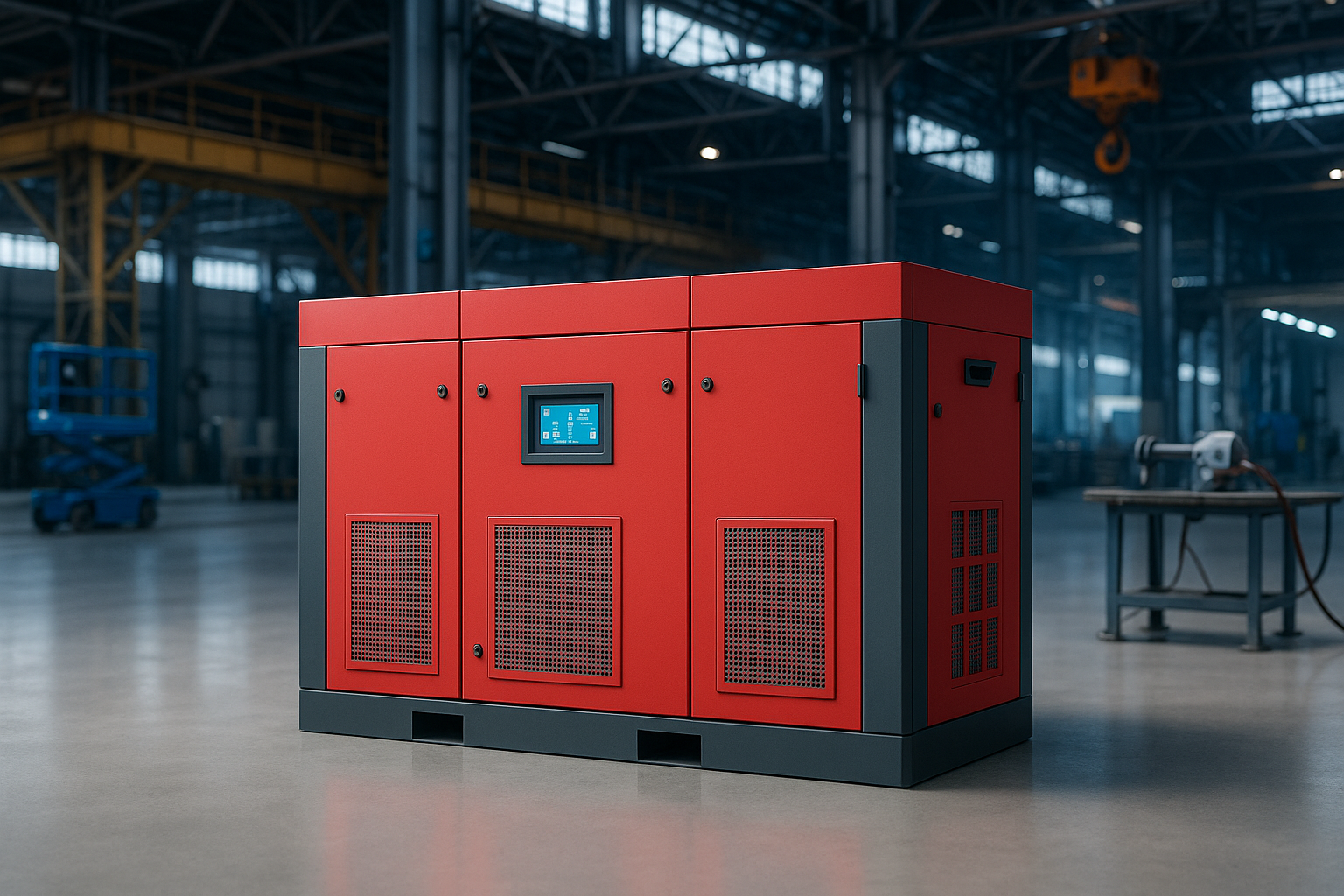
Key Factors for Workshop Compressor Selection
When you pick a compressor, you need to think about a few things. These things help you choose the best air compressor with dryer. They also make sure your tools work well every day. Let’s look at what is most important.
Air Compressor with Dryer Essentials
Your compressor should give you dry and clean air. Wet air can hurt your tools and mess up your work. That is why you need an air compressor with dryer. You should see what kind of dryer comes with it. Some dryers cool the air to take out water. Other dryers use special stuff to soak up water. Both kinds help keep your air dry and your tools safe.
Here are the main things to think about when picking a compressor for your workshop:
CFM rating (how much air it gives)
PSI (the pressure your tools need)
Tank size (how much air it holds)
Noise level (how loud it is)
Type (rotary screw, oil-free, or oil-lubricated)
Installation needs (space, drainage, and setup)
Maintenance (how easy it is to keep working)
Cost (price now and savings later)
Sollant is special because it makes rotary screw air compressors. You get strong performance, new technology, and save up to 35% on energy. Sollant works hard on new ideas and helps customers. You can trust your compressor to last a long time.
Matching CFM and PSI to Tools
You must match your compressor’s cfm and PSI to your tools. If your compressor is too small, your tools will not work well. If it is too big, you waste energy and money. Check the chart below to see what tools need:
Tool Type | Recommended PSI | |
|---|---|---|
Impact Wrench | 4-8 | 90-100 |
Air Sander | 6-9 | 90-100 |
Paint Sprayer | 12-15 | 40-60 |
Air Hammer | 2-4 | 90-100 |
Die Grinder | 4-6 | 90-100 |
Look at your tool that needs the most air. Use its cfm and PSI to pick your compressor. This way, you do not have weak tools or waste energy.
Tank Size and Noise Level
Tank size changes how your compressor works. Big tanks hold more air, so you can use tools longer. Small tanks fill up faster but run out of air sooner. Here is a quick look at how tank size matters:
Aspect | Larger Tanks | Smaller Tanks |
|---|---|---|
Air Availability | Hold more air for longer use. | Hold less air, good for short use. |
Pressure Stability | Keep pressure steady, good for steady tools. | Pressure changes more, okay for some tools. |
Recovery Time | Take longer to fill but need less filling. | Fill up fast but need to fill more often. |
Moisture Control | More time for air to cool, so drier air. | Less time for water to leave, so wetter air. |
Noise Levels | Run less often, so less noise. | Run more often, so more noise. |
Energy Efficiency | Can save energy by starting less often. | May save energy if you use little air, but starts more. |
Noise level is also important. You want your workshop to be quiet. Most compressors are between 40 dB (very quiet) and over 90 dB (very loud). Loud compressors can hurt your ears, cause stress, and make you less productive. Try to get a compressor under 85 dB. This keeps your workshop safe and comfortable.
Tip: Always check your local noise rules before you put in a commercial air compressor.
If you take care of your air compressor with dryer, it can last 10 to 20 years. Good care means fewer problems and lower costs. Sollant compressors are made to last, so you get more for your money.
Sollant’s workshop compressors are reliable, new, and save energy. You get a system that fits your needs and helps your business grow.
Types of Air Compressor and Dryer Systems
Rotary Screw and Commercial Air Compressor Options
When you pick a compressor, you see many choices. Rotary screw compressors are common in shops and factories. They use two screws that spin and squeeze air. This gives steady air and works for long hours. If you need a commercial air compressor, rotary screw types are smart. They last a long time and help save energy.
Oil-lubricated compressors use oil to keep parts moving well. They last longer and are tough, but you must change oil and filters often. Oil-free compressors do not use oil. They give clean air and need less care, but they may not last as long.
Here is how oil-lubricated and oil-free compressors are different:
Feature | Oil-Lubricated | Oil-Free |
|---|---|---|
Lifespan | Lasts longer with oil | Wears out faster |
Air Purity | Has some oil in the air | Gives only clean air |
Maintenance Requirements | Needs oil and filter changes | Needs little care |
Initial Cost | Usually costs less | Usually costs more |
Operational Cost | Costs more to keep up | Costs less to keep up |
Durability & Lifespan | Stays strong with oil | Wears out faster without oil |
Rotary screw compressors are good for steady work. Oil-free compressors are best where you need clean air, like food or medical shops. Oil-lubricated compressors are strong and last longer.
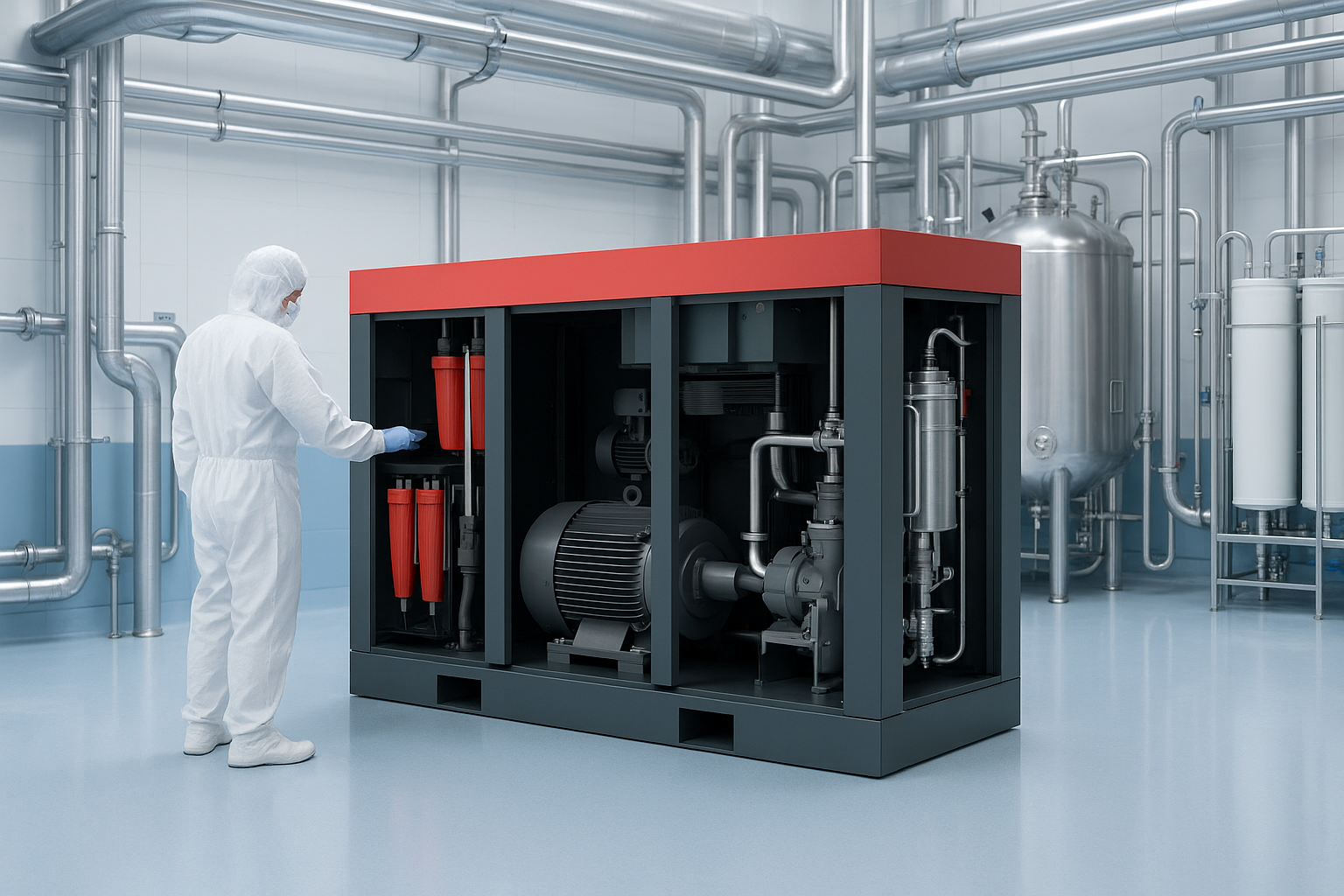
Dryer Technologies Overview
You need dry air for your tools. That is why you want an air compressor with dryer. There are two main dryer types: refrigerated and adsorption.
Refrigerated dryers cool the air. Water falls out when the air gets cold. These dryers work for most jobs and use electricity. Adsorption dryers use beads to catch water from the air. They make the air very dry, which is good for special tools.
See how these dryers are different:
Parameter | Refrigerated Dryer | Desiccant Dryer |
|---|---|---|
Pressure Dew Point | +3℃ to +10℃ | -20℃ to -70℃ |
Energy Consumption | Uses some electricity | Uses air and electricity |
Refrigerated dryers are easy and save energy. Adsorption dryers make drier air but use more power.
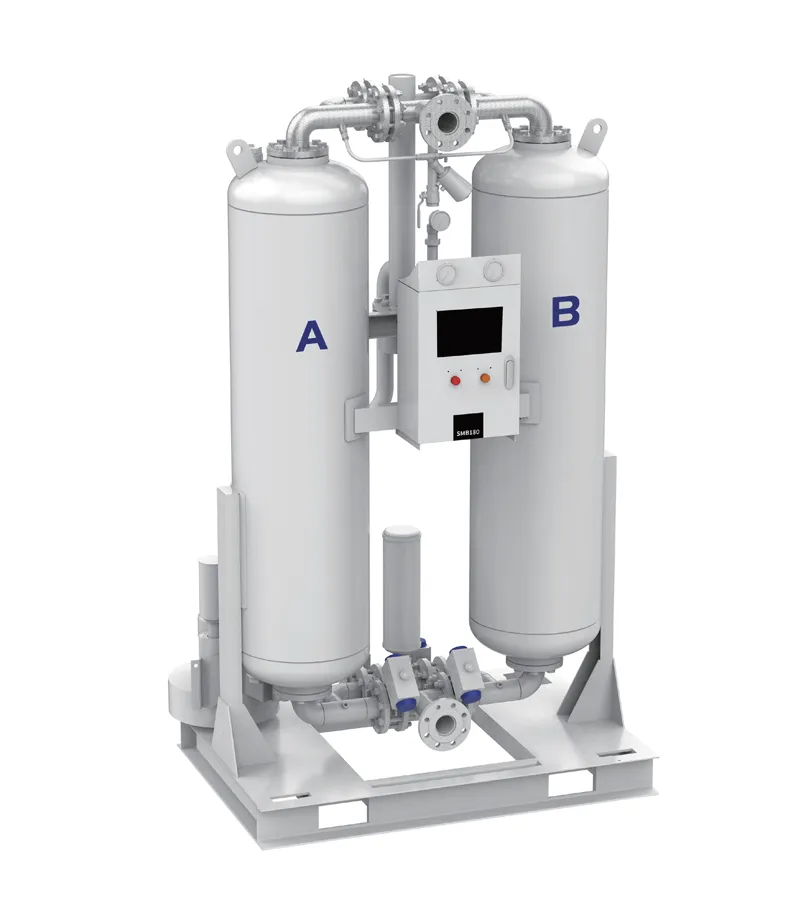
Sollant Air-Dryer-for-Air-Compressor Features
Sollant’s air-dryer-for-air-compressor is special. It removes water well, so your air stays dry and clean. This keeps your tools safe from rust and keeps your products good. Sollant dryers use less energy, so you save money each month.
Here is what makes Sollant stand out:
Unique Features | Benefits |
|---|---|
Removes water well | Gives high-quality air |
Saves energy | Costs less to run |
Stops rust on tools | Tools and machines last longer |
Makes good products | Fewer bad products |
Custom cooling systems | Fits many shop needs |
Sollant has both refrigerated and adsorption dryers. You can pick what fits your shop and cfm needs. If you want a strong air compressor with dryer, Sollant helps you get the best.
Installation, Maintenance, and Support
Setup and Drainage Tips
Setting up your air compressor with dryer the right way is important. If you make mistakes, you can have problems later. The table below shows mistakes people often make:
Mistake | Explanation |
|---|---|
Overlooking Moisture Drain Systems | If you forget drains, rust and damage can happen inside the compressor. |
Using the Wrong Dryer | The wrong dryer means your air may stay too wet. |
Skipping Regular Desiccant Replacement | Old desiccants let water pass through. |
Relying on Visual Inspections Alone | Looking only at the outside can miss hidden issues. |
Disregarding Manufacturer Recommendations | Not following instructions can void your warranty. |
When you pick a compressor, plan for space and drainage. Here are some things you should do:
Put a floor drain in to catch water from the compressor and dryer.
Leave space around the compressor for air to move and for repairs.
Use ducts to push hot air out of the room.
Add automatic drains to tanks, drip legs, filters, and dryers to stop water.
Tip: Good drainage and airflow help your compressor last longer and work better.
Maintenance Best Practices
To keep your compressor and dryer working well, do regular maintenance. Here is an easy schedule you can follow:
Frequency | Maintenance Task |
|---|---|
Daily | Check oil, look for leaks, and drain water. |
Weekly | Clean or change air filters, check belts and hoses. |
Monthly | Look at the cooling system, check the pressure valve, add oil. |
Quarterly | Change oil and filter, check the motor and wires. |
Annually | Have a professional check everything and replace old parts. |
You should also:
Keep intercoolers and oil coolers clean.
Test drains and valves to make sure they work.
Clean coils in refrigerated dryers.
Change air filters and check for water in the system.
Service pilot air-filters two times each year.
If you watch the duty cycle and runtime, you will know when your compressor needs more care. Always read the manual for your model’s needs.
Sollant Service and Support
Sollant makes it simple to get help when you need it. The company has support in over 80 countries, so you can find help almost anywhere. If you have a problem, Sollant’s team answers in two hours or less. You get quick help from experts.
Sollant’s after-sales service gives you:
Technical help for setup and installation.
Training for your team on safety and maintenance.
Regular updates and checks to keep your system running.
Help finding parts and accessories.
Note: Sollant’s strong service network means you worry less and get more work done.
Cost and Purchase Checklist
Energy Efficiency and Warranty
When you look for a workshop compressor, you want to know how much it will cost over time. The price you pay at first is only part of the story. Most of the money you spend goes to energy. Take a look at this table to see where your money goes over five years:
Cost Component | Percentage of TCO |
|---|---|
Energy Consumption | |
Initial Investment | 15% |
Maintenance Costs | 8% |
If you pick a workshop compressor with good energy ratings, you save money every month. Refrigerated air dryers work well for most shops and need little care. For bigger jobs, cycling air dryers handle changing needs and keep energy use low. Membrane dryers are smart for small jobs with low air flow. You should always check the cfm rating and make sure your air treatment system matches your compressed air tools.
Warranty matters too. Sollant gives you a two-year warranty on their air compressor. This matches what most brands offer. You get peace of mind knowing your workshop compressor is covered if something goes wrong.
Final Buying Checklist
Before you buy an air compressor for sale, use this checklist to avoid mistakes:
Check the cfm rating for your compressed air tools.
Listen to the noise level. Pick a quiet workshop compressor if you want a calm workspace.
Look at the tank size. Make sure it fits your needs.
Decide on the type: direct drive or belt-driven, oil-free or oil-lubricated.
Inspect all electric terminals and make sure they are safe.
Check pre-line filters for dirt.
Test the gas pressure on the refrigeration unit.
Make sure the pressure gauge works right.
Use soap solution to check for gas leaks.
Confirm the solenoid valve works.
Blow out the condenser coils.
Inspect the exhaust fan and motor.
Test the temperature control.
Watch for oil or air leaks.
Monitor oil levels.
Make sure voltage and temperature are correct.
Remove debris from coolers.
Confirm the air dryer works.
Check for extra vibration in parts.
Tip: Don’t buy just by price. Cheap workshop compressors can cost more later if they break or use too much energy.
If you follow this checklist, you’ll pick the best workshop compressor for your shop. You’ll get dry air, safe tools, and a system that lasts.
Picking the best air compressor with dryer is easy if you follow these steps. First, think about how dry you want your air. Next, look at dryer types like refrigerated or desiccant. Figure out how much air and pressure you need. Check all costs, not just the price. Make sure it will be easy to take care of.
If your compressor matches what you need, you save money. Your tools will last longer and work better. Sollant is special because it has a smart design. It is easy to fix and gives you good value.
Feature | Why It Matters |
|---|---|
Quality Assurance | Each unit is checked before shipping |
Cost-Effectiveness | Good quality for a low price |
Easy Maintenance | Simple to fix and keep working |
Are you ready to get a new compressor? Look at your checklist and see all Sollant’s choices to find the best one! 🚀

FAQ
What size air compressor with dryer do I need for my workshop?
You need to check the CFM and PSI your tools use. Pick a compressor that matches the highest CFM and PSI. This way, your tools work well and you avoid problems.
How often should I maintain my air compressor and dryer?
Check your compressor every day for leaks and water. Clean filters weekly. Change oil and filters every few months. Always follow the manual for your model.
Can I install the air compressor with dryer by myself?
You can set up small units if you follow the instructions. For bigger systems, ask a professional. This keeps your equipment safe and working right.
What happens if I skip using an air dryer?
If you skip the air dryer, water can get into your tools. This causes rust, damage, and poor results. Always use a dryer to keep your air clean and dry.
Request a Quick Quote Now
How to do my business well ?
- Market situation
- Technology configuration
- Strike Price
- exclusive agency
- Import and export assistance
- More…

