
Choosing the Right Portable Compressor for Your Industrial Needs
Selecting the right portable air compressor for your work is important. You need a guide that explains why matching compressor specifications to your job matters. You should think about CFM and PSI. Tools need the correct airflow and pressure to work well. The table below shows how CFM and PSI affect how well things work:
Impact of CFM and PSI on Operational Efficiency | Description |
|---|---|
Adequate CFM and PSI for Tool Functionality | Tools need enough CFM and PSI to work properly. |
Continuous Operation of Tools | More CFM lets air tools run without stopping often. This helps you get more done. |
Faster Replenishment of Air Tanks | Compressors with more CFM fill their air tanks faster. This means less waiting between jobs. |
Handling Multiple Tools | A compressor with enough CFM can run many tools at once. |
Operational Inefficiencies from Sizing Errors | Compressors that are too small can cause pressure drops and tools may not work right. Compressors that are too big use more energy and cost more to run. |
When you buy an air compressor, do not pick one that is too small. Small compressors can cause pressure drops and tools may not work well. Big compressors use more energy and cost more money. Sollant is a trusted maker. They provide reliable, energy-saving, and custom solutions. You get a guide to help you choose between a stationary or portable compressor. You also receive assistance from compressor dealers who offer advice on features, maintenance, and working with them.
Table of Contents
Key Takeaways
Make sure the compressor’s CFM and PSI match your tools. This helps your tools work well and stops pressure drops. Your tools will work better if you do this.
Think about what air quality your job needs. Pick oil-free or oil-lubricated compressors for your work place. Use oil-free in places like food factories. Use oil-lubricated for tough jobs.
Choose a compressor that suits where you work. Electric compressors are best for inside jobs. Portable diesel ones are good for outside or far away places.
It is important to look after your compressor often. Check it every week and get it fully serviced twice a year. This helps your compressor last longer and work better.
Work with brands you trust, like Sollant. They give you help, training, and special solutions for your work. You can get support that fits your needs.
Selection Factors
Application Needs
Start by thinking about what your job needs. Every job uses compressed air in a different way. Some places need clean, dry air so nothing gets dirty. Food and drink factories must keep oil and water out of their systems. Hospitals need pure air to keep patients safe. Check if your work needs oil-free or dry air. If you use tools in factories, you might want a portable compressor. Outdoor jobs need machines that can handle bad weather and rough ground.
Tip: Always pick a compressor that fits your job. This stops problems and keeps everything working well.
Here is a table with the most important things to think about when picking a portable compressor for work:
Factor | Description |
|---|---|
Pressure | Make sure the compressor’s PSI matches what your job needs. |
Capacity and Flow Rate | Work out how much CFM you need and add a bit extra for busy times. |
Maintenance | Think about how often you need to look after the compressor and if you can get it fixed easily. |
Power Source | Decide if electric or diesel is better for where you will use it. |
Air Quality | Check if you need oil-free or dry air for your work. |
Lifespan | Find out how long the compressor should last and how much care it needs. |
Airflow & Pressure
You need to know how much air and pressure your tools need. Compressors work best when their CFM and PSI match your machines. Pneumatic tools need enough air to keep going. Big compressors need much more CFM and PSI than small ones. Always add a bit more to your numbers. This helps you when you need extra air and stops pressure drops.
Here is a chart that shows the best CFM and PSI for common jobs:
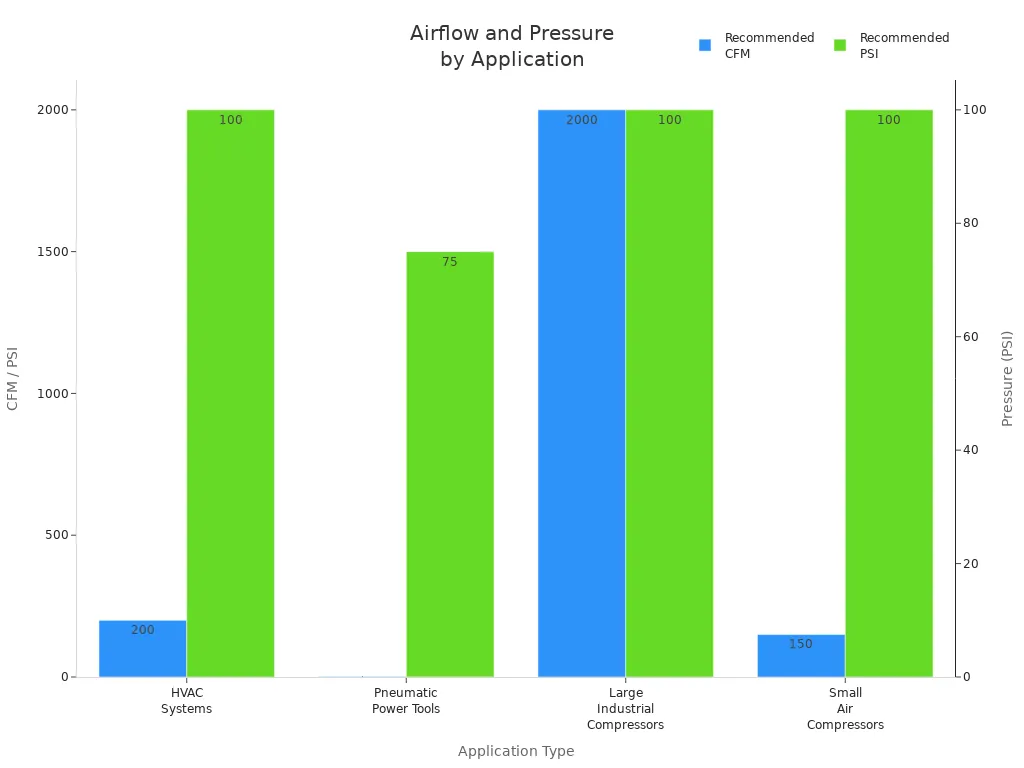
You can also see the best ranges in this table:
Application Type | Recommended CFM | Recommended PSI |
|---|---|---|
HVAC Systems | 200 CFM | 100 PSI |
Pneumatic Power Tools | 2 CFM | 75 PSI |
Large Industrial Compressors | 2000 CFM | 100 PSI |
Small Air Compressors | 150 CFM | 100 PSI |
Note: Always check what each tool and machine needs. Add 20–30% more CFM and 10–15% more PSI to be safe.
Environment
Where you use your compressor changes how it works. If you use it outside, you need to keep it safe from rain, dust, and heat. Wet air can make water build up inside and cause rust. You must keep your system dry to stop damage. Temperature is important too. Compressors work best between 10°C and 29°C. If it gets too hot, the compressor can overheat and not work well. Cold weather can freeze parts and lower the air pressure.
Tip: Pick a compressor that suits where you will use it. Electric compressors are good indoors because they are quiet and do not make fumes. Diesel compressors are better for outside and far away places, but only use them outdoors.
Check your air system often. Look for water, rust, or if it gets too hot. This helps your system stay safe and work well.
Compressor Types
Picking the right compressor helps you finish work faster. It also keeps you safe. There are three main kinds of industrial air compressors. These are rotary screw, reciprocating, and portable diesel air compressor. Each one is good for different jobs and places.
Rotary Screw
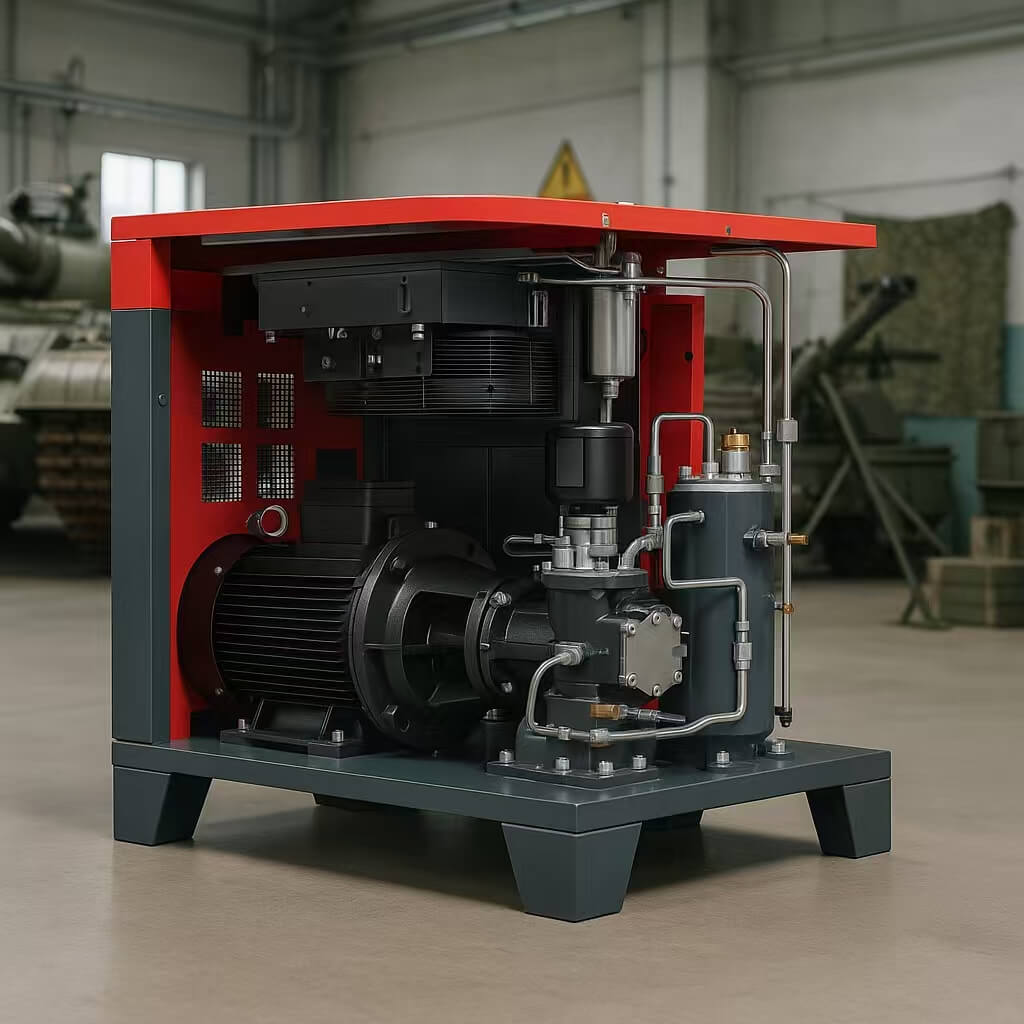
Rotary screw air compressor units are used in factories and workshops. They can run all day without stopping. These compressors use two screws to press air together. This makes them work well and use less energy. They are quiet and do not get very hot. Sollant makes rotary screw air compressor models for hard jobs. You can trust them for building, car work, and making things. These compressors do not need much fixing because they have fewer parts. You save money because they last a long time.
Tip: Pick rotary screw air compressor systems if you need air for many hours.
Here is a table that shows how rotary screw and reciprocating compressors are different:
Feature | Rotary Screw Compressors | Reciprocating Compressors |
|---|---|---|
Efficiency | High efficiency, built for continuous use | Efficient for intermittent use |
Maintenance Needs | Lower maintenance, fewer moving parts | Higher maintenance, more frequent service |
Cost | Higher upfront investment | Lower initial cost |
Lifespan & Durability | Long-lasting in tough environments | Shorter lifespan under heavy loads |
Noise Levels | Quieter operation | Louder operation |
Duty Cycle | 100% duty cycle | 20-30% duty cycle |
Heat Generation | Generates less heat | Generates more heat |
Reciprocating
Reciprocating compressors use pistons to press air together. You will see them in small workshops and places that do not need air all the time. These compressors are good for short jobs. They give strong air for tasks that need power. Sollant has reliable reciprocating compressors for light and medium jobs. They are easy to look after because they are simple. They cost less at first, but you might need to fix them more.
Here are the main good and bad points:
Advantages:
Work well for short jobs
Can be used for many tasks
Good for light work
Cheap to buy
Disadvantages:
Make a lot of noise
Air flow is not steady
Get hot quickly
Need fixing often
Note: Use reciprocating compressors for jobs that do not need air all day.
Portable Diesel Air Compressor
A portable diesel air compressor is needed for outdoor or far away jobs. These compressors use diesel fuel, so you do not need electricity. They are strong and easy to move. Sollant makes portable diesel air compressor units for building sites and road work. You can use them where there is no electric power. They work well in rough places and give steady air.
Portable diesel air compressor models let you work anywhere. They are easy to move and work hard. Electric compressors save energy and are cheaper to look after, but they need power. Diesel compressors are best for outside jobs and places far from buildings.
Tip: Pick a portable diesel air compressor for far away and hard jobs.
Key Features
Specifications
When you pick a portable compressor, look at its main features. The most important things are cfm, required psi, and power source. These numbers show how much air the compressor gives and how strong the pressure is. You must match the cfm and psi to your tools for best results. If you use many tools at once, you need more cfm. The table below lists the main things to check:
Specification | Description |
|---|---|
Airflow (cfm) | Portable models give between 35 and 800 cfm. |
Pressure (PSI) | They work from 100 to 218 PSI. |
Horsepower (HP) | Shows engine size; more HP means more power for big tools. |
Check the voltage and power rating too. These features help your compressor work well. Sollant makes compressors with smart controls. You can change cfm and pressure for each job. This gives you more choice and better results every time.
Efficiency
Energy efficiency is very important when you choose a compressor. Compressors that save energy help you spend less and waste less. Sollant uses new technology so each compressor uses less energy. You can see the good points in the table below:
Feature | Benefit |
|---|---|
Energy Efficiency | |
Reduced Maintenance | Fewer emergency repairs |
Longer Equipment Life | Costs less to own over time |
Stable Air Pressure | Less waste and better work speed |
Efficient compressors give steady air and lower costs. You can use your tools longer and finish more work. Sollant’s compressors help you get the best results and save energy every time.
Durability
You need a compressor that works well in tough places. Durability is one of the most important features for any industrial compressor. Sollant makes compressors with strong parts and smart designs. These features help your compressor last longer, even in hard places. The table below shows what makes a compressor strong:
Design Features / Materials | Description |
|---|---|
Optimised Airflow | |
High-Performance Fans | Keep the compressor cool when used a lot. |
Improved Heat Exchangers | Cooler running for better results. |
Recycled and Sustainable Materials | Good for nature and very strong. |
Biodegradable Lubricants | Safe for nature. |
Oil-Free Designs | No chance of oil getting into the air. |
Modular and Serviceable Designs | Easy to fix and look after. |
Sollant’s compressors use these features to give you reliable air and good results every day.
Noise
Noise can make work less safe and less comfortable. You want a compressor that does not make much noise. Different compressors make different amounts of noise. The table below shows the usual noise levels:
Compressor Type | Best For | |
|---|---|---|
Ultra-Quiet Pancake Compressor | 40-45 | Small workshops, inside jobs, quiet places |
Low-Noise Piston Compressor | 55-60 | Light work, home garages |
Industrial-grade Compressors | Over 90 | Big jobs and heavy work |
Manufacturers use many ways to make compressors quieter. You can use a muffler, rubber pads, or wrap the compressor in blankets. Putting the intake outside or using soundproofing helps too. Sollant makes compressors with these features, so you get better results and less noise at work.
Industrial Air Compressor Applications
Manufacturing
Industrial air compressors are used a lot in factories. They help run tools and keep machines working. Compressed air is needed for cutting and welding. It also helps push pieces out of moulds. You use it to check machines and change how they work. Portable diesel air compressors help with jobs like screwing, tightening nuts, and packing things. They are used for cleaning, painting, and sandblasting. Robots and conveyor belts need compressed air to move. Sollant gives you compressors that match your job. You can get steady airflow or special filters. Sollant’s parts help keep your system clean and working well. This means less time fixing things and lower costs.
Common manufacturing uses for portable diesel air compressors:
Cutting and welding
Pushing pieces out of moulds
Blowing up tanks or bottles
Sandblasting and finishing metal
Moving machines automatically
Cleaning and packing
Tip: Pick a compressor with the right CFM and PSI for your tools. Sollant has custom choices for every industrial job.
Construction
On building sites, portable diesel air compressors are needed for many jobs. They power drills, hammers, and nail guns. You use them for painting, sandblasting, and running big machines. Mobile compressors are best because you move around a lot. Sollant makes compressors for hard places. They work well and are easy to move.
Requirement | Description |
|---|---|
CFM | Make sure the compressor’s CFM fits your tools. |
PSI | Most building tools need about 150 PSI. |
Job Site Location | Portable diesel air compressors are good for moving and rough ground. |
Sollant helps you at every step of your project. Their compressors work in dust, heat, and rain. This keeps your work going.
Remote Sites
Remote places are hard to work in. You are far from power and help. Portable diesel air compressors let you work on your own. Sollant’s compressors use IoT to watch your machines from far away. You get alerts if something goes wrong. You can fix problems fast. This keeps your machines safe and stops delays. You protect important data and make sure new systems fit with old ones.
How portable diesel air compressors help remote sites:
Let you watch and get alerts from far away
Work without needing electricity
Handle tough weather and ground
Make fixing and looking after machines easier
Sollant gives you compressors with special features for remote jobs. You get steady air wherever you work. You also get help with fitting and keeping things safe.
Note: Sollant’s portable diesel air compressors help you work far away and in hard places. Your work keeps going without problems.
Maintenance & Reliability
Routine Care
You must look after your compressor every day. This helps it work well and last longer. Here are some easy things you should do:
Check the oil and fluids in the engine and compressor each day.
Start and stop the compressor the right way. Let it cool for five minutes before you turn it off.
Clean dust collectors and coolers often, especially if your job is dirty.
After 50 hours, check the compressor for dirt or small bits.
Look at the compressor oil through the sight glass when it is humid.
Keep spare parts ready so you can fix problems fast.
These tips help your industrial air compressors work their best. You keep the air clean and your tools safe.
Doing these things often keeps your compressor running smoothly. You stop sudden breakdowns and keep your compressed air system strong for all your jobs.
Long-Term Support
Long-term support helps you feel safe. Top manufacturers give services to help you use your compressor for many years. You get help with setting up, fixing, and regular checks. The table below shows what you get:
Service Type | Description |
|---|---|
Installation | Skilled workers set up your compressor and make sure it fits your needs. |
Repair | Full repair service with real parts and emergency help anytime. |
Preventive Maintenance Program |
These services help your compressed air system work well for all jobs. You save money and avoid long stops at work.
sollant Service
Sollant gives you strong help for your compressor. You get training, technical help, and a global dealer network. This means you always have someone to help with tips and repairs. The table below shows how sollant helps you:
Aspect | Description |
|---|---|
Technical Training | Dealers get training to give you the best service for your industrial air compressors. |
After-Sales Service | Dealers have spare parts and guides to help you quickly. |
Warranty & Service Contracts | You can get longer warranties and service plans for your compressor. |
Sollant’s help keeps your compressed air system reliable. You get help for all your needs and jobs. With sollant, you know your air compressors will work well for a long time.
Compressor Dealers
Dealer Support
Compressor dealers help you get the best from your compressed air systems. You ask them for advice and technical help. They give you spare parts quickly. Dealers connect manufacturers and users. They help you track orders and manage supplies. This stops delays and keeps your work going. Dealers store and deliver compressors and parts. You always have what you need when you need it. You can plan your jobs better because your air supply is safe.
Dealers also teach you and give technical help. Many offer hands-on lessons at their centres. You learn how to use and look after your compressor safely. Some, like BAUER and Ariel, teach at their sites or yours. You get expert tips on choosing the right compressor and accessories. This help lets you use your compressors better and avoid mistakes.
Dealer | Training Type | Location | Description |
|---|---|---|---|
BAUER | On-site and Off-site | BAUER Training Facility, Norfolk | Full training on compressor use, taught by experts. |
Ariel | Instructor-led Course | Ariel Training Centre, Mount Vernon | Practical training focused on compressor skills and efficiency. |
Tip: Pick dealers who give good technical help and training. This keeps your compressed air system working well.
sollant Partnerships
If you work with sollant, you get more than just good compressors. Sollant works with dealers all over the world. You get reliable products and great service. Sollant helps dealers make the supply chain better. This means you wait less and pay less. You get tools to manage stock, so you always have the right compressor.
Sollant trains dealer teams all the time. You get top service and repairs for your compressors. Sollant checks every compressor to make sure it is high quality. You get compressors that save energy and have smart cooling and filters. These features help you spend less and stop breakdowns.
Benefit | Description |
|---|---|
Energy Efficiency | Special inverter technology cuts energy use by up to 30%. |
High Performance | Strong parts make compressors last long and work well. |
Advanced Cooling and Filtration | Big radiator and many filters keep your compressor working well. |
Low Noise | Runs under 65 dB, good for indoor jobs. |
Intelligent Control System | Touchscreen and automatic fault checks make it easy to use. |
Versatile Applications | Works for factories, car jobs, and food and drink places. |
Sollant knows what you need and tries to do even better. You get new compressor ideas and strong dealer help. Sollant and its dealers help you keep your compressed air systems working well and efficiently.
When you pick an industrial air compressor, make a list of your air tools. Write down their ratings. Match the compressor’s CFM and PSI to your needs. You can choose single-stage or two-stage compressors. These help you work more efficiently. Oil-free compressors are good for some jobs. Oil-lubricated compressors suit other jobs. Looking after your compressor often stops it from breaking down.
If you work with trusted brands like sollant, you get help all the time. You get training, technical support, and special maintenance plans. This teamwork helps you do well for many years. Your compressor keeps working smoothly.
Customisation Service | Description |
|---|---|
Voltage Customisation | Makes sure the compressor fits your place and job. |
Tailored Power and Capacity | Helps your compressor match your work needs. |
Pressure Precision | Sets the compressor for your process. |
Advanced Features | Adds smart controls and saves energy. |
Safety Enhancements | Makes your compressor safer to use. |
Always think about what you need, the main features, and dealer help. Sollant gives expert advice and custom choices for every job.
FAQ
What size compressor do you need for industrial tools?
You should check the air requirements for each tool. Add up the CFM needed. Choose a compressor with a little extra capacity. This helps you avoid pressure drops and keeps your tools working well.
How often should you service your compressor?
You should inspect your compressor weekly. Clean filters and check oil levels. Schedule a full service every six months. Regular care helps your compressor last longer and work safely.
Can you use a compressor outdoors?
You can use a compressor outdoors if it has weather protection. Portable diesel models work best for rough sites. Always keep your compressor dry and shielded from rain or dust.
What is the difference between oil-free and oil-lubricated compressors?
Oil-free compressors give you cleaner air. These suit food, drink, and medical jobs. Oil-lubricated compressors work well for heavy tasks. You should pick the type that matches your job’s air quality needs.
How do you choose between electric and diesel compressors?
You should pick an electric compressor for indoor jobs. These run quietly and do not make fumes. Diesel compressors suit outdoor or remote sites. They give you strong power without needing electricity.
Request a Quick Quote Now
How to do my business well ?
- Market situation
- Technology configuration
- Strike Price
- exclusive agency
- Import and export assistance
- More…

