
How to Prevent Moisture Problems with Screw Air Compressor Air Dryers
Moisture in compressed air systems can cause a variety of serious issues. You may notice problems such as:
Frozen control lines or air leaks
Bacterial growth that threatens product safety
Risk/Cost | Description |
|---|---|
Corrosion | Moisture leads to corrosion of fittings, valves, tanks, and electronic components, increasing maintenance costs. |
Reduced Product Quality | Moisture can cause defects in products, especially where precision matters. |
A screw-air-compressor-air-dryer helps by removing excess moisture, protecting your equipment, and ensuring reliable operation. Sollant’s advanced solutions provide you with the expertise and technology needed to maintain high standards in any industry.
Table of Contents
Key Takeaways
Moisture in compressed air can cause serious damage, including rust, corrosion, and reduced product quality. Keep relative humidity below 50% to prevent these issues.
Using a screw-air-compressor-air-dryer removes excess moisture, protecting your equipment and ensuring reliable operation. Choose between refrigerated and desiccant dryers based on your needs.
Regular maintenance is crucial for air dryers. Inspect oil levels, check for water collection, and clean filters to keep your system running efficiently.
Select the right air dryer by considering dryer type, sizing, dew point rating, and energy efficiency. Proper placement after the compressor maximizes moisture removal.
Sollant offers tailored air dryer solutions and support to help you maintain dry air, improve equipment longevity, and enhance product quality.

Prevent Moisture Damage
Moisture Damage Risks
Moisture enters compressed air systems in several ways. You may not see it, but atmospheric air always contains water vapor. When you run your compressor, the process of compressing and cooling air causes this vapor to condense into liquid water. Even on a typical day at 80°F with 75% relative humidity, every 1,000 cubic feet of air can bring in about 0.15 gallons of water. This adds up quickly and creates a significant risk for your equipment.
Tip: Dry air is essential for your system. You should keep relative humidity below 50% to avoid corrosion and other problems.
The effects of moisture damage can be both immediate and long-term. Here is a quick overview:
Effect | Description |
|---|---|
Loss of lubrication | Moisture washes away lubricants, causing parts to wear out faster. |
Corrosion | Water leads to rust and weakens metal components, reducing their lifespan. |
Pipe scale and rust | Scale builds up inside pipes, restricting airflow and lowering system performance. |
Increased costs | You may face unexpected shutdowns and repairs, which hurt your profits. |
Poor air quality | Rust and bacteria can enter your processes, affecting product quality and safety. |
Bacterial growth | Moisture creates a breeding ground for bacteria and mold, which can block airflow and cause health risks. |
Scientific studies show that moisture in compressed air systems can spoil products and damage equipment. If humidity rises above 50%, corrosion and maintenance issues become much more likely. Moist air also changes the way gas flows through your compressor, which can lower efficiency and increase the need for repairs. In industries like food processing, dry and clean air is not just important—it is required to meet safety standards.
How Air Dryers Work
You can prevent moisture damage by using a screw-air-compressor-air-dryer. This device removes water vapor from the air before it reaches your tools and machinery. Sollant air-dryer-for-air-compressor solutions use advanced technology to keep your air dry and your equipment safe.
Here is how moisture forms and how air dryers help:
Atmospheric air always contains some water vapor.
When you compress air, the temperature rises. As the air cools, water vapor condenses into liquid.
If you do not remove this moisture, it will flow through your system and cause damage.
Sollant air dryers use two main methods to prevent moisture damage:
Refrigerated air dryers cool the compressed air, causing water to condense so it can be drained away.
Desiccant air dryers use special materials to absorb water vapor, achieving very low dew points for sensitive applications.
Environmental factors like temperature and humidity affect how much moisture your system must handle. In hot or humid climates, air dryers must work harder. Sollant designs its dryers to handle these challenges, offering models that perform well even in tropical or coastal environments.
Note: Sollant air dryers help you maintain dry air, protect your equipment, and meet industry standards for quality and safety.
By choosing the right air dryer, you can prevent moisture damage, reduce maintenance costs, and keep your compressed air systems running smoothly.
Screw-Air-Compressor-Air-Dryer Solutions
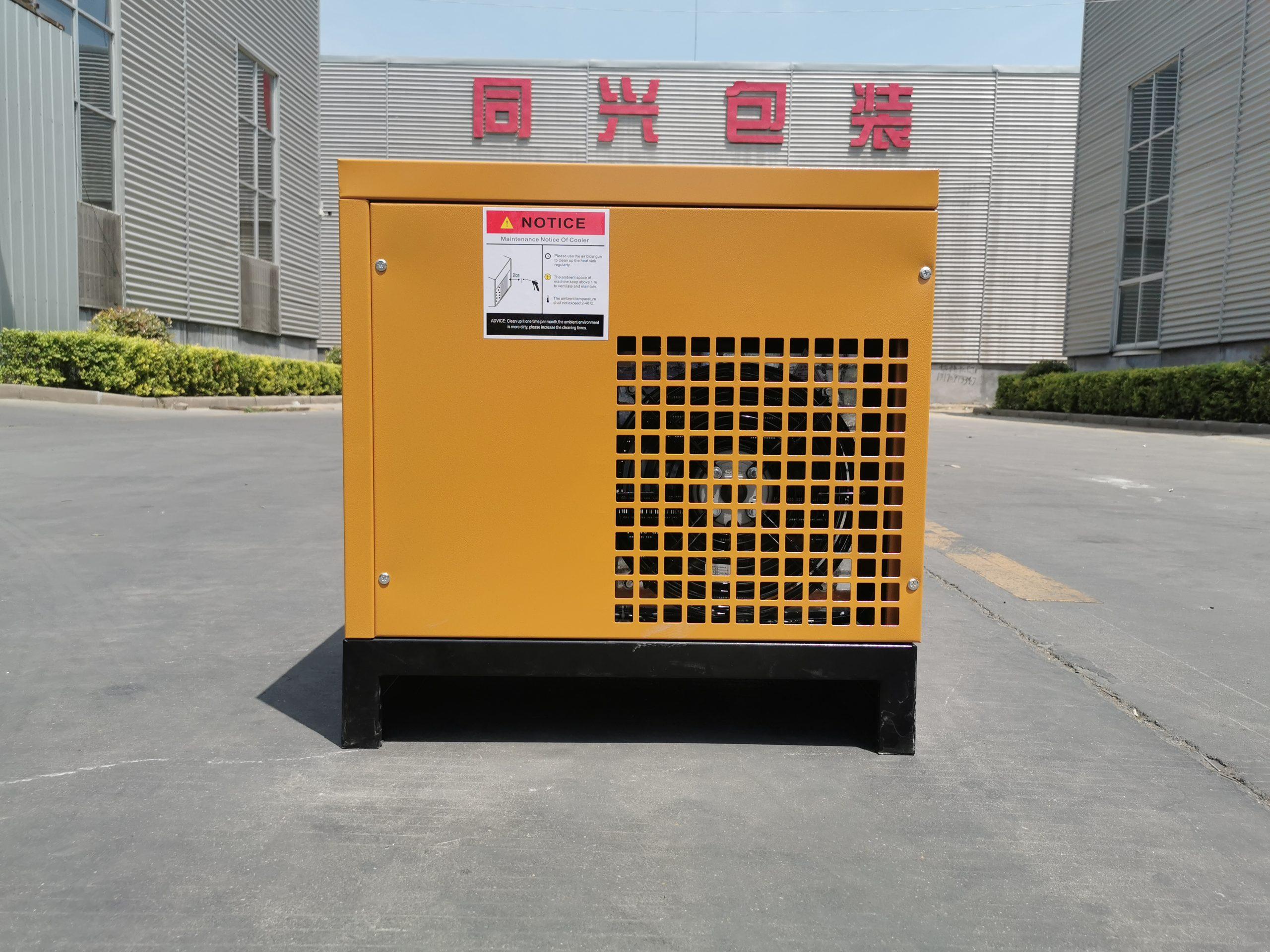
Sollant offers a complete line of screw-air-compressor-air-dryer solutions designed to meet the demands of modern industries. You can choose from different types of compressed air dryer systems, each with unique features and benefits. These dryers help you maintain dry, clean air, which protects your equipment and improves product quality.
Refrigerated Air Dryers
Refrigerated air dryers use a cooling process to remove moisture from compressed air. The system cools the air, causing water vapor to condense into liquid. You can then drain this liquid away, leaving dry air for your operations. Refrigerated dryers are popular because they are reliable and cost-effective.
Refrigerated air dryers work best for general industrial applications, such as powering pneumatic tools or running assembly lines. You will find them in places where moderate air quality is needed.
Here is a quick comparison of features:
Feature | Refrigerated Air Dryers |
|---|---|
Dew Point | |
Moisture Removal Efficiency | Moderate |
Ideal Applications | Paint spraying, pneumatic tools, general assembly |
Mechanism | Heat exchange |
Energy Consumption | About 0.8 kW per 100 cfm |
Maintenance Frequency | Low |
Initial Cost | Low |
Refrigerated air dryers have a smaller carbon footprint and use environmentally friendly refrigerants. You can expect moderate energy use, which makes them a sustainable choice for many businesses. Most refrigerated dryers last between 10 and 20 years if you maintain them well.
Desiccant Air Dryers
Desiccant air dryers use special absorbent materials to attract and remove moisture from compressed air. These dryers can achieve very low dew points, making them ideal for sensitive applications. You will see desiccant dryers in industries that require ultra-dry air, such as electronics, pharmaceuticals, and food processing.
Desiccant air dryers reach dew points of -40°F or lower.
They provide high moisture removal efficiency.
You can use them in high-pressure systems and outdoor environments.
Feature | Desiccant Air Dryers |
|---|---|
Dew Point | -40°F or lower |
Moisture Removal Efficiency | High |
Ideal Applications | Electronics, pharmaceuticals, cold food storage, coating processes |
Mechanism | Adsorbent materials |
Energy Consumption | |
Maintenance Frequency | High |
Initial Cost | High |
Desiccant dryers use more energy than refrigerated dryers, but they deliver extremely dry air. You should consider them for critical applications where moisture can cause serious problems.
Sollant Product Advantages
Sollant’s screw-air-compressor-air-dryer solutions stand out for their advanced technology and customization options. You can select a compressed air dryer that matches your specific needs, whether you work in manufacturing, automotive, or food processing.
Sollant offers tailored designs, ensuring your air dryer is correctly sized and installed for maximum efficiency and lifespan.
Here are some advantages you get with Sollant:
Custom air dryer designs based on your actual requirements.
A comprehensive range of dryers for different industries.
High-density filter materials with nano-plating for efficient filtration.
Durable construction that resists chemicals, high temperatures, and deformation.
Lifespan of 10 to 20 years with proper maintenance.
Reliable performance in harsh environments.
Customization Option | Description |
|---|---|
Tailored Design | Custom air dryers designed for your specific needs |
Sizing and Installation | Ensures correct sizing and installation for best results |
Comprehensive Range | Wide selection for various industries and applications |
You can monitor key performance metrics to keep your screw-air-compressor-air-dryer running smoothly. Watch for dew point, pressure drop, temperature, and flow rate. These indicators help you spot problems early and maintain efficiency.
Sollant’s support team helps you select, install, and maintain your compressed air dryer, making sure you get the best results for your business.
Air-Dryer-for-Air-Compressor Selection

Key Selection Factors
Choosing the right air dryer for your screw air compressor system requires careful consideration. You need to match the dryer type and size to your compressor’s capacity and your application’s requirements. Refrigerated air dryers work well for most industrial uses, providing a dew point around 37°F. Desiccant dryers suit environments where you need extremely dry air, reaching dew points as low as -100°F.
You should look at several important factors:
Dryer Type: Decide between refrigerated or desiccant dryers based on your moisture control needs.
Sizing: Select a dryer with a capacity 10-20% higher than your compressor’s maximum flow rate. This ensures reliable operation.
Dew Point Rating: Lower dew points mean drier air, which helps prevent rust and machine failure.
Application Needs: Consider the specific requirements of your industry, such as electronics, food processing, or automotive.
Energy Efficiency: Choose models that help you save on energy costs.
Ambient Conditions: Check how temperature and humidity affect dryer performance.
Proper placement matters. Position your air dryer right after the compressor and before the receiver to maximize moisture removal.
You should also review certifications and standards. The table below shows some important ones:
Certification | Description |
|---|---|
Guarantees 100% oil-free air for critical industries | |
NFPA & CSA Code Compliant | Ensures safe and reliable operation in demanding environments |
Recognized performance standard for rotary screw compressors |
Sollant Support
Sollant helps you select the best air dryer for your system. You get access to customized solutions based on your airflow rate, pressure, and temperature needs. Sollant’s team guides you through sizing and placement, making sure your dryer fits your system and industry standards.
Sollant offers a proven track record with high-quality air dryers and positive customer reviews.
You can request tailored designs for unique industrial needs.
Sollant provides after-sales support, including warranties, maintenance, and technical help.
You benefit from competitive pricing and reliable service.
Sollant’s experts help you integrate your air dryer for optimal compressed air quality. Regular maintenance and technical support keep your system running smoothly. You can trust Sollant to deliver solutions that improve productivity, extend equipment life, and maintain high standards in your operations.
Maintenance for Moisture Damage Prevention
Routine Checks
Regular maintenance keeps your screw air compressor air dryer working at peak efficiency. You should inspect your system often to prevent water in your air lines and avoid costly repairs. Start each day by checking inlet pressure, temperature, and flow. Look for signs of water collection in the drain valves. Listen for unusual noises and confirm that cooling systems operate correctly.
Here is a simple checklist to guide you:
Inspect oil levels and lubrication daily.
Check dryer, coolers, and display readings weekly.
Clean drain valves and air filters monthly.
Change oil and replace oil filters every quarter.
Perform a comprehensive inspection of all system components annually.
Frequency | Maintenance Tasks |
|---|---|
Daily | Inspect oil levels, confirm cooling, check controls, look for damage, listen for unusual noises, drain condensate. |
Weekly | Check dryer, coolers, temperature, display readings, voltage, condensation, oil levels, belts. |
Monthly | Inspect and clean drain valves, air filters, check belts, examine hoses for leaks. |
Quarterly | Change oil, replace oil filter, examine safety valves, inspect pulley screws. |
Annually | Comprehensive inspection, replace air and oil separators, technician inspection. |
You should monitor moisture levels based on your industry and application. For critical uses, quarterly testing is recommended. Regulated industries may require annual or more frequent checks. ISO 8573 standards help you maintain safe moisture levels and prevent damage.
Tip: Always check for water collection in your air lines. Early detection helps you avoid corrosion and maintain air quality.
Troubleshooting
If you notice water in your air lines or poor dryer performance, act quickly. Common issues include moisture carry-over, high pressure drop, refrigerant leakage, and air leakage. Electrical problems and freezing in refrigeration dryers can also occur. Inspect drain valves for blockages or malfunction. Clean or replace them if you see water collection building up.
You may hear strange noises or see unexpected condensation. These signs often point to problems with drain valves or cooling systems. Address these issues before they lead to equipment failure.
Sollant provides strong after-sales support to help you resolve maintenance problems. Their customer-centric approach ensures rapid response and on-site support. Sollant’s team helps you maximize system value and maintain stable operations.
Aspect | Description |
|---|---|
After-sales service system | Sollant emphasizes the importance of a complete after-sales service system for air dryer maintenance. |
Rapid response | They ensure quick responses to equipment problems to maintain stable operations for enterprises. |
Customer-centric approach | Sollant focuses on user needs with streamlined pre-sales and after-sales service. |
On-site support | They provide on-site support to maximize customer value continuously. |
Note: Regular maintenance and prompt troubleshooting keep your air dryer running smoothly. Sollant’s support team stands ready to assist you with any issue.
Choosing the right screw-air-compressor-air-dryer protects your equipment and keeps your products safe. Sollant’s solutions offer proven benefits:
Benefit | Description |
|---|---|
Keeps air clean and dry, preventing contamination and spoilage. | |
Improved Longevity | Reduces corrosion, helping your equipment last longer. |
Energy Efficiency | Lowers compressor load, saving energy. |
Reduced Maintenance | Cuts repair costs by minimizing moisture damage. |
To get started:
Compare dryer types.
Calculate your system’s flow rate.
Review total costs.
Plan for regular maintenance.
Ongoing care improves efficiency, extends equipment life, and lowers costs. Assess your needs, reach out to Sollant for a quote, and invest in maintenance for lasting results.
FAQ
What types of air dryers can you choose from Sollant?
You can select refrigerated air dryers or desiccant air dryers. Refrigerated models suit general industrial use. Desiccant models provide ultra-dry air for sensitive applications like electronics or pharmaceuticals.
How often should you perform maintenance on your air dryer?
You should check your air dryer daily for oil levels and moisture. Clean filters and drain valves monthly. Replace oil and filters every quarter. Schedule a full inspection once a year.
Can you use Sollant air dryers in high-pressure environments?
Yes, Sollant offers air dryers designed for high-pressure systems. These models handle pressures above 1.2 Mpa and work well in demanding industrial settings.
How do you know which air dryer fits your compressor system?
You should match the dryer’s capacity to your compressor’s maximum flow rate. Consider your application’s dew point needs and energy efficiency. Sollant’s team can help you choose the best model.
What industries benefit most from Sollant air dryers?
Manufacturing, automotive, food processing, medical, and electronics industries use Sollant air dryers. You get reliable moisture control and improved air quality for your specific needs
Request a Quick Quote Now
How to do my business well ?
- Market situation
- Technology configuration
- Strike Price
- exclusive agency
- Import and export assistance
- More…

