
Why Screw Air Compressors Fail to Start and How to Fix It
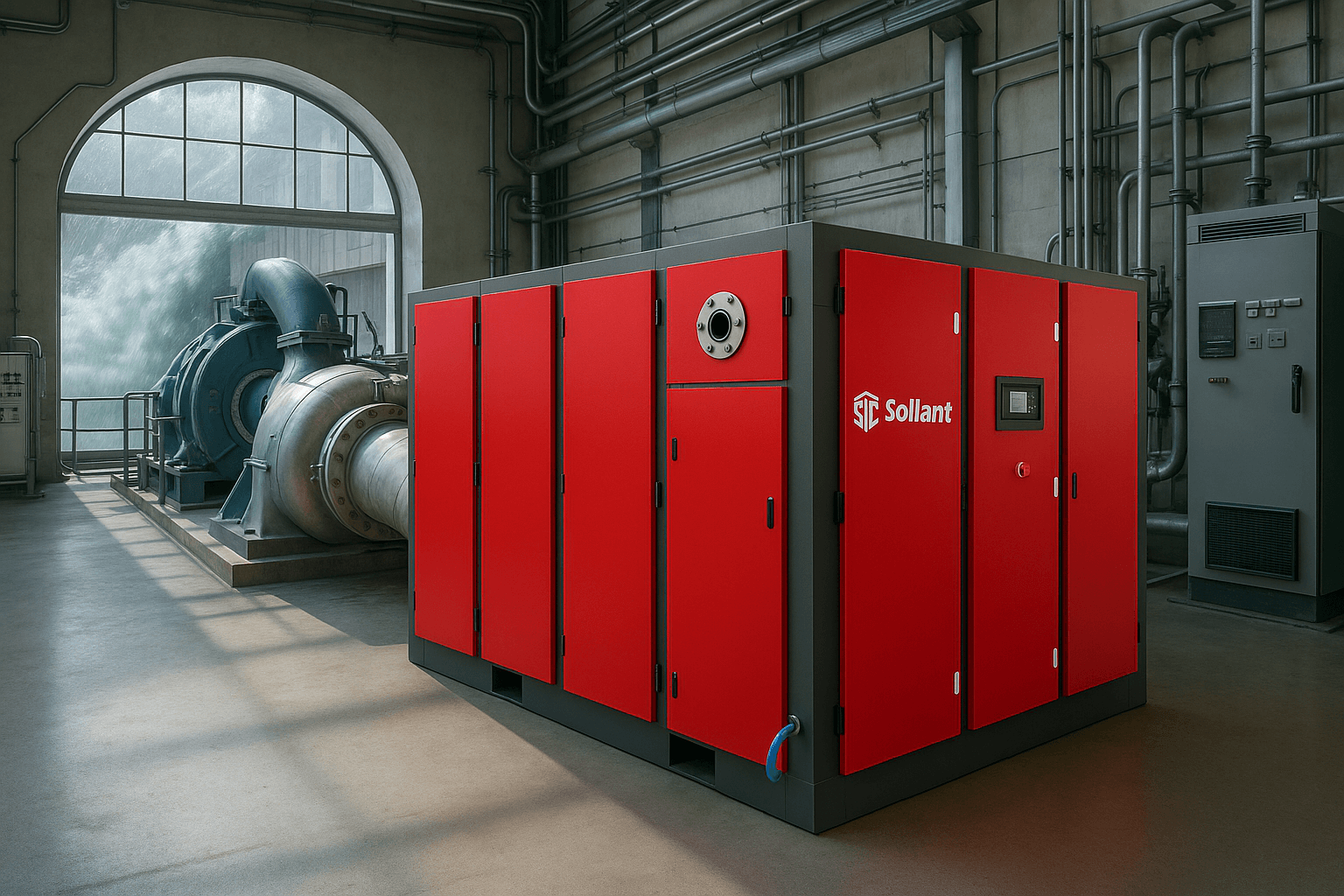
A Screw Air Compressor helps your factory work every day. If it does not start, your company can lose a lot of money each hour. Some factories lose up to $260,000 every hour when machines stop. Startup problems often happen because of power supply faults, old mechanical parts, control system mistakes, or problems with extra systems. Quick checks and easy fixes help you stop losing money. Sollant gives expert tips, so you get simple steps and advice you can use, if you work on the floor or manage the team.
Table of Contents
Key Takeaways
Electrical problems often stop the compressor from starting. Check the power supply first. Look at circuit breakers and wiring too.
Mechanical problems can also stop the compressor. Check parts like valves and bearings often. Make sure oil levels are good.
Control system faults can block startup commands. Check that sensors work well. Make sure controllers are working right.
Do routine checks to find small problems early. Follow a maintenance schedule to help your compressor. This saves you time and money.
Sollant gives expert help and good parts. They help keep your compressor working well and smoothly.
Causes of Screw Air Compressor Startup Failure
Electrical Problems
You need steady power to start your screw air compressor. Electrical problems are a big reason it might not start. If your machine will not turn on, check the electrical system first. Here are some usual electrical problems:
Fault Type | Description |
|---|---|
Blown Fuses | Stop power and keep the compressor from starting. |
Damaged Electrical Components | Stop the compressor from getting needed power. |
Poor Contact | Loose or rusty wires can block electricity. |
Low Power Supply Voltage | Not enough voltage means the compressor will not start. |
Motor Overload | Too much load can stop the motor from working. |
Internal Inverter Fault | Problems inside the inverter may need an expert to fix. |
💡 Tip: Always check the power source, circuit breakers, and wires before checking other parts.
Sollant makes compressors with good electrical parts to lower these risks. You get better startup and less downtime.
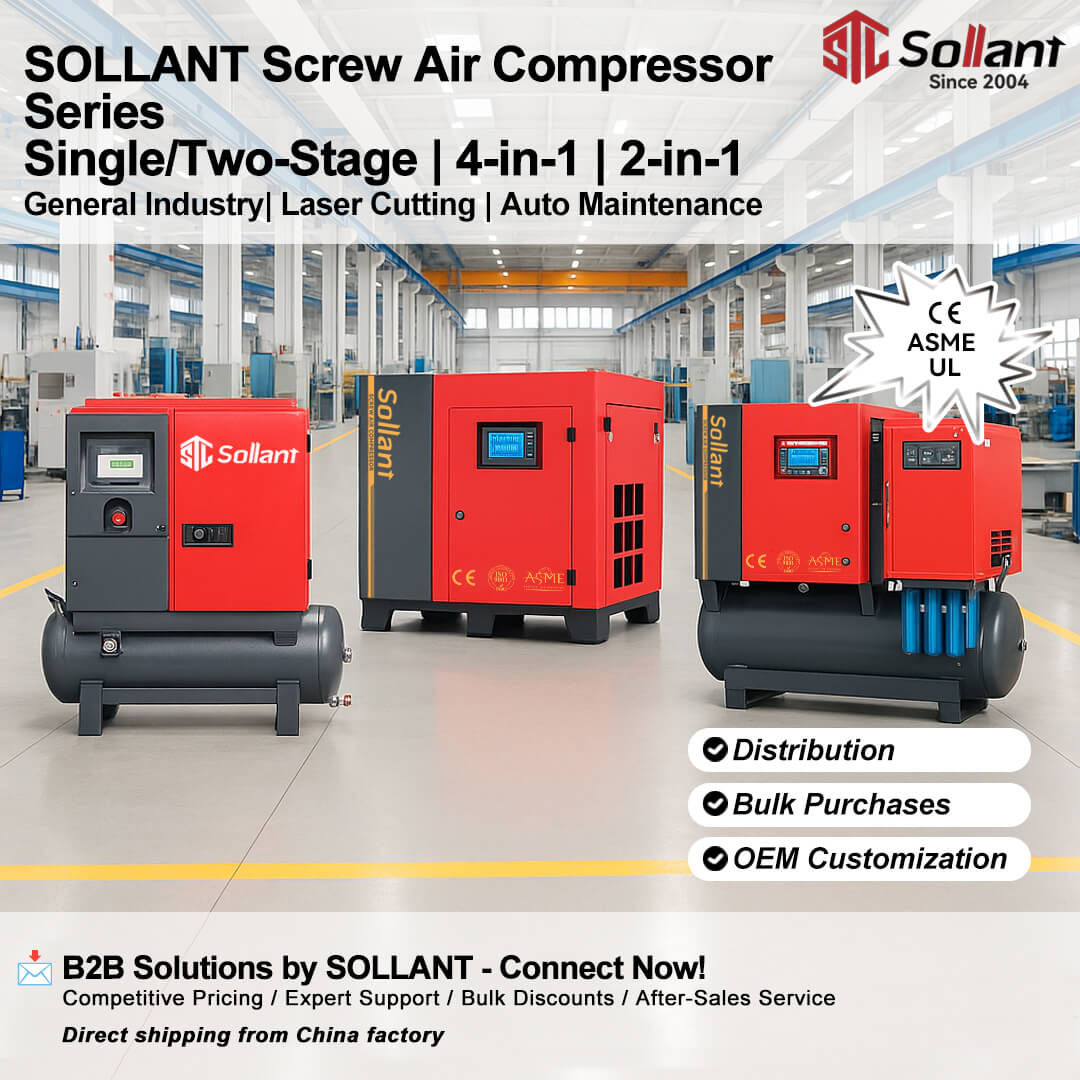
Mechanical Issues
Mechanical problems can also stop your screw air compressor from starting. Old or broken parts make more friction and make the motor work harder. Here are some common mechanical causes:
Unloading valve failure—The intake valve can get stuck and block air.
High temperature trip—If the temperature valve sticks, the compressor can get too hot and shut off.
Starting under pressure—If the system is not depressurized, the compressor may trip the air switch.
Excessive head resistance—Too much resistance can overload the motor.
Electrical device failure—Switch problems can stop the compressor soon after it starts.
You might also have trouble if parts are not lined up or if there is not enough oil. These problems make the compressor work harder and can cause startup failure. Sollant uses strong materials and careful assembly to help you avoid these problems.
Control System Faults
The control system is like the brain of your screw air compressor. If sensors or controllers break, the machine may not get the signal to start. For example, a broken pressure sensor can send the wrong message and stop the startup. Sometimes, the system thinks the pressure is wrong, even when it is not. This can block the start command.
You should also check the main controller or PLC. If there is a program mistake or a broken part, the compressor will not start. Sollant uses good control systems to help you avoid these problems and keep things running.
Auxiliary System Failures
Auxiliary systems help your screw air compressor work. Problems in these systems can turn on protection and stop the machine from starting. Here are some common auxiliary failures:
Bad capacitors can stop the motor from making enough force.
Broken motor windings mess up the electric field and stop startup.
Overload protection may turn on if the system gets too hot.
Check valve failure can cause air to flow back and add resistance.
Blocked intake filters stop air from coming in.
Air end bearings failure makes more resistance.
🔧 Note: Good oil and cooling are important. Too much heat or not enough oil can make starting hard or impossible.
Sollant’s compressors use strong filters and good cooling to lower these risks. You get longer use and fewer startup problems.
Diagnosing Startup Issues
If your Screw Air Compressor will not start, you need a simple plan. You should follow steps to find the problem fast and safely.
Safety Checks
Begin with safety first. Always turn off the power before touching the compressor. Use this table to help with your first checks:
Safety Check | Description |
|---|---|
Ensure Proper Oil Levels | Check the oil tank and oil quality to stop overheating. |
Inspect Air Filters and Valves | Clean or change filters and check the intake valve for good airflow. |
Evaluate Pressure and Temperature | Test sensors to make sure they work and are in the right range. |
Check Safety Mechanisms | Look at safety shut-offs and make sure the emergency stop is not pressed. |
Inspect Motor and Drive System | Check the motor and look at belts and couplings for damage or loose parts. |
Consider Ambient Conditions | Make sure there is enough air flow and check humidity to stop startup problems. |
⚠️ Tip: If you skip safety checks, you might miss the real problem. Many compressors sent for repair are not broken, which wastes time and money.
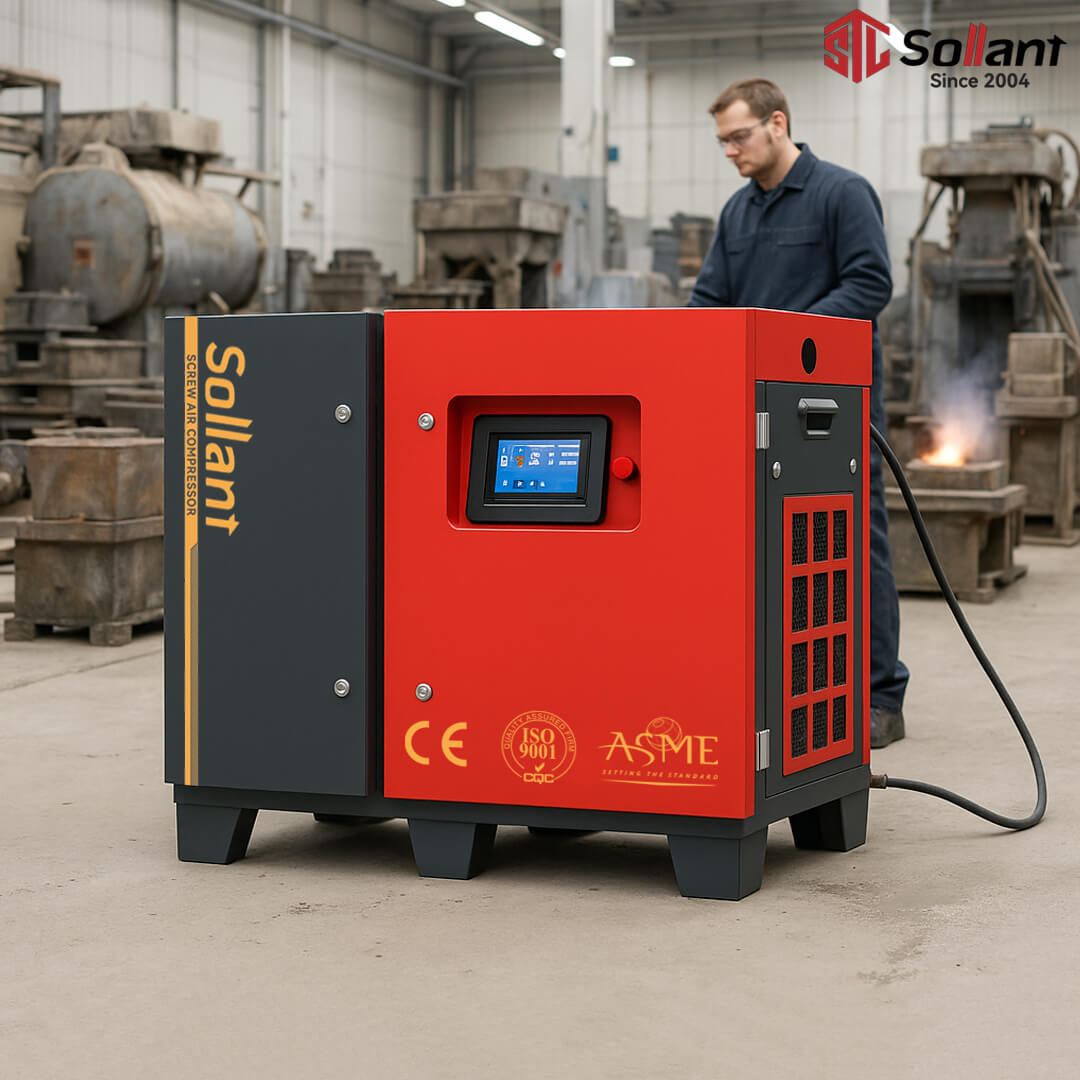
Power and Wiring Inspection
Next, check the power and wires. Use a multimeter to test each phase voltage. Make sure the three-phase power is even. Watch for these common problems:
Bad wires or loose connections
Not enough voltage or missing phase
Too many things on one circuit causing overload
Step | Possible Causes | Solutions |
|---|---|---|
1 | Power not connected or phase loss. | Check each phase voltage; make sure power is even. |
Control voltage fault. | Check transformer output; change it if needed. | |
Start button damaged. | Change or clean the button. | |
Thermal relay tripped. | Reset relay and check the motor load. | |
Damaged contactor. | Check and change if broken. | |
2 | Motor overload or jam. | Measure current; check the load. |
Worn bearings. | Change bearings. | |
Thermal relay set too low. | Reset relay. | |
Burnt contactor points. | Change or clean. | |
Poor insulation. | Test and fix. |
Mechanical Component Review
Look at the main parts of the compressor. Use your eyes and ears. Check for leaks, missing screws, or strange sounds. Look at these parts:
Mechanical Component | Issue Description |
|---|---|
Screw Elements | If not lined up, worn, or broken, they make the motor work harder. |
Motor | Problems can stop it from starting and make a humming sound. |
Bearings | |
Check Valve | A bad check valve can cause back pressure and make starting hard. |
👀 Note: Looking at your compressor every day helps you find problems early. Make sure all parts are tight and listen for odd noises.
Control Panel and Sensors
Check the control panel and sensors. If you have remote monitoring, use it. Watch for error codes or warning lights. Modern sensors help you:
Find problems fast with alerts
See failures before they happen
Watch vibration and temperature for early signs
Put sensors near bearings for best results. Use control panel data to plan repairs before the compressor breaks.
Auxiliary System Assessment
Do not forget the support systems. Check cooling fans, oil separators, and filters. Clean or change them if needed. Good support systems help your compressor run and stop downtime. If you have more than one compressor, a backup can help you keep working.
🛠️ Sollant Support: If you need help, Sollant has experts who can help you fix problems. Their team can guide you or come to your site.
Solutions for Screw Air Compressor Problems
Electrical Fixes
You can fix many startup problems by checking the electrical system first. Use this table to help you with repairs:
Electrical Fixes | Description |
|---|---|
Check Power Connections | Make sure the power cord is plugged in. Turn on the switch. Check that circuit breakers are not off. |
Inspect and Maintain the Motor | Look for damage or wear. If the motor uses too much current, replace it. Test the motor with a multimeter. |
Check the Starter and Capacitors | Look at the starter for problems. Test the capacitors. Replace any bad parts. |
Repair Damaged Wiring | Find wires that are broken or loose. Replace broken wires. Make sure all connections are tight. |
⚡ Tip: Always turn off the power before you work. This keeps you safe and protects your Screw Air Compressor.
Mechanical Repairs
Mechanical problems can stop your compressor from working. You need to check the main parts and fix any issues. Here are some common repairs:
Issue | Recommended Repair Techniques |
|---|---|
Too Much Oil in the Air | Service or change the oil separator. Clean the oil scavenge system. Check the oil check valve. |
Low Pressure And/Or Flow | Look for leaks in the system. Check the tank valve. Clean or change blocked filters. |
Frequent Shutting-Off | Make sure oil flows well. Clean heat exchanger fins. Check for blocked filters or bad temperature sensors. |
Test safety valves to make sure they work.
Calibrate pressure gauges for correct readings.
Sollant uses strong filter materials with nano-plating. These filters catch metal bits and dirt in the oil. Clean oil goes into the main engine. This keeps your compressor safe. You get longer use and fewer breakdowns.
Feature | Description |
|---|---|
Filter Material | Strong filter material |
Surface Treatment | Nano-electroplating |
Filtration Accuracy | |
Service Life | Makes the equipment last longer |
Control System Solutions
Modern control systems help you find and fix problems fast. You can use smart controllers and monitoring tools to keep your Screw Air Compressor running well.
Control System Solution | Description |
|---|---|
Xe-50M Series Rotary Compressor Controller | Gives you full control and easy use. |
Xe-145M Series Rotary Compressor Controller | Has strong connections and simple checks. |
IntelliFlow Electronic Flow Controller | Keeps pressure steady and saves air. |
X8i System Automation | Manages many compressors for better efficiency and lower energy costs. |
AIRGuard Wireless Remote Monitoring | Lets you watch your compressor from far away for better reliability. |
Surge control changes how the compressor works in real time.
Performance mapping shows how your compressor works.
IoT data logging helps you plan maintenance before problems happen.
Sollant gives you control parts you can choose. Pick features that fit your needs. Smart monitoring helps you spot problems early. Diagnostic tools save you time and energy. Visual graphics make it easy to see how your compressor is working.
Feature | Benefit |
|---|---|
Advanced Monitoring | Helps you find problems early and keep performance high. |
Diagnostic Tool | Gives you clear data for fast maintenance. |
Visual Graphics | Shows you the compressor’s state and any issues. |
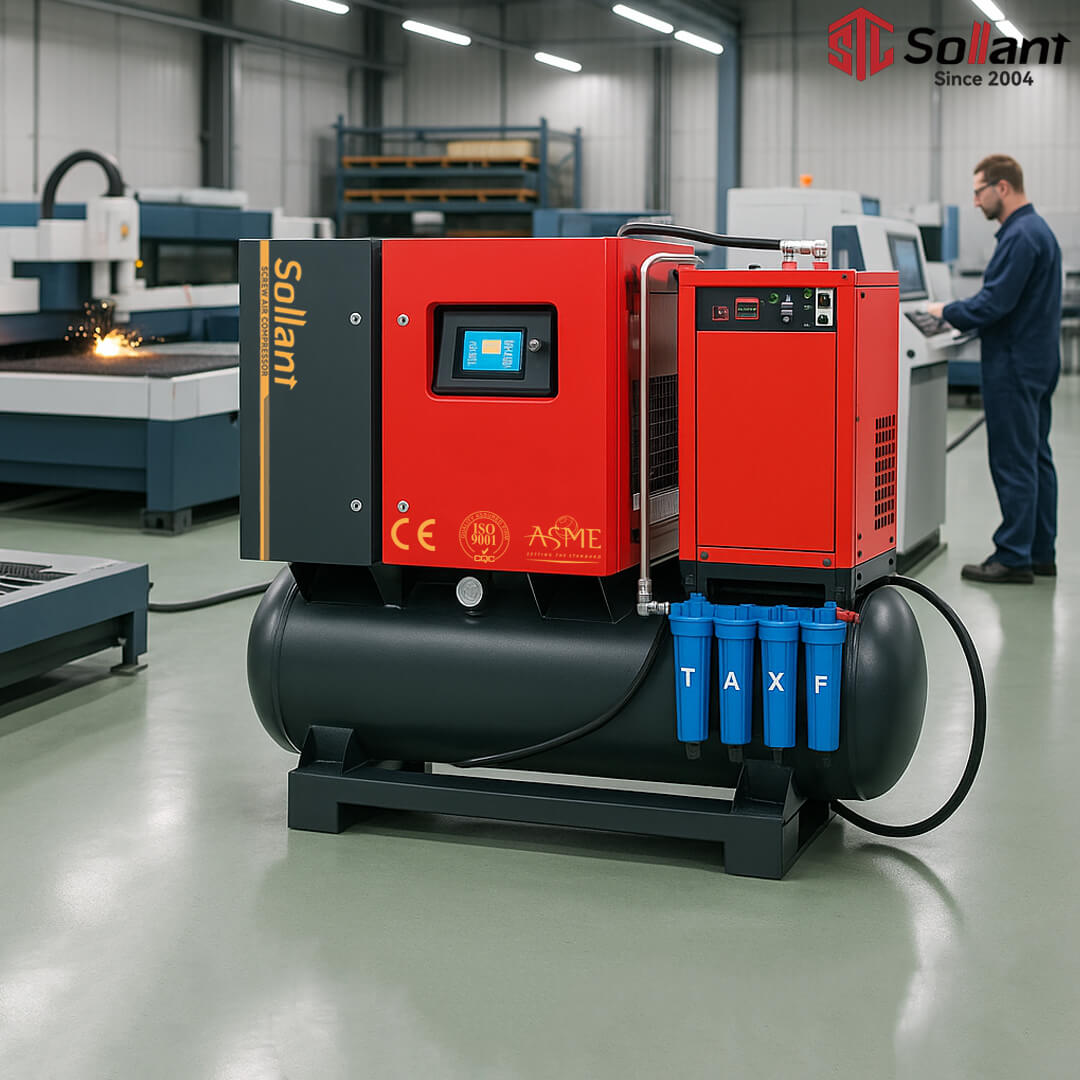
Auxiliary System Maintenance
Auxiliary systems help your compressor work. You need to keep them clean and working well. Follow these steps:
Clean or change cooling fans and heat exchangers.
Change oil separators and air filters often.
Check for leaks in pipes and valves.
Make sure safety devices work right.
🛠️ Note: Good care of auxiliary systems lowers the risk of startup problems and helps your compressor last longer.
Sollant Parts and Support
Sollant gives you strong parts and expert help. You can pick high-density filters with nano-plating for cleaner oil. These filters have even pore size and low resistance. This means more oil flows and less dirt gets to the engine. You get longer use and less downtime.
Sollant also gives you parts you can choose. Pick the size and features that fit your factory. Sollant engineers help you install and care for your compressor. Training and support help you use your equipment the right way.
If you need help, Sollant’s team can guide you or visit your site. You get fast answers and good service.
Preventive Maintenance Tips
Routine Checks
You should check your compressor often to keep it running well. Look for oil leaks, listen for strange noises, and make sure all parts are tight. Clean or replace air filters when you notice a pressure drop. Check belts and couplers every month. Grease the motor bearings as needed. Clean the cooler and pre-filters if you see dust building up.
🛠️ Tip: Regular checks help you find small problems before they become big ones.
Maintenance Schedule
A good schedule helps you avoid downtime and costly repairs. Follow the manufacturer’s guide for each task. Use this table to plan your work:
Maintenance Task | Frequency |
|---|---|
Change the oil | As per manufacturer’s schedule |
Change oil filters | |
Inspect air filters | When pressure drops |
Check belts and couplers | Monthly |
Grease motor bearings | Regularly |
Clean cooler and pre-filters | As needed |
Sticking to a schedule keeps your Screw Air Compressor efficient and reliable.
Record Keeping
Write down every check and repair you do. Keep a log of oil changes, filter replacements, and any parts you fix. Note the date and what you found. This record helps you spot patterns and plan future maintenance. Good records also make it easier to explain problems if you need help from a service team.
Track oil and filter changes.
Record pressure, temperature, and running hours.
Note any unusual sounds or shutdowns.
Sollant Service Recommendations
Sollant offers support and training to help you care for your compressor. Their team can show you how to do checks and repairs the right way. You can ask for custom maintenance plans that fit your factory. Sollant’s experts help you lower costs, save energy, and keep your equipment running longer. Regular training and support mean you always know the best way to keep your compressor in top shape.
💡 Note: Preventive maintenance saves money, reduces downtime, and extends the life of your compressor.
You should check your Screw Air Compressor often. Fix problems as soon as you find them. Brands like Sollant help you work better and stop delays. If you follow the steps and tips, you can avoid problems later.
Many startup problems are easy to fix. You can solve them if you use good steps and take care of your compressor often.
FAQ
Why does my screw air compressor make a buzzing sound but not start?
A buzzing sound means the motor tries to run but cannot turn. You should check for stuck mechanical parts, low voltage, or a faulty starter. Fix these issues to help your compressor start.
How often should you change the oil and filters in a screw air compressor?
You should change the oil and filters every 2,000 to 4,000 hours. Always follow the manufacturer’s guide. Clean oil and filters help your compressor run smoothly and last longer.
What should you do if the compressor trips the circuit breaker?
First, turn off the power. Check for overload, short circuits, or loose wires. Replace damaged parts. Reset the breaker after fixing the problem. If it trips again, call a technician.
Can you start the compressor if the air tank is full?
No, you should not start the compressor if the air tank is full. High pressure stops the compressor from starting. Release some air from the tank before you try again.
Who can you contact for expert help with screw air compressors?
You can contact Sollant’s support team for expert help. They offer advice, troubleshooting, and on-site service. Visit Sollant’s website or email info@sollant.com for assistance.
Request a Quick Quote Now
How to do my business well ?
- Market situation
- Technology configuration
- Strike Price
- exclusive agency
- Import and export assistance
- More…

