
Screw Air Compressor Tripping and Shutdown Fault Analysis: Causes, Troubleshooting, and Prevention
Screw air compressors are critical equipment in industrial production, but unexpected tripping and shutdowns can disrupt operations and accelerate wear and tear due to frequent start-stop cycles. These shutdowns are usually triggered by protection mechanisms or core component failures. Blindly restarting the machine can worsen the problem. This article analyzes four common causes of screw air compressor trips—overload, high temperature, pressure abnormalities, and electrical faults—and provides actionable troubleshooting and preventive strategies.
Table of Contents
1. Overload Trip: Motor “Overworked” Protection
Overload is the most frequent cause of screw air compressor shutdowns. It occurs when the motor current exceeds its rated value, triggering a thermal overload relay or VFD (Variable Frequency Drive) protection. Key inspection areas include excessive load and power transmission issues.
1.1 Excessive Main Unit Load
The compressor rotor is the machine’s core. Poor maintenance, degraded oil (e.g., water contamination or carbon buildup), or stuck intake valves can dramatically increase friction, causing a sudden spike in motor current. Inspection steps:
-
Check oil levels and oil quality (degraded oil appears black with a foul odor).
-
Disassemble and clean intake valves, replacing worn springs if necessary.
1.2 Misaligned Coupling
Motor-to-compressor couplings misaligned beyond 0.1 mm, or loose bolts, can create radial forces, resulting in uneven motor load, unusual noises, and high motor casing temperature. Solution: Use a dial indicator to check alignment and replace worn rubber buffers.
1.3 Motor Faults
Motor issues such as winding moisture, short circuits, or bearing wear can cause abnormal current. Use a multimeter to check winding insulation resistance (below 0.5 MΩ indicates issues). Bearings producing “grinding” sounds should be replaced with the correct type, applying high-temperature grease. Also, unstable three-phase voltage (>5% deviation) can affect motor performance—monitor supply voltage carefully.

2. High-Temperature Trip: Cooling System Failure
Screw air compressors typically operate between 75–95°C. Temperatures exceeding 105°C trigger thermal protection or PLC shutdowns. The main causes are excessive heat generation or blocked cooling paths.
2.1 Cooling System Blockage
-
Air-cooled compressors: Dust or oil buildup on fins reduces cooling efficiency. Use compressed air or cleaning agents to remove deposits.
-
Water-cooled compressors: Scale in pipes or partially closed valves can reduce flow. Check water pressure (0.2–0.4 MPa) and clean with descaling agents.
2.2 Lubrication Oil Issues
Low oil levels or wrong oil types reduce heat dissipation. Maintain proper oil levels and use only manufacturer-specified compressor oil. Check the oil separator return line for blockages to prevent insufficient lubrication and overheating.
2.3 Temperature Sensor Errors
Faulty sensors may trigger false high-temperature signals. Test sensors with a multimeter and simulate temperature signals per manufacturer instructions. Replace or resecure sensors if necessary.
3. Pressure Abnormalities: Overpressure or Underpressure Protection
Pressure-related trips fall into two categories: overpressure trips and low-pressure protection. Both are tied to the system’s pressure control logic.
3.1 Overpressure Trips
If intake valves are stuck open or pressure sensors fail, system pressure can exceed safe limits, triggering trips. Steps:
-
Manually release pressure via the storage tank relief valve.
-
Test intake valves for normal operation and replace faulty pressure sensors.
3.2 Low-Pressure Protection
Compressor models may include a minimum pressure protection (e.g., oil separator outlet <0.4 MPa). Issues such as leaking check valves or clogged oil separator filters can cause pressure drops and trigger shutdowns. Replace leaking valves and clogged filters, ensuring proper oil return.
4. Electrical Fault Trips: Control Circuit Disconnects
Electrical faults directly cut power to the compressor. Focus on control circuits rather than main power circuits.
4.1 Poor Wiring Connections
Loose or corroded terminals in the control cabinet (contactors, PLC I/O terminals) can increase resistance and cause sudden shutdowns. Inspect and tighten all terminals, sanding oxidized contacts if necessary.
4.2 Contactor or Relay Failure
Burnt contact points or coils in contactors/relays can disrupt power or control signals. Check for blackened contacts, measure coil resistance, and replace faulty components.
4.3 PLC Program Errors
PLC errors or damaged I/O modules can trigger trips. Check fault codes on the display (e.g., E03 = high temperature, E06 = overload) and follow manufacturer instructions. If no code appears, reprogram or replace the module.
5. Troubleshooting Principles and Preventive Measures
5.1 Troubleshooting Principles
-
Check fault codes first, then hardware.
-
Turn off power before dismantling components.
-
Use fault codes to narrow the scope and avoid unnecessary disassembly.
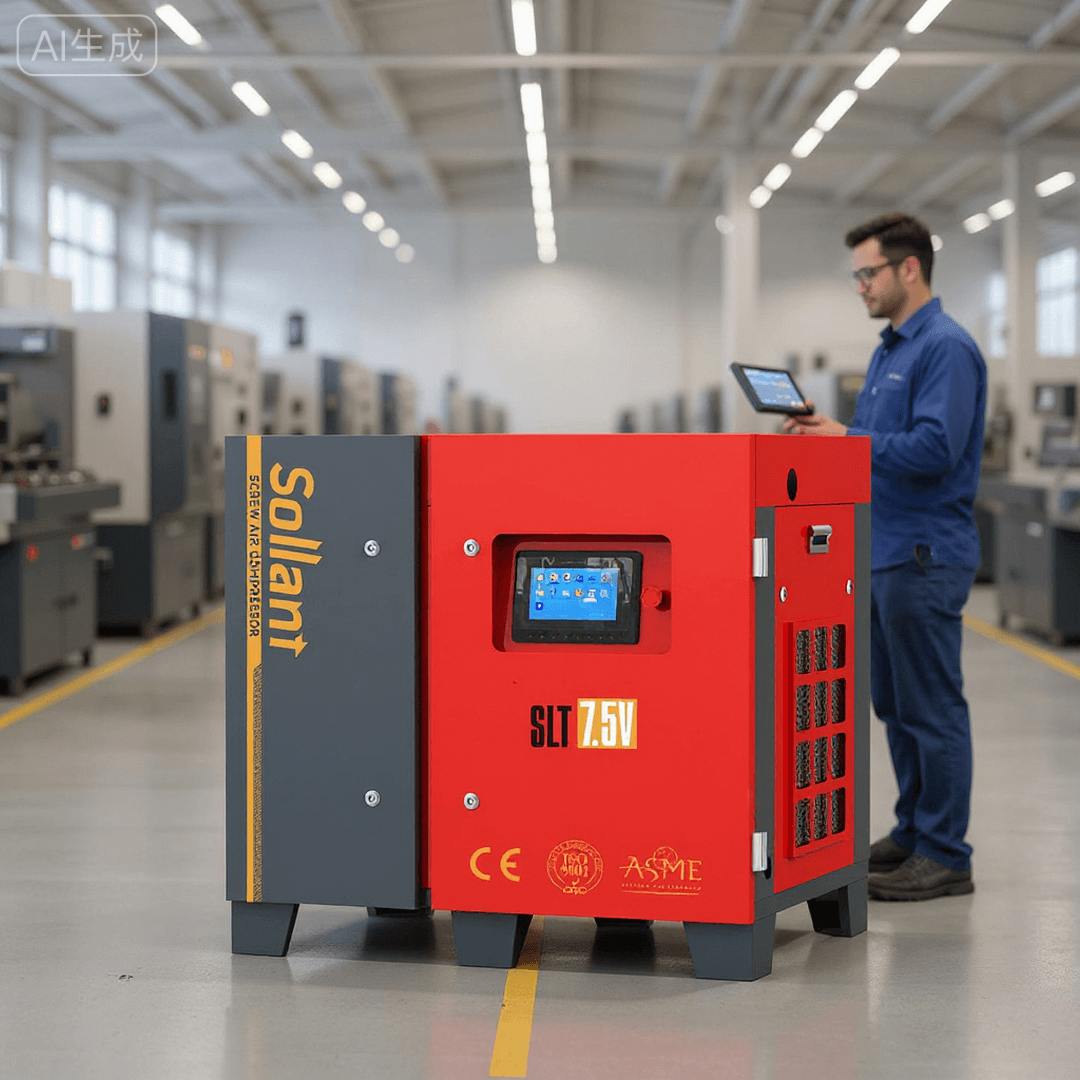
5.2 Preventive Measures
-
Scheduled maintenance: Replace lubricating oil and filters every 2000 hours; clean the cooling system monthly.
-
Real-time monitoring: Install current and temperature meters in the control cabinet to detect anomalies early.
-
Proper operation: Avoid frequent start-stop cycles; check oil level and voltage before startup; ensure system pressure is released after shutdown.
Conclusion
Screw air compressor trips are not sudden accidents but self-protection signals. By following the troubleshooting logic—check overload → inspect load, high temperature → check cooling, pressure → check control system, electrical → check circuits—most issues can be resolved within 1–2 hours. Routine maintenance is key to reducing trips and ensuring stable operation.
Request a Quick Quote Now
How to do my business well ?
- Market situation
- Technology configuration
- Strike Price
- exclusive agency
- Import and export assistance
- More…

