
Causes and Solutions for Refrigerated Dryer Dew Point Non-Compliant

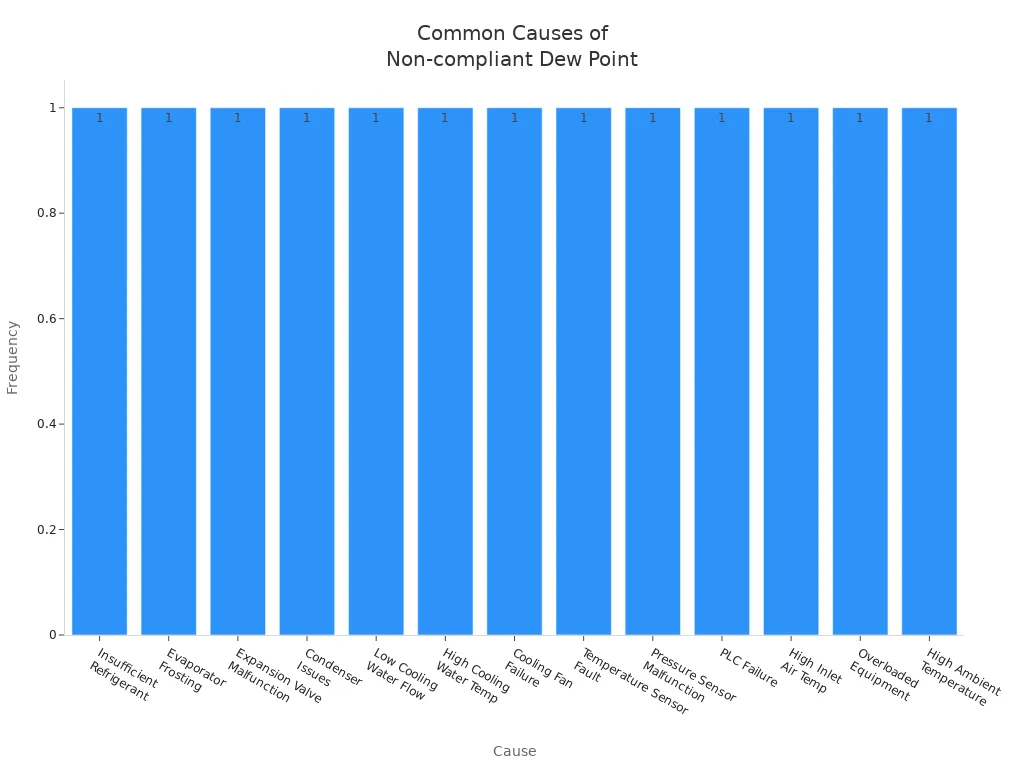
Keeping the dew point in your Refrigerated Dryer is very important. It helps keep your production quality high. Problems like not enough refrigerant, evaporator frosting, or control system faults can cause dew point issues. Here is how these problems compare:
| Cause | Effect |
|---|---|
| Insufficient Refrigerant | Less cooling power, higher evaporation temperature |
| Evaporator Frosting | Lower heat exchange, poor cooling |
| Expansion Valve Malfunction | Less refrigerant flow, weaker cooling |
| Condenser Issues | Bad heat release, lower refrigeration efficiency |
| Low Cooling Water Flow | Poor cooling, higher dew point |
| High Cooling Water Temperature | Air does not cool well, moisture stays in compressed air |
| Cooling Fan Failure | Not enough cooling air, dew point goes up |
| Temperature Sensor Fault | Wrong temperature readings, bad system control |
| Pressure Sensor Malfunction | Bad system control, dew point changes too much |
| PLC Failure | Temperature and pressure do not adjust right |
| High Inlet Air Temperature | Too much load, cooling does not work, dew point rises |
| Overloaded Equipment | System cannot cool air well |
| High Ambient Temperature | Equipment gets hotter, works less efficiently |
Moisture in compressed air can cause big problems:
- Food factories might get product contamination and expensive recalls.
- Electronics plants can have short-circuits and lose reliability.
- Semiconductor lines may stop for days because of chip packaging failures.
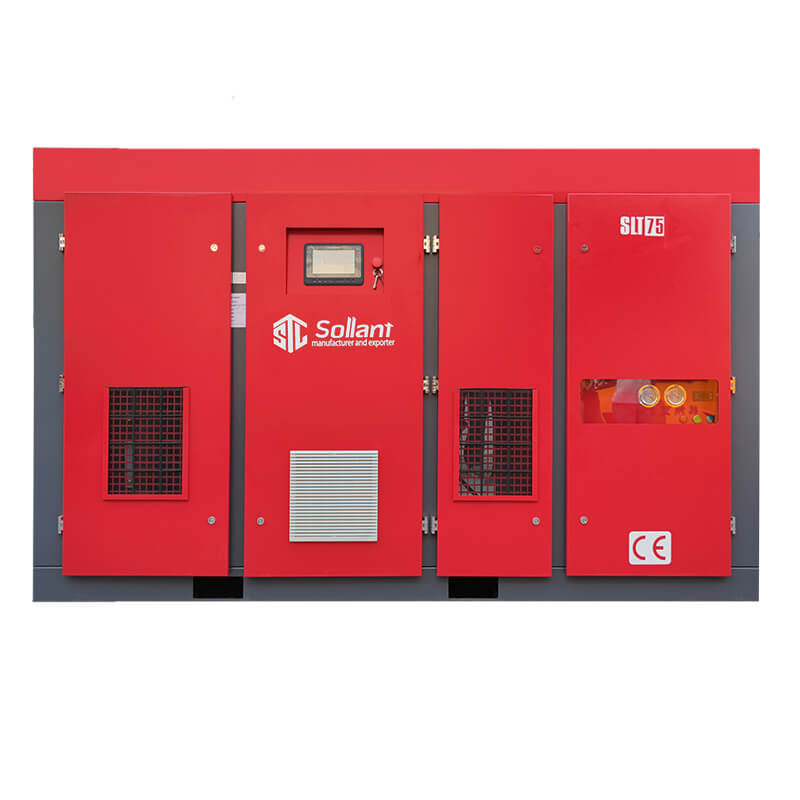
You can trust Sollant for air-dryer-for-air-compressor solutions. These help keep your compressed air dry and safe.
Table of Contents
Key Takeaways
- Knowing about dew point is important. A low dew point stops water from building up in compressed air. This keeps your equipment and products safe.
- Doing regular maintenance is very important. Check your refrigerated dryer often. This helps you find problems early. It also makes sure the dryer works well.
- Watch the cooling system closely. If the temperature is too high, the dew point can go up. If water flow is too low, the dew point can also rise. Make sure these things are okay.
- Pick the right size for your equipment. If the dryer is too small, it cannot cool well. This causes higher dew points and more water problems.
- You can trust Sollant for help. Their air-dryer-for-air-compressor products keep dew points low. They also make air quality better.
Common Causes of Refrigerated Dryer Dew Point Issues
Knowing why your refrigerated dryer dew point is too high helps you fix problems faster. Here are the main technical reasons and how to spot them.
Refrigeration System Failure
Your refrigerated dryer may not reach the dew point you set. This usually means the refrigeration system has a problem. If the compressor’s current is lower than normal, it might be failing. You might see strange frost or no frost on the evaporator. These signs show the cooling is weak. The dew point goes up, and more water stays in your compressed air.
| Failure Type | Description |
|---|---|
| Loss of Lubrication | Leaks or flooding can damage the compressor. |
| TXV Failure | A broken thermal expansion valve can make the evaporator work badly. |
| Low Refrigerant Charge | Not enough refrigerant causes icing and overheating. The dew point gets higher. |
| Restrictions in Circuit | Blockages make cooling worse and dew points higher. |
| Non-Condensables | Air or dirt raises pressure and lowers cooling power. |
| Electrical Failures | Bad electrical parts can stop the system and cause dew point trouble. |
Tip: Check the condensation trap drain every year. If your dryer is low on refrigerant, it will not cool well. The dew point will go up.
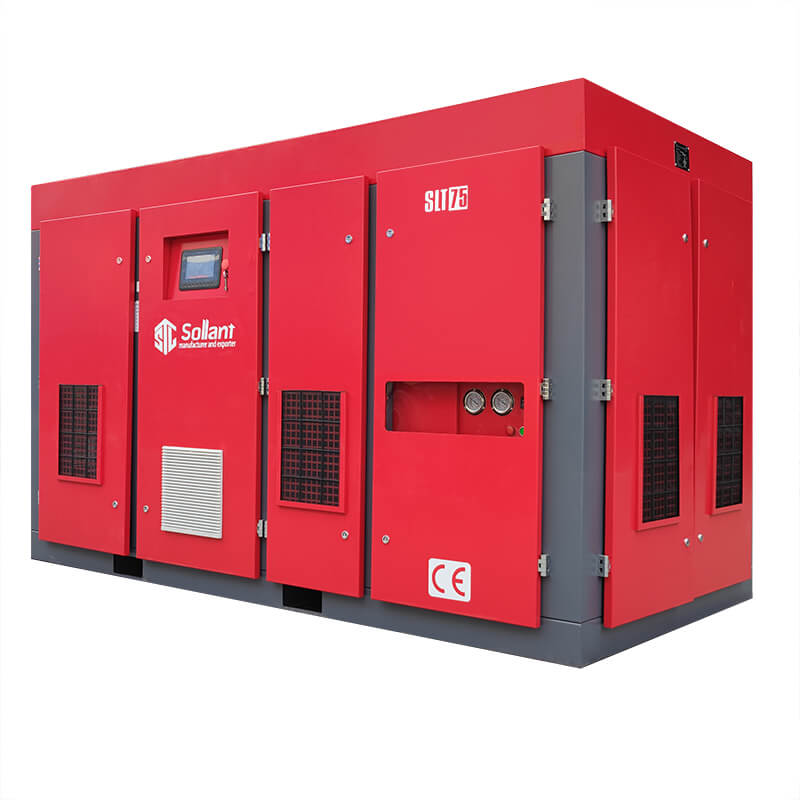
Sollant makes refrigerated dryers with smart controls and strong parts. This helps you avoid these problems and keeps your air dry.
Cooling System Faults
Cooling system problems make it hard for your dryer to remove moisture. High cooling water temperature, dirty coolers, or low water flow all lower cooling power. When this happens, the dryer cannot keep the dew point low. More water stays in your compressed air.
| Factor | Impact on Dew Point Performance |
|---|---|
| High Cooling Water Temp | It is harder to reach low dew points. More moisture gets through. |
| Dirty/Fouled Coolers | Bad heat transfer means less moisture is removed. |
| Inadequate Flow | Not enough water or air flow means moisture stays in the air. |
Sollant uses energy-saving designs and easy-to-clean parts. This helps your cooling system work well and keeps the dew point safe.
Control System Failure
If your dryer’s control system fails, you lose good temperature and pressure control. Bad sensors or a broken PLC can give wrong readings. The dryer runs at the wrong settings. It cannot keep the dew point where you want it.
Check and adjust sensors often. Replace broken parts quickly. Sollant’s dryers use strong sensors and smart controls to help you avoid these problems.
High Inlet Air Temperature
If the air going into your dryer is too hot, it has more moisture. The dryer works harder to remove extra water. If it cannot keep up, the dew point rises. Water stays in your compressed air.
- Hot inlet air brings more moisture.
- The dryer may need changes to handle extra heat.
- Some dryers use a hot gas bypass to keep the dew point steady.
Sollant gives custom solutions to help you handle high inlet air temperatures and keep your system working well.
Equipment Overload
If you use your dryer for more air than it should handle, it cannot cool enough. The dew point goes up. You may see more water in your air lines and tools.
Always pick a dryer that matches your air needs. Sollant helps you choose the right size so you avoid overload and keep your air dry.
High Ambient Temperature
Hot rooms make it harder for your dryer to get rid of heat. Every 20°F rise in room temperature can double the moisture load. The dryer struggles to keep the dew point low. You may see water in your air lines if the room is too hot.
- High room temperatures bring more moisture for your dryer.
- The dryer may not keep up, so dew points get higher and water problems can happen.
Sollant’s energy-saving technology and strong designs help your dryer work well, even in hot rooms.
Note: Doing regular maintenance and picking the right equipment helps you avoid most dew point problems. Sollant’s skill in research, custom solutions, and energy-saving designs gives you good support for all these challenges.
Understanding Dew Point in Refrigerated Dryers
Dew Point Basics
It is important to know about dew point. Dew point is the temperature when water in air starts to form. When air cools to this point, water vapor turns into drops or frost. In a refrigerated dryer, you want the dew point to stay low. This stops water from building up inside your air lines and machines. Pressure dew point tells you the temperature when water vapor becomes drops under system pressure. If dew point and air temperature are the same, the air is full of moisture.
Impact on Compressed Air Quality
Dew point affects how good your compressed air is. If dew point is high, your system will have extra moisture. This can cause many problems:
- Pipes and tanks can get rusty.
- Moisture can make your products dirty.
- High dew point can break your tools and machines.
- Rust and germs can get into your finished goods.
- Water can freeze in air lines and stop your machines.
Keeping dew point low helps you avoid these problems. Your air stays clean and dry. This protects your machines and products.
Compliance Standards
You need to follow rules to keep your compressed air safe and working well. Industry standards help you check and report dew point the right way. Here are some important rules:
| Requirement | Description |
|---|---|
| Instruments | Must measure dew point and system pressure at the same time |
| Conversion | Dew point numbers must be changed to 68°F (20°C) and 102 psig (7 barg) |
| Compliance | Follow ISO 8573-3 test methods and keep records |
| Reporting | Report both measured and changed dew point numbers clearly |
| Documentation | Write down the system pressure during testing |
You should use the correct tools and follow ISO rules. This helps your refrigerated dryer work safely. It also makes sure your air quality meets what the industry needs.
Detailed Solutions for Dew Point Non-Compliance
If your refrigerated dryer has dew point problems, you need clear steps to fix it. This section shows you easy ways to solve each common problem. You will learn how to repair, adjust, and take care of your system. This helps you get dry compressed air that works well.
Refrigerant Recharge and Leak Repair
If your dryer does not cool enough, check the refrigerant level first. Low refrigerant means your system cannot remove enough water. You should:
- Look at all joints and pipes for leaks like oil stains or hissing.
- Use a leak detector to find leaks you cannot see.
- Fix leaks by tightening fittings or changing broken parts.
- Add the right type and amount of refrigerant to the system.
Tip: Always use the refrigerant the maker says to use. Using too much or too little refrigerant can hurt your dryer.
Evaporator and Condenser Cleaning
Dirty evaporators and condensers make cooling hard for your dryer. Dust or dirt stops heat from leaving the system. This makes the dew point go up and lets more water stay in your air.
Cleaning these parts is very important. Use a soft brush or compressed air to clean the condenser fins. Wipe the evaporator and look for frost or dirt. Watch the pressure difference across the evaporator. If it gets high, clean it right away.
Clean parts help your dryer reach lower dew points and work better.
Expansion Valve Adjustment
The expansion valve controls how much refrigerant goes into the evaporator. If it is not set right, your dryer cannot cool the air enough. You can do these steps to adjust the valve:
| Step | Action | Consideration |
|---|---|---|
| 1 | Change the thermostat setting | Lowering it can help get a lower dew point but may lower capacity. |
| 2 | Check refrigerant temperature | Look at the temperature after the expansion valve to check the setting. |
| 3 | See if there is microprocessor control | Some dryers may not let you change settings because of programming. |
If your dryer uses a microprocessor, you may need special steps or help from support.
Cooling Water Flow and Temperature Control
Cooling water problems can make the dew point go up. You should:
- Make sure water pipes are clear and the pump works well.
- Set the water temperature low enough for good cooling.
- Check the cooling tower or chiller for blockages or problems.
- Change the water flow to fit what the dryer needs.
If the cooling water is too hot or does not flow well, your dryer cannot remove enough heat. This means more water stays in your air.
Sensor and PLC Troubleshooting
Sensors and PLCs control your dryer’s temperature and pressure. If they break, your dryer cannot keep the dew point steady. Here is a simple guide to fix problems:
- Check ground loops. Make sure the system’s ground is good to stop electrical noise.
- Look at PLC indicators. Watch for error codes or warning lights.
- Check PLC inputs. Make sure sensors are wired right and working.
- Check PLC outputs. Test output devices and look for program mistakes.
- Check the CPU. Look for signs of overheating or damage.
Note: Change broken sensors or PLC parts fast. Good readings help your dryer work well.
Load and Environmental Management
Your dryer works best when you control the load and the room. You can:
- Lower the temperature of air going into the dryer.
- Do not put too much air into the dryer.
- Make the room cooler with better ventilation.
- Check often to make sure the dryer is not working too hard.
Managing these things helps your dryer keep the dew point low and your air dry.
Sollant Air-Dryer-for-Air-Compressor Solutions
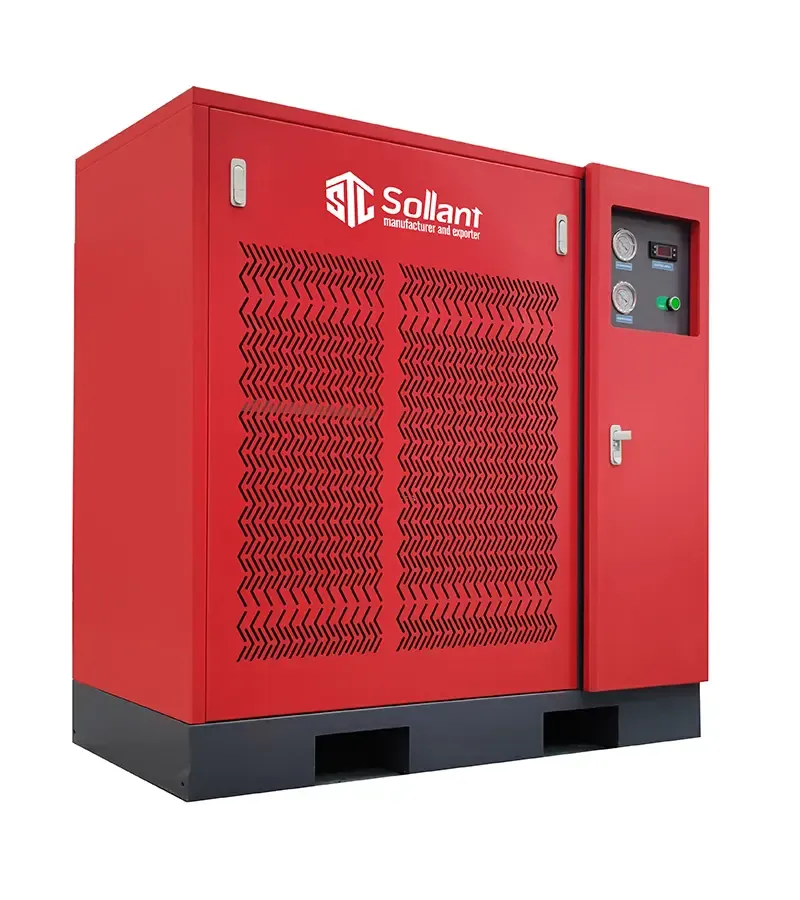
Sollant gives smart solutions to help you keep dew point right. When you use Sollant’s air-dryer-for-air-compressor, you get:
- Dry compressed air with no moisture.
- Protection from rust and loss of efficiency.
- Better product quality for factories, car makers, and food companies.
Sollant’s refrigerated air dryers can lower the dew point to between 3 and 5 ºC. You can pick refrigerated or desiccant air dryers for what you need. Sollant also has air dryers and special filters for special jobs.
Sollant’s products save energy and use strong parts. You get steady performance, easy care, and good help. Sollant helps you pick the right dryer and parts for your system, so you avoid dew point problems.
If you want your compressed air system to work well, Sollant’s air-dryer-for-air-compressor solutions give you the reliability and efficiency you need.
Troubleshooting Guide for Refrigerated Dryer Dew Point
Diagnosis Steps
You can solve dew point problems by following a clear checklist. Start by looking for signs like wet air after the dryer, product rejections, or rust in your pipes. These signs show that moisture is getting through. Use this step-by-step guide:
- Check the dew point reading on your control panel.
- Inspect the air lines for water or ice.
- Listen for strange noises from the dryer.
- Look for error codes or warning lights on the display.
- Examine the evaporator and condenser for dirt or frost.
- Test the temperature and pressure sensors.
- Review the system for leaks or blockages.
- Make sure the cooling water or air flow is steady.
- Confirm that the dryer is not overloaded.
Tip: Use a systems approach. Look at the whole setup, not just one part. Problems can come from many sources.
Required Tools
You need the right tools to troubleshoot your refrigerated dryer. These tools help you find and fix problems quickly.
- Dew point meter
- Pressure gauge
- Infrared thermometer
- Leak detector
- Multimeter
- Cleaning brush or compressed air
- Wrenches and screwdrivers
- Personal protective equipment (PPE)
These tools let you check for leaks, measure temperature, and clean parts. They also help you test sensors and electrical parts.
Safety Tips
Stay safe when you work on your dryer. Always turn off the power before you open any panels. Wear gloves and safety glasses to protect yourself. Watch out for hot surfaces and sharp edges. If you find a problem you cannot fix, contact Sollant support for expert help.
Note: Safety comes first. Never skip safety steps, even for small jobs.
Maintenance Best Practices
Routine Inspection
Check your refrigerated dryer often to keep it working well. Regular checks help you find problems early. Look at the condensate drain to see if it is blocked. Test the drain to make sure it removes water. Check built-in sensors to see if they work right. Try upgrades like zero-loss drainage to save energy and remove more moisture.
Tip: A quick check every week can stop big problems later.
Monitoring Dew Point
Watch the dew point to keep your air dry and safe. Dew point sensors show the temperature when water starts to form. Use these sensors to track how your system works. Sensors help you spot changes early, so you can fix problems fast. Pick sensors that fit your system and check their calibration often. Good monitoring stops rust and keeps your tools and products safe.
Note: If you see the dew point go up, act fast to avoid downtime.
Preventive Maintenance
A good plan keeps your dryer running smoothly. Use this table to guide your tasks:
| Maintenance Task | Purpose |
|---|---|
| Visual Inspections | Find leaks, damage, or worn parts. |
| Cleanliness | Keep vents and filters free of dust and debris. |
| Operational Checks | Watch temperature and airflow; listen for odd sounds. |
| Lubrication | Lubricate parts and check for leaks. |
| Documentation | Write down any problems or changes. |
| Detailed Inspections | Look for corrosion or alignment issues. |
| Cleaning and Maintenance | Deep clean inside parts and change filters often. |
| Calibration | Make sure sensors and controls are accurate. |
| Minor Repairs and Adjustments | Fix or replace worn parts right away. |
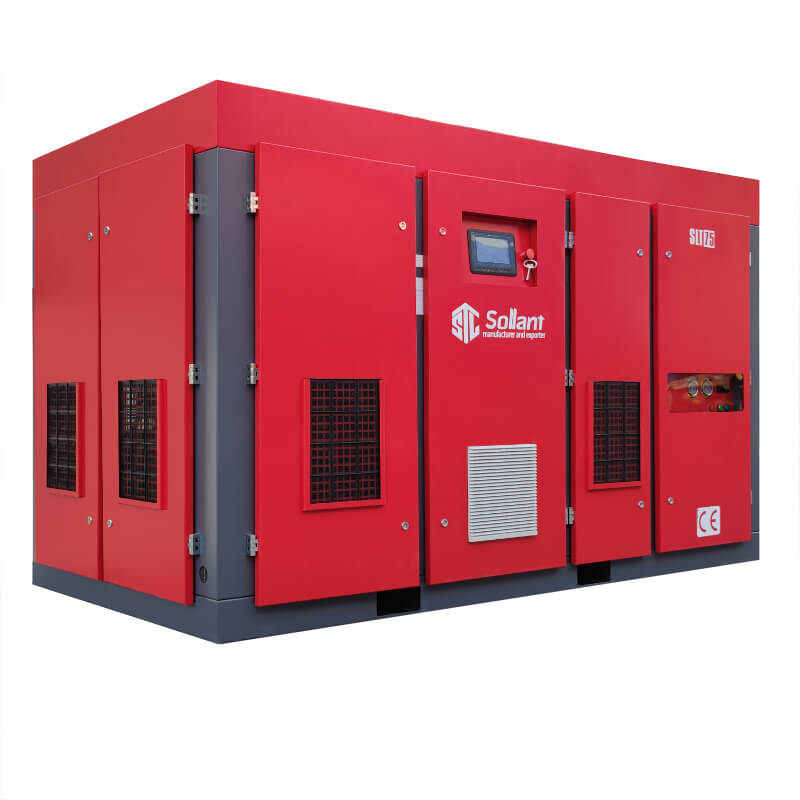
Sollant Support and Services
Sollant gives strong support to keep your refrigerated dryer working well.
| Feature | Description |
|---|---|
| Efficient Water Removal | Keeps air dry, protects equipment, and improves product quality. |
| Energy Efficiency | Uses advanced heat exchangers to save energy and control humidity. |
| Safety and Reliability | Has overload protection and trusted parts for safe, steady operation. |
| Control Options | Offers flexible controls for easy system management. |
You can trust Sollant for expert help, reliable parts, and solutions that fit your needs.
You can make sure your Refrigerated Dryer works well by doing a few easy things. Look at your system often and fix any problems fast. Clean parts and check them to stop moisture from building up. Sollant’s air-dryer-for-air-compressor solutions help your dryer work reliably. If you need help, Sollant gives expert support and special advice.
Remember: Taking care of your dryer and fixing problems quickly keeps your products and equipment safe.
FAQ
What is the dew point in a refrigerated dryer?
The dew point is the temperature where water vapor in compressed air turns into liquid. You want a low dew point to keep your air system dry and safe.
How often should you check the dew point?
You should check the dew point at least once a week. Regular checks help you find problems early and keep your air system working well.
Why does my dryer’s dew point suddenly rise?
A sudden rise often means a problem like low refrigerant, dirty filters, or a broken sensor. Check these parts first. Fixing them quickly keeps your air dry.
Can you use Sollant air dryers in hot environments?
Yes! Sollant air dryers work well in high temperatures. They use strong parts and smart controls to keep your air dry, even when the room is hot.
What should you do if you see water in your compressed air lines?
First, check your dryer for leaks, blockages, or overload. Clean or repair any broken parts. If you need help, contact Sollant support for expert advice.
Request a Quick Quote Now
How to do my business well ?
- Market situation
- Technology configuration
- Strike Price
- exclusive agency
- Import and export assistance
- More…

