
What is a Diesel Air Compressor and How Does It Work
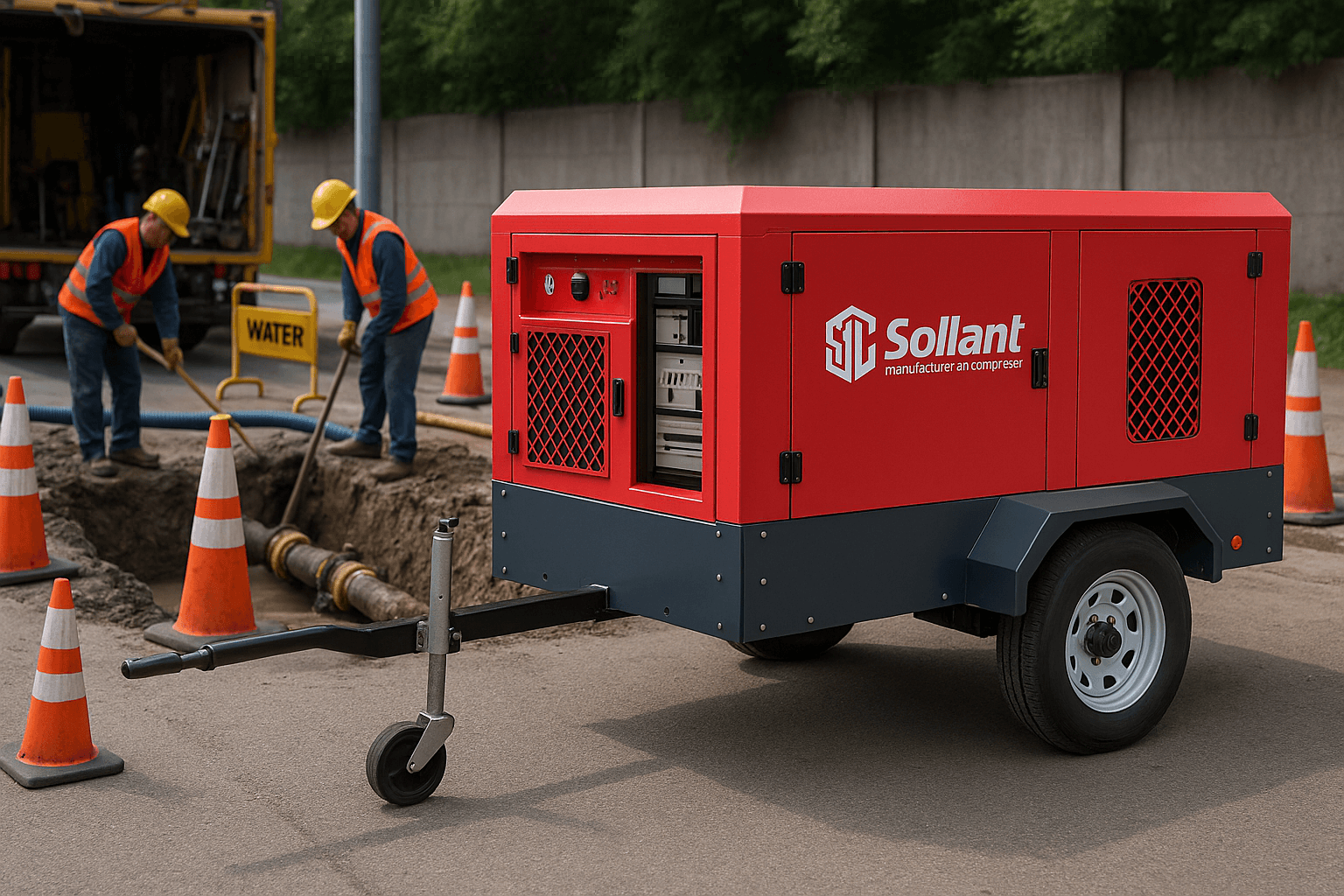
A diesel air compressor uses a diesel engine to make compressed air. You get pressurized air without needing electricity. This makes the compressor great for job sites and faraway places. Diesel air compressors help you run tools and big machines where there is no electrical power. Sollant has good models for these jobs.
Function/Purpose | Description |
|---|---|
Power Equipment | Makes pressurized air for many uses. |
Portability | Works anywhere, like construction sites or factories. |
Runs in places with no electricity. | |
Support for Heavy Machinery | Powers excavators, drilling rigs, and other large machines. |
Efficiency in Construction | Cuts downtime and helps workers get more done. |
Table of Contents
Key Takeaways
A diesel air compressor gives compressed air without using electricity. This makes it great for places far from power. Regular care, like checking oil and filters, helps your compressor last longer. It also helps it work better. Pick portable or stationary models based on your job. Portable ones are easy to move. Stationary ones are better for long jobs. Diesel air compressors are strong and work well. They are good for hard jobs like construction and mining. Always match the compressor’s PSI and CFM to your tools. This helps your tools work their best.
Diesel Air Compressor Overview
Definition
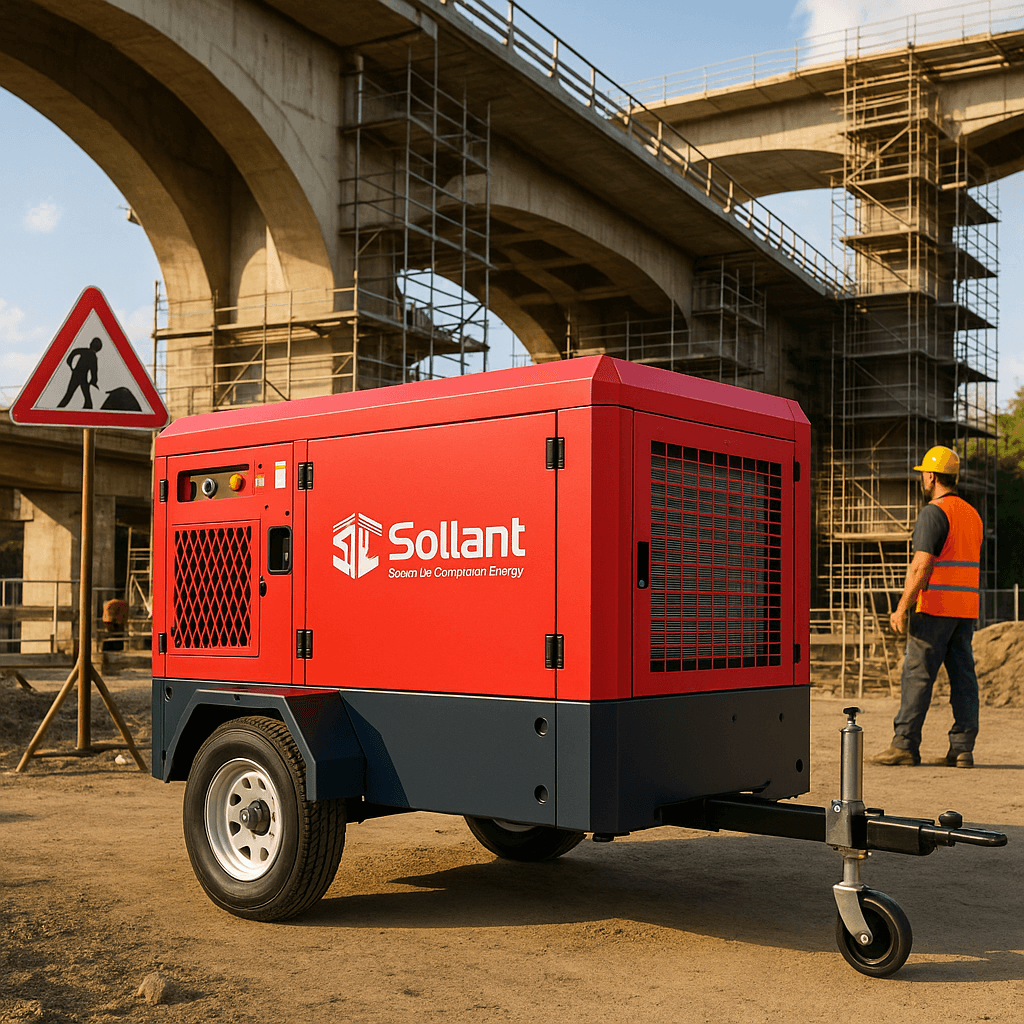
A diesel air compressor gives you compressed air where there is no electricity. It has a diesel engine that uses fuel to make power. The engine makes the compressor work. The compressor takes in air and squeezes it to make it pressurized. You get a steady flow of air for your tools and machines. People use this compressor for outdoor jobs or places far from power. Sollant has strong models that work well in hard places.
Main Components
A diesel air compressor has two main parts:
Air End: This part pulls air from outside. It squeezes the air to make pressure for your tools.
Diesel Engine: This engine burns diesel fuel. It turns the fuel into power for the air end.
Every diesel air compressor has these two parts. The air end and engine work together to give you strong air pressure. Sollant builds compressors with good engines and air ends. You get reliable performance every time.
Tip: Take care of your compressor often. It will last longer and work better. You save money on repairs and energy. You also stop your machine from breaking down.
Diesel vs. Electric
You may wonder how a diesel air compressor is different from an electric one. The table below shows the main differences:
Feature | Diesel Air Compressors | Electric Air Compressors |
|---|---|---|
Power Source | Uses fuel engines, easy to move | Uses electricity, costs less to run |
Operational Efficiency | Great for moving and high-pressure jobs | Saves energy for jobs that run all day |
Maintenance Needs | Needs regular checks and fuel care | Has fewer parts, needs less fixing |
Environmental Impact | Makes more emissions, good for outside | Makes less emissions, good for inside |
Application Suitability | Best for moving jobs like silo discharge | Best for places like factories |
Diesel air compressors are best when you need to move them or work where there is no power. They do hard jobs and work in tough places. Electric compressors are better for factories or workshops with steady power. Diesel models need more care, but they last longer in dirty or rough places. Most diesel air compressors last about 15 years. Some last even longer if you take care of them.
A compressor can last from 2 to 60 years.
How long it lasts depends on care and working conditions.
Sollant sells both diesel and electric compressors. You can pick the one that fits your needs.
Working Principles
Air Displacement
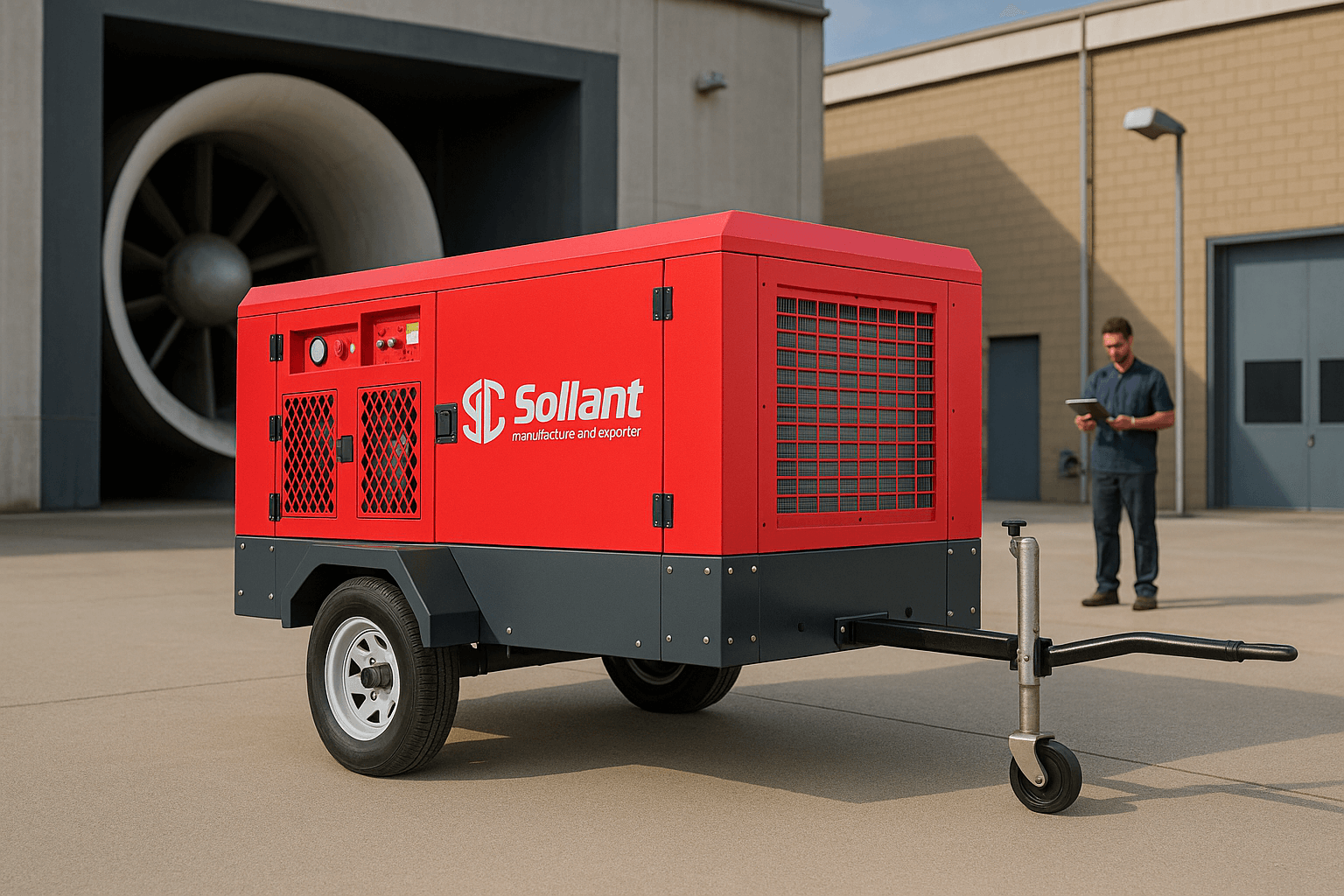
You see how a diesel air compressor works by moving air from the outside into the machine. The compressor pulls air through a filter. This filter keeps dust and dirt out. The air then enters the air end. The air end uses spinning rotors or pistons to push the air into a smaller space. This process increases the pressure. You get strong, pressurized air for your tools. The working principles of air displacement make sure you always have a steady supply of air. You can use this air for many jobs, like powering drills or cleaning surfaces.
Note: Clean air helps your compressor last longer. Always check the air filter before you start working.
How the Diesel Engine Powers the Compressor
The diesel engine is the heart of your compressor. When you start the engine, it burns diesel fuel. This burning creates energy. The engine turns a shaft connected to the air end. The shaft spins fast and gives power to the compressor. You do not need electricity. The diesel engine lets you use the compressor anywhere. You can work on remote sites or places with no power lines. The engine keeps running as long as you have diesel fuel. You get reliable air compression for your tools and machines.
Diesel engines work well in tough conditions.
You can use the compressor in rain, dust, or heat.
The engine needs regular checks for oil and fuel.
Compression Process
The air compression process happens in stages. You can find single stage and two stage compressors. Each type works in a different way.
Type of Compressor | Description |
|---|---|
Single Stage Compressors | Air is compressed in a single stroke of the engine. |
Two Stage Compressors | Air is first compressed by one piston and then moved to a smaller chamber for further compression, generating significant heat that requires cooling between cycles. |
In a single stage compressor, the air enters the chamber and gets squeezed once. You get pressurized air quickly. In a two stage compressor, the air goes through two steps. First, the air is compressed by a piston. Then, the air moves to a smaller chamber for more compression. This process makes the air even stronger. The working principles of two stage compressors help you get higher pressure. You need cooling between stages because the air gets hot. You can choose the right compressor based on your job needs.
Tip: Two stage compressors give you more power for heavy-duty tasks. Single stage compressors work well for simple jobs.
You see how the diesel engine, air end, and compression process work together. The diesel air compressor gives you strong, reliable air wherever you need it.
Types of Diesel Mobile Air Compressor
When you pick a diesel mobile air compressor, you will see two main kinds. These are portable and stationary. Each kind is good for different jobs and places. You can find both types in Sollant’s products. This means you always have the right tool for your work.
Portable
A diesel portable air compressor is easy to move. You can take it from one place to another. It is good for jobs that need quick setup. You can carry or tow these compressors. They are light but still strong for hard work. You often see them at road repairs or small building sites. They also work well in faraway places. This type is best for jobs that move a lot. Sollant has portable models that give steady air and power.
Stationary
A diesel stationary air compressor stays in one spot. You use it when you need air at one place all the time. This kind is bigger and heavier than portable ones. It can do bigger jobs and run longer. You will see these at mines, factories, or big building sites. Sollant’s stationary compressors work well for a long time. They use diesel engines to power the air end. This makes them a positive displacement air compressor.
Type | Flow Rate | Best Application Areas | |
|---|---|---|---|
Fixed Type | 7–15 bar | 10–30 m³/h | Small and medium construction, mining |
High Pressure | 15–40 bar | 30–60 m³/h | Oil and gas extraction, deep sea construction |
Ultra High Pressure | 40–100 bar | 60–120 m³/h | Special industrial tasks, deep well work |
Common Uses
Diesel mobile air compressors are used in many fields. They power tools and machines where there is no electricity. A diesel driven air compressor is great for outdoor and off-grid work. You can use portable air compressors for city building, mining, and shipbuilding. The table below shows some common uses for a diesel mobile air compressor:
Use Case | Description |
|---|---|
Diesel mobile air compressors are used in city building for many jobs. | |
Quarry and Mines | They give steady power for drills and hammers in mines. |
Water Conservancy | Used to power vacuum systems for water treatment and waste removal. |
Shipbuilding and Maintenance | Powers tools for shipbuilding, like welding and surface work. |
You can trust a diesel air compressor for steady air anywhere. Sollant’s diesel mobile air compressors cover both portable and stationary needs. This way, you always have the right compressor for your job.
Applications
Industry Use
Diesel air compressors are used in many industries. They help you get air right where you need it. You can use them for fixing things, making products, or helping in emergencies. Portable diesel compressors let you work outside. Stationary ones are good for jobs inside. Good filters keep water out and protect your tools.
Industry | Description |
|---|---|
Construction | Japan’s construction industry uses diesel compressors for strong and flexible work, especially when building earthquake-safe structures. |
Manufacturing | Diesel air compressors are important in factories. They give power and help things run smoothly. |
Emergency Services | Diesel compressors help emergency teams fix things fast and work in the field. |
Diesel air compressors make work easier every day. They give strong air for tools and machines. You can count on them for air in tough places.
Construction
Construction jobs need compressors that work anywhere. Diesel air compressors power drills, hammers, and other tools. You use them to build roads, bridges, and tall buildings. These machines help you finish work faster. Your team can keep working without stopping. You do not need electricity, so you can work far from cities. Diesel engines give steady air for big jobs. You can also move your compressor to new sites.
Tip: Check your compressor before you start. Clean filters and regular care keep your compressor working well.
Mining
Mining needs strong and tough compressors. Diesel air compressors power tools, clean machines, and help with air flow. They are used for many mining jobs. You need air on-site to work safely and quickly. Safety is very important in mining. Pick a diesel compressor that is safe to use. Make sure it has safety parts and follows the rules. Check your equipment often and train your team to stay safe.
Diesel compressors work well in rough mining places.
They give high-pressure air for drilling and blasting.
Good safety steps keep everyone safe.
Diesel air compressors help important industries. They give strong air for construction, factories, and mining. These machines help you work anywhere and keep your work going.
Advantages and Selection
Benefits
Diesel air compressors have many good points. They give strong air where there is no electricity. You can use them for a long time because they use their own fuel. You do not worry about losing power. Diesel compressors work in hot, dusty, and wet places. These machines are tough and last a long time. They save money because they use less fuel than gasoline compressors. You will have fewer problems and your work stays on track. Diesel compressors give high pressure and lots of air for big jobs. They are easy to move and fix. Many industries like diesel compressors because they are reliable and strong. You can trust them to work all the time, even far away.
Handle heat, dust, and tough weather
Use less fuel and save money
Break down less often
Give strong air and big amounts
Simple to move and take care of
Tip: Diesel air compressors are great for faraway places and hard jobs. They give you strong air with good efficiency and last a long time.
How to Choose a Compressor
You need to pick the best compressor for your job. First, think about how you will use it. Sollant has many diesel air compressors for different jobs. Check the place where you will work. Hot and wet weather can make compressors weaker. Pick a model that works in the hardest conditions. Decide if you need steady air or quick bursts. Some jobs need very clean and dry air, so you might need extra parts. Look at how much care the compressor needs and if you can get parts fast. Good help after you buy keeps your compressor working. Always look at the total cost, not just the price.
Factor | Description |
|---|---|
Intended Use | Make sure the compressor fits your job. |
Expected Ambient Conditions | Pick one that works in heat and wet places. |
Intermittent Demands | Choose for steady or burst air needs. |
Compressed Air Quality Requirements | Add dryers for clean and dry air. |
Note: Sollant gives you strong diesel air compressors with good help and easy care.
Key Specifications
You should check important details before you buy a diesel air compressor. Match the PSI and CFM to your tools and jobs. Look at the engine for clean running and saving fuel. Pick rotary screw or reciprocating airend for your work style. Check if the compressor is built well and can handle your weather. If you move it a lot, make sure it is easy to carry. Safety and simple controls help you work better. Think about the total cost, including fixing and care. Make sure the company gives a good warranty and has parts.
Match PSI and CFM to your work
Check engine for clean running and saving fuel
Pick rotary screw or reciprocating airend
Look at how easy it is to move and how strong it is
Find simple controls and safety parts
Think about all costs, not just buying
Make sure you get a good warranty and parts
Diesel screw air compressors are known for being efficient and tough. They work well even when not used at full power. They adjust to different needs. You get better energy use and lower costs. New features, like Variable Speed Drive, make them work better and cleaner. They last longer and are easier to fix. Sollant’s diesel air compressors give you strong air, good efficiency, and last a long time for every job.
A diesel air compressor gives you strong air where you need it. You can use your tools even far from cities. Each part of the compressor helps it work well:
Function | |
|---|---|
Compressor valves | Control how much air moves |
Cooling system | Stops the machine from getting too hot |
Air filter | Takes out dirt and dust |
Pressure regulator | Keeps the air pressure steady |
You get these main benefits:
You can move it anywhere for off-grid jobs
It gives lots of power for big tools
Think about what your job needs before you pick one. Look at the type of diesel power and how good the compressor is. Sollant has diesel air compressors that many industries trust.
FAQ
What maintenance does a diesel air compressor need?
You should check the oil, fuel, and air filters often. Clean or replace filters when dirty. Inspect hoses and belts for wear. Keep the compressor clean. Regular care helps your compressor last longer and work better.
Can you use a diesel air compressor indoors?
You should not use a diesel air compressor indoors. Diesel engines make fumes that can be harmful. Always use these compressors outside or in open spaces with good airflow.
How long can a diesel air compressor run?
Most diesel air compressors can run for many hours without stopping. You need to check fuel and oil levels. Good maintenance lets your compressor work longer and more reliably.
What safety tips should you follow?
Always read the manual before use. Wear safety gear like gloves and goggles. Keep the area clear of flammable items. Check for leaks or damage before starting the compressor.
How do you choose the right size compressor?
You need to match the compressor’s PSI and CFM to your tools. Make a list of all tools you plan to use. Pick a model that meets or exceeds those needs. Ask a supplier like Sollant for help if you are unsure.
Request a Quick Quote Now
How to do my business well ?
- Market situation
- Technology configuration
- Strike Price
- exclusive agency
- Import and export assistance
- More…

