
Complete Guide to Dry-Oil-Free-Air-Compressor Solutions for Food and Pharma
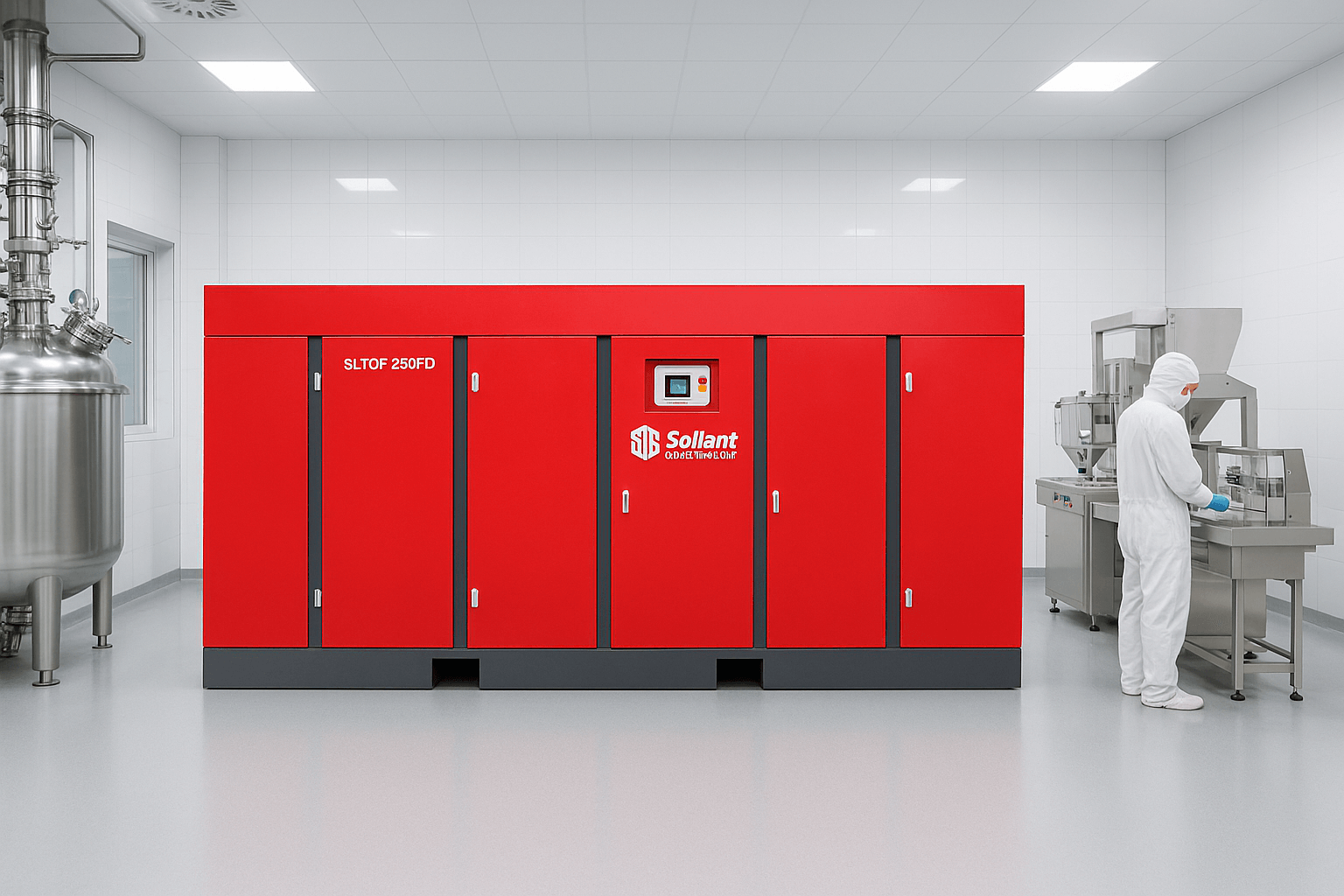
You need clean air to keep food and medicine safe. Small amounts of oil in air can make products dirty. Oil can also harm products and risk people’s health. The FDA says air must be very clean for food and medicine. You should test the air often to follow these rules. A dry-oil-free-air-compressor gives you air with no oil. This keeps your process safe and clean. Sollant has air compressors that help protect your business and your customers.
Table of Contents
Key Takeaways
Clean air is very important for food and medicine safety. Dry-oil-free air compressors stop oil from getting in the air.
Testing air often helps find problems early. Follow FDA and ISO rules to keep air safe.
Pick oil-free compressors for sensitive jobs. They give Class 0 air quality, which helps keep people healthy.
Regular care keeps compressors working well. Look at filters, check for leaks, and make sure safety parts work.
Sollant gives good solutions and help. Their compressors save energy and follow strict safety rules.
Air Purity in Food and Pharma
Risks of Oil Contamination
It is important to keep air clean in your building. Oil in the air can cause problems when making food and medicine. If oil gets into the air compressor, it can reach your products. This can make food and drinks taste and smell bad. Oil can also help bacteria grow, which is not safe. Oil can be liquid, vapor, or tiny drops. These can come from the compressor’s lubrication, dirty air coming in, or leaks in seals and fittings.
Testing the air often helps you find oil problems early and keep products safe.
Oil in food can cause:
Health problems for people
Bacteria growth
Main places oil comes from:
Air around the building
Compressor’s lubrication
Dirty air coming in
Pipes that move air
Storage tanks
Items like valves and tubes
Leaks in seals and O-rings
Regulatory Standards
You have to follow strict rules to keep air safe for food and medicine. Rules like ISO 8573-1:2010 say how much oil can be in compressed air. These rules help you make sure your oil free air system is safe.
Groups like the FDA, FSIS, and SQF want you to check air quality often. They have rules for testing air and keeping it safe.
Standard | Description |
|---|---|
ISO 8573-1:2010 | Says how much pollution, like oil, can be in compressed air for food and medicine. |
Regulatory Agency | Requirement | Frequency of Air Sampling |
|---|---|---|
FDA | Rules for checking air quality | At least once a year, more for risky products |
FSIS | Food safety rules | Like FDA, no set levels for air quality |
SQF | Air testing as part of programs | No set levels for air quality |
The FDA and FSIS make rules for air in food factories.
Testing air helps keep food and drinks safe.
The Clean Air Act has rules for air in medicine factories.
Product Safety
You want your products to be safe and clean. Using oil free air in your compressor helps stop contamination. Oil free compressed air is very important for making food and medicine. It keeps products clean and protects people’s health.
Medicine factories need very clean air. Oil-free air stops sensitive products from getting dirty.
Oil free air keeps oil out of work areas and products.
Medicine factories need oil-free air to keep products pure.
Clean air helps you follow safety rules and protect your company.
Dry-Oil-Free-Air-Compressor Technology
How It Works
A dry-oil-free-air-compressor gives you clean air. It does not use oil to work. The air is safe for food and medicine. The dry oil-free screw air compressor has special parts. These parts do not need oil to move. It uses strong coatings and materials. These help the parts move smoothly. This stops oil from mixing with the air. You do not have to worry about oil in your products.
You use a dry-oil-free-air-compressor by pulling in outside air. The compressor squeezes the air to make it stronger. It then takes out water and tiny bits. You get oil free air that meets safety rules. This keeps your food and medicine safe from contamination.
Here is a table that shows the differences between oil-lubricated and oil-free air compressors:
Feature | Oil-Lubricated Air Compressors | Oil-Free Air Compressors |
|---|---|---|
Air Quality | May have oil carryover | Clean, oil free air |
Maintenance | Needs oil changes | Lower maintenance |
Contamination Risk | Oil can get into products | No oil contamination |
Applications | Heavy industry | Food, pharma, healthcare |
You can trust a dry oil-free screw air compressor. It gives you oil free air for sensitive jobs.
Key Features
You should know what makes a dry-oil-free-air-compressor special. The dry oil-free screw air compressor gives you oil-free and moisture-free air every time. Here are some important features:
Class 0 oil-free air: This is the highest level of air purity.
Energy efficiency: It uses less power and saves you money.
Reliable operation: It works for long hours without trouble.
Easy maintenance: You do not need to change oil.
Quiet design: It does not make much noise.
Performance metrics help you check your air compressor. The table below shows what to look for:
Performance Metric | Description |
|---|---|
Compliance with ISO 8573-1:2010 Class 0 | Highest air purity for food and pharma safety |
Energy Efficiency | Uses less energy, lowers costs |
Reliability | Keeps running without stopping |
Maintenance Requirements | Needs little care, saves time |
You can count on a dry oil-free screw air compressor. It gives you safe and clean air for food and medicine.
Sollant Dry Oil-Free Screw Air Compressor

Product Overview
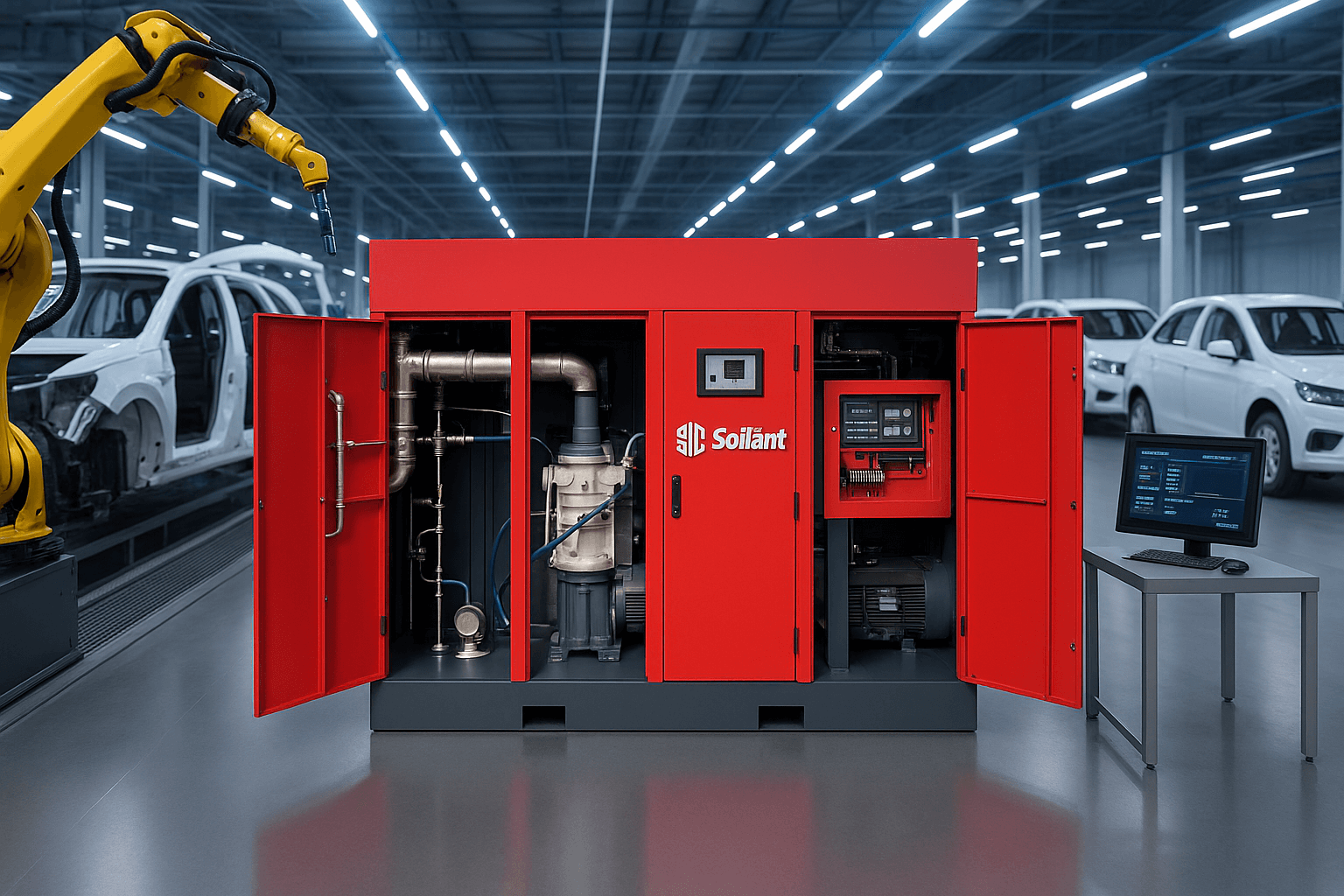
You need clean air to make food and medicine. Sollant has a dry oil-free screw air compressor for this job. This machine uses new technology to give you oil free air every time. It is made to last a long time and work well. The pipes are made from strong 304 stainless steel. These pipes do not rust and keep your system safe. The IE3 motor saves energy and lowers your bills. You can control the compressor with a smart system in many languages. The compressor is quiet because of special noise reduction parts. You can pick from many models for your needs. Sollant gives help and custom solutions anywhere in the world.
Sollant thinks saving energy is important for the future. This product helps you use less energy and keeps your customers safe.
Class 0 Oil Free Air
You need very pure air for food and medicine. Sollant dry oil-free air compressors give you Class 0 oil free air. This means no oil gets into your compressed air. Your products stay safe from contamination. Sollant meets ISO 8573-1:2010 Class 0 rules. You also get CE certification for extra safety. These show that Sollant gives true oil free air for sensitive jobs.
Sollant air compressors meet ISO 8573-1:2010 Class 0 air quality rules.
You get CE certified machines for more safety.
Oil free air keeps your food and medicine pure. You follow world safety rules and protect your brand.
Energy Efficiency
You want to save energy and spend less money. Sollant dry oil-free screw air compressors help you do this. The IE3 motor uses less power and works well. You pay less for energy and waste less. Sollant designs each compressor to use 30-40% less energy than old oil-flooded compressors. You also do not have to buy or throw away oil. The smart control system helps you use the best settings for your needs.
Feature | Sollant Dry Oil-Free Compressors | Traditional Oil-Flooded Compressors |
|---|---|---|
Energy Savings | 30-40% lower electricity costs | N/A |
Oil Consumption | Less than oil-flooded compressors | Higher oil use |
This solution helps you reach your green goals. Sollant helps you lower your carbon footprint and grow your business.
Sollant gives help and service everywhere. You get help with setup, training, and care. You can ask for special features for your needs.
Oil Free Compressed Air Benefits
Food and Pharma Applications
You need clean air to keep products safe. Oil-free air compressors protect food and medicine from getting dirty. In food factories, you use oil free air to mix things. You also use it to package and store food. This keeps food fresh. It stops oil from changing taste or smell. Oil-free air cools baked goods before you pack them. If you make powdered food, oil-free air keeps it pure. This helps people stay healthy.
Pharma factories need oil free compressed air for many jobs. You use it to mix formulas and coat tablets. You also use it to package capsules. Oil-free air helps clean and dry packages. You use it to make ointments, gels, and syrups. When you do fermentation, oil-free air gives you clean air. You use compressed air to run machines and move things. This keeps products safe and follows strict rules.
Oil-free air compressors help you keep food and medicine pure. You protect your brand and build trust with customers.
Common uses for oil-free air compressors in food and beverage and pharma:
Mixing and packaging food
Cooling baked goods
Keeping powdered food safe
Cleaning and drying packaging
Making tablets and capsules
Running fermentation processes
Compliance and Certifications
You must follow strict rules when using air compressors in food and pharma. These rules help keep products safe. You need to meet standards like ISO 8573-1 Class 0. This means your air compressor gives air with no oil. You also follow FDA rules for food safety. GFSI certification helps you meet world food safety standards. HACCP rules help you control contamination risks. If you work in cleanrooms, you follow USP and ISO rules.
Compliance Standard | Description |
|---|---|
ISO 8573-1 Class 0 | Guarantees no oil contamination from the air compressor |
FDA Standards | Ensures safe use of air in contact with food and packaging |
GFSI Certification | Supports global food safety compliance and audit readiness |
HACCP | Helps you find and control contamination risks |
USP and ISO Guidelines | Needed for cleanroom environments in medical and biotech sectors |
You keep products safe and meet world standards with oil free air. This helps you pass audits and protect people’s health.
Compressor Technologies
Oil-Free vs Oil-Lubricated
It is important to know how both types work. Oil-free air compressors use special coatings and materials. These help the parts move without using oil. This gives you clean air for food and medicine. Oil-lubricated air compressors use oil to help parts move. The oil can get into the air and cause problems.
Taking care of each type is different. Oil-lubricated air compressors need more work and money. You have to change the oil and filters a lot. You also need to check the oil levels often. Oil-free air compressors are easier to take care of. There is no oil to worry about. You still need to check for worn parts.
Here is a table that shows how maintenance and costs are different:
Type of Compressor | Maintenance Requirements | Cost Implications |
|---|---|---|
Oil-lubricated | Needs oil changes, new filters, and checking oil levels often. | Costs more to keep working over time. |
Oil-free | Needs less care because there is no oil; uses other ways to keep parts moving. | Costs less to take care of, but may break down more. |
Pick the best air compressor for your food or medicine work. Oil-free air compressors help keep your products safe and clean.
Drying Methods
You need to take water out of compressed air to keep food and medicine safe. Drying methods help you get oil free air for your work. There are two main ways to dry air in these places:
Regenerative dryers have two towers with desiccant inside. The desiccant pulls water from the air. This gives you very dry air. This way works well when you need very clean and cold air.
Membrane dryers use special membranes to take water out of the air. This gives you clean, dry air for making food and medicine.
Tip: Pick a drying method that fits your needs. Regenerative dryers give very dry air for important jobs. Membrane dryers are good for small spaces and save room.
Using the right drying method helps your air compressor work well. Clean, dry air helps you follow safety rules and keeps your products safe.
Selecting the Right Compressor
Application Needs
First, think about what your process needs. Every job in food and pharma is different. Some jobs need very pure air. Others care more about saving energy or easy care. If you work with sensitive products, you need strict air rules. Oil-free air compressors are best for these jobs. General jobs can use oil-lubricated compressors, but they do not give the same clean air.
Application Type | Air Quality Requirement | Compressor Type |
|---|---|---|
Stringent standards | Oil-free air compressors | |
General Applications | Less critical | Oil-lubricated compressors |
You should also think about how much air you need. The size of your factory and number of machines matter. If you run a big food plant or busy pharma factory, you need a strong compressor. It must keep up with your work. Check if your process needs dry air or if some moisture is okay. Powders and tablets need very dry air to stay safe.
Key Criteria
When you pick an air compressor, look at important points. These help you find the best one for your food or pharma work.
Air quality: You need clean, dry, oil-free air. This keeps products safe.
Maintenance: Pick a compressor that is easy to care for. Make sure you can get parts and service fast.
Efficiency: Look for features that save energy. This helps you spend less money.
Reliability: Choose a compressor that works well for a long time. This helps you avoid problems in your factory.
Humidity control: Dry air is needed for many jobs. Make sure your compressor can remove water.
Compliance: Your air must meet rules like ISO 8573-1:2010. This means your air is safe for products.
Testing: Test your air often to keep it clean and safe.
Tip: Always check if your compressor meets your industry rules. This helps you pass checks and keep products safe.
Sollant Solutions
Sollant gives you many choices for air compressors. You can pick oil-free scrolls, spiral teeth, or dry screws. All meet strict rules for food and pharma use. Sollant compressors pass GMP checks and meet GB/T13277 rules. This means they control particles, water, and oil in the air.
Feature | Requirement |
|---|---|
Oil-Free Air | Essential for maintaining purity in pharmaceutical applications. |
Compliance with GMP | All products must pass GMP certification inspections to ensure safety and quality. |
Quality Standards | Must meet GB/T13277 standards for compressed air quality, including specific limits on particles, water, and oil content. |
Product Range | Includes oil-free scrolls, oil-free spiral teeth, and oil-free dry screws, all certified by TüV. |
Efficiency and Stability | High efficiency and stable performance make Sollant compressors a preferred choice in the industry. |
Customization | Solutions can be tailored to meet specific application requirements in food and pharmaceuticals. |
You can ask Sollant for a custom solution. If you have special needs, Sollant can help you design the right system. Sollant helps with setup, training, and service. You get help from experts who know how to keep air clean and your business working.
Note: Sollant’s team can help you pick the right compressor size, purity, and features for your plant. You get a solution that fits your needs and meets all safety rules.
Maintenance and Support
Routine Care
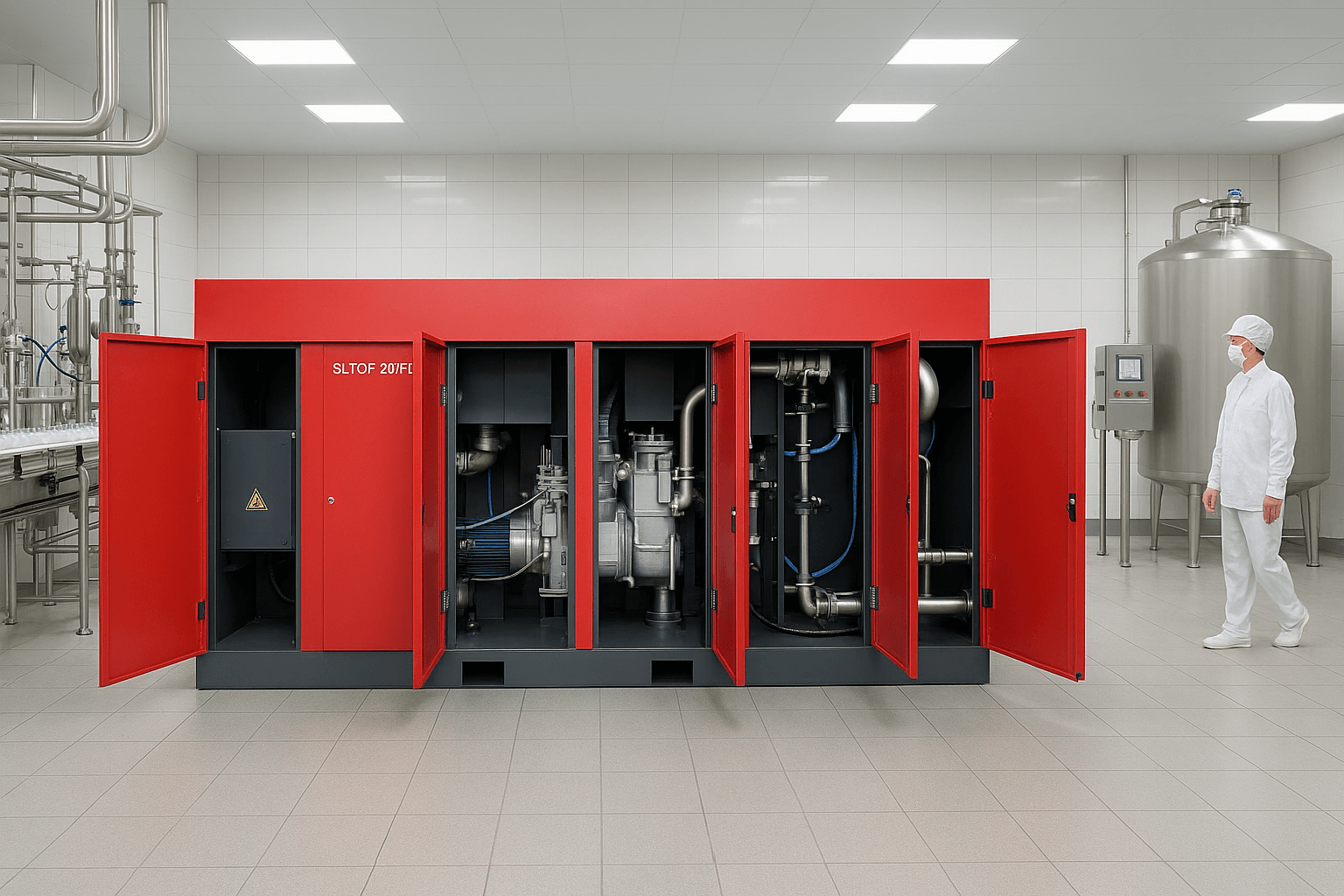
You need to keep your air compressor in good shape to protect your food and medicine. Regular maintenance and care for food grade air compressors helps you get clean air and avoid problems. You should check your system often and follow a schedule for cleaning and inspection. This keeps your equipment working well and helps you meet safety rules.
Here are some important steps for routine care:
Inspect filters and replace them when dirty.
Check for leaks in pipes and fittings.
Clean the intake area to stop dust from entering.
Test the system for air purity.
Make sure all safety devices work.
Factory-trained technicians know how to care for air compressors in food plants. Good maintenance and care for food grade air compressors saves energy and lowers costs. You also keep your compressed air system running longer and avoid downtime.
Tip: Preventive maintenance helps you avoid sudden breakdowns and keeps your products safe.
Troubleshooting
Sometimes, your air compressor may not start or work right. You can fix many common problems if you know what to look for. Power supply issues, faulty electrical parts, and damaged pressure switches are some things that can stop your compressor. You may also find problems with capacitors, motors, or wiring.
Use this table to help you find and fix issues:
Problem | What to Check |
|---|---|
Power supply | Outlet, circuit breakers, fuses |
Pressure switch | Damage, corrosion |
Capacitor | Test for proper capacitance |
Motor | Burned out or damaged |
Wiring | Loose or broken connections |
If you check these areas, you can solve most problems quickly. Always make sure your system is safe before you start repairs.
Sollant Service
Sollant gives you strong support for your air compressor. You get help with setup, training, and regular care. Sollant’s team knows the needs of food and pharma businesses. They help you keep your compressed air system clean and safe. You can ask for custom service plans to fit your plant.
Sollant offers:
Fast response for repairs and questions.
Expert advice for maintenance and care for food grade air compressors.
Training for your staff.
Global support for all customers.
You can trust Sollant to help you keep your air compressor working well. Good service helps you meet safety rules and keep your products pure.
Air Compressor Food Grade Oil Considerations
Food Safety
You always need to think about food safety. This is important when you use air compressors in food or medicine plants. If compressed air touches your product, you must use 100% oil-free air. This is called Class 0. It keeps food and medicine safe from oil contamination. Sometimes, air does not touch the product directly. But there is still a chance of contact. In these cases, you must use compressor oil that follows food safety rules. The oil should be NSF registered.
Using the right oil or oil-free air helps stop contamination. You keep your products and customers safe.
Working in a food-grade place brings more risks. The air around your plant can have dirt, dust, and other pollution. Your compressor can add rust or hydrocarbons to the air. You need to control these risks to keep products safe.
Here are some important things to remember: Always use Class 0 oil-free air if air touches food or medicine. Pick NSF registered food grade oil if there is any chance of contact. Watch for dirt, rust, and hydrocarbons from the compressor or air around you. Test your air often to make sure it stays clean.
Industry Standards
You need to follow strict rules to keep compressed air safe for food and medicine. These standards help you stop contamination and keep products pure. Each standard has its own focus. All standards work to protect food safety.
Standard | Description |
|---|---|
Makes sure compressed air is clean and tested often. | |
ISO | Sets rules for air quality and testing. |
SQF | Shares best ways to keep air clean and needs yearly testing. |
BRC | Wants regular checks and tests for air compressors. |
FSSC 22000 | Needs strong rules for food safety and regular checks. |
Check which standards fit your plant. Following these rules helps you pass checks and keeps products safe for everyone.
When you pick dry-oil-free air compressors, you keep products safe. These systems help you follow safety rules and keep things clean. Sollant machines work well and save energy. They also help lower health risks. You can make your products better and stop contamination in your equipment. Start by using a strong intake filter. Add an air dryer to remove water. Put in inline filters to catch tiny bits. You can ask Sollant for help and get a plan made just for your plant.
FAQ
What is Class 0 oil-free air?
Class 0 oil-free air means your compressor gives you air with no oil at all. This is the highest purity level. You need this for food and medicine to keep products safe.
How often should you test compressed air quality?
You should test your compressed air at least once a year. If you make sensitive products, test more often. Regular testing helps you find problems early.
Why do food and pharma factories need oil-free compressors?
Oil-free compressors keep oil out of your products. You protect people’s health and meet safety rules. Oil-free air helps you pass audits and build trust with customers.
How do you choose the right compressor size?
Check how much air your machines use. Look at your factory size and daily needs. Sollant can help you pick the best size for your work.
What support does Sollant offer after buying a compressor?
Sollant gives you setup help, training, and fast repairs. You get expert advice and global support. Sollant helps you keep your compressor working well.
Request a Quick Quote Now
How to do my business well ?
- Market situation
- Technology configuration
- Strike Price
- exclusive agency
- Import and export assistance
- More…

