
Reasons Why Screw Air Compressors Can’t Unload
You may see screw air compressors not unload because of problems with pressure switches, intake valves, solenoid valves, control loops, and air source pipelines. Here are the main reasons people report:
Cause of Failure | Description |
|---|---|
Pressure Switch | Set wrong or changes after being set |
Intake Valve | Breaks and does not open |
Solenoid Valve | Does not let out air, so pressure goes up |
Control Loop | The control system stops working |
Air Source Pipeline | Leaks make the compressor work worse |
If your air compressor keeps loading, it uses more energy and parts wear out faster. You will pay more for energy. This can be up to 80% of the total cost during the life of the screw air compressor. Other costs, like buying and fixing the machine, are a smaller part.
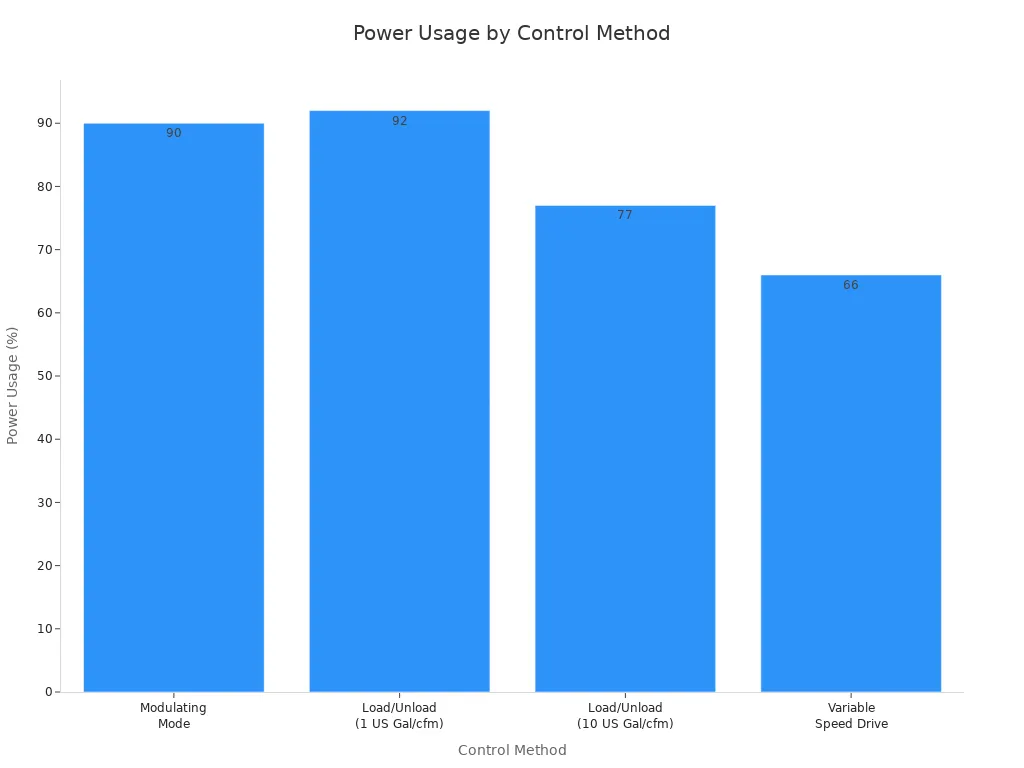
Table of Contents
Key Takeaways
Check pressure settings often. Wrong settings can make your compressor load and unload too much. This uses extra energy.
Look at sensors and valves every month. Clean them to stop blockages. This helps get correct pressure readings.
Search for air leaks near joints and valves. Fix leaks fast to save energy. This also lowers repair costs.
Do maintenance checks often. Clean filters and watch for overheating. This keeps your compressor working well.
Teach operators how to care for the compressor. Trained operators find problems early. They help keep things running well.
Pressure Control Issues in Screw Air Compressors
Sensor and Gauge Problems
Sensors and gauges help your air compressor work well. If you notice a pressure issue, check these parts first. Many unloading problems start with a sensor that is not lined up or a broken gauge. If the pressure sensor is before the pressure maintenance valve, it might show the wrong pressure. This can stop the compressor from unloading when it should. If the pipe behind the valve freezes or gets blocked, the pressure can change fast. Your compressor may not unload at the right time.
Here is a table that lists common sensor and gauge problems and what they do:
Problem Description | Potential Impact |
|---|---|
Pressure sensor installed before the pressure maintenance valve | Can give wrong pressure readings and affect unloading. |
Frozen or blocked pipeline behind the pressure maintenance valve | Makes pressure change quickly and can cause unloading problems. |
Damaged loading solenoid valve | Can stop the loading and unloading system from working right. |
If the pressure gauge needle does not move or the digital display is blank, you might need a new gauge. Oil can block the sensor spot, so clean it often. Always check the pressure reading on your air compressor with a regular gauge. If the numbers are very different, change the sensor or gauge. Doing this can help you avoid bigger repairs later.
Tip: Clean the sensor spot and look for oil every month. This helps stop sensor problems and keeps your compressor working.
Incorrect Pressure Settings
You use the control panel to set the pressure for your air compressor. If you set the unloading pressure too high, your compressor may never reach it. This makes the compressor load and unload too often. These cycles use more energy and wear out the compressor faster. Always check your pressure settings to stop this problem.
Many service reports say wrong pressure settings are a big reason for unloading problems. If you set the unloading pressure too low or the loading pressure too high, your compressor will switch between loading and unloading a lot. This lowers efficiency and makes your screw air compressor last less time.
Here are steps to set the pressure the right way:
Use a gauge to check the pressure. Make sure it matches what the manufacturer says.
Turn the set screw on the unloading valve. This changes the pressure up or down.
Test the compressor after you adjust it. Run it and check the pressure again to make sure it is right.
Note: Always check both the control panel and any remote settings. If the settings do not match, unloading problems can happen.
Installation Errors
Unloading problems can happen if you put the pressure sensor in the wrong spot. If you put it near the exhaust port, the airflow can give a wrong reading. Your air compressor may keep loading because it does not sense the right pressure. Long pipes can slow down the pressure signal, so the compressor does not unload when it should.
Oil leaks can also hurt the sensor and cause unloading problems. If oil gets into the sensor or gauge, it can block the signal. Put the pressure sensor in a main line with steady airflow. This helps your compressor get the right pressure reading.
Troubleshooting: If you think there is an installation mistake, move the sensor to a better spot. Add a buffer tank if the pipe is long. Clean oil off the sensor and check for leaks.
You can stop many unloading problems by checking the sensor spot, cleaning oil, and setting the right pressure. Regular checks and service help your screw air compressors work well and save you money on repairs.
Intake System Problems in Air Compressor
Stuck Intake Valve
Sometimes your air compressor does not unload right. This can happen if the intake valve gets stuck. If the intake valve does not close, air keeps going into the compressor head. This makes the compressor load and unload a lot. It uses more energy and parts wear out faster.
Here are some signs that show the intake valve is stuck:
Symptoms | Description |
|---|---|
The machine uses more current when unloaded. This can mean the intake valve has a problem. | |
Slow pressure rise | Pressure goes up slowly when unloaded. The intake valve may not close all the way. |
High-pressure alarm | The high-pressure alarm can go off if the valve does not work right. |
Residual pressure after shutdown | Pressure stays in the machine after shutdown. This shows the intake valve is stuck. |
You might also see low unit pressure. Sometimes, the gas used is more than the output. The intake valve might not close during loading. Oil and carbon can build up inside the valve. This makes it hard for the valve to move. The spring inside the valve can get weak. The sealing surface can wear out. These problems let air keep flowing when the compressor should unload.
Tip: Turn off your air compressor and look at the intake valve. Clean out oil and carbon. Check the spring and sealing surface. If the valve is very worn, replace it.
Control Component Failure
Control parts help your air compressor switch between loading and unloading. If these parts break, the intake valve may not get the signal to close. You might see leaks in the control pipeline. The capacity adjustment valve may not work. The pressure sensor can fail.
Here is a table with common control part problems and what to do:
Common Failure Description | Suggested Action | |
|---|---|---|
Control Pipeline | Leaks in the control pipeline | Find the leak and make sure there are no gaps |
Capacity Adjustment Valve | The valve does not work | Replace the valve if it is broken |
Pressure Sensor | The sensor does not work right | Put in a new sensor |
Intake Valve | The valve does not move well | Add grease to help it move |
Pressure Maintenance Valve | The valve seat or plate fails | Take apart and check for wear, replace if needed |
Change air filters often to stop blockages. Look for clogs or damage in filters. Replace them if needed. Fix or change bad inlet valves to help air flow right. Oil can make control valves stick. Clean and grease moving parts often.
Note: If you find a leak in the control pipeline, fix the leak and make sure there are no gaps. This helps your compressor unload the right way.
Air Leaks
Air leaks can stop your compressor from unloading right. Leaks let air out, so pressure drops. The compressor keeps loading. You may see oil stains near joints. You might hear hissing sounds. These show there is a leak.
Look for leaks near the intake valve, control pipeline, and pressure maintenance valve. Oil can make seals slippery and cause gaps. Use soapy water to look for bubbles at joints. Tighten loose fittings and change old seals. Clean off oil to help seals work better.
Check all joints and connections for leaks.
Use soapy water to look for bubbles.
Tighten fittings and change seals if needed.
Clean off oil to stop future leaks.
Alert: Air leaks waste energy and make your compressor work harder. Fix leaks fast to keep your air compressor working well and avoid big repairs.
Check and fix intake system problems often. Clean and look at intake parts a lot. Change worn parts and keep oil and air filters clean. These steps help your screw air compressor unload the right way and save you money on repairs.
Actuator and Valve Failures in Compressor
Unloading Valve Blockage
Sometimes your air compressor does not unload right. The unloading valve can get blocked. This makes the compressor load and unload a lot. Oil or dirt can build up inside the valve. If you put a check valve between the outlet and air tank, air can get stuck. The pressure sampling point may not see changes in air pressure well. When the compressor unloads, leaks in the pipe can make pressure drop fast. The compressor loads again before it should. If your air compressor makes more air than you use, it unloads too much.
Common reasons for unloading valve blockage are:
Check valves stop air from flowing back. Pressure sampling points cannot see changes.
Leaks in pipes make air pressure drop fast. The compressor loads again.
The compressor makes more air than you use. It unloads a lot.
Other things can block the unloading valve:
Filters can get clogged. This stops air and raises pressure. The compressor loads and unloads often.
Pipes that are not open all the way make air move slow. Pressure changes fast.
Oil inside the valve can block it. This makes it fail.
Check the unloading valve often. Clean out oil and dirt. Change clogged filters. Make sure pipes are open. These steps help you avoid repairs and keep your air compressor working well.
Tip: Clean the unloading valve and look for oil every few months. This easy step can stop problems and save you time on service.
Oil-Gas Separator Issues
Problems with the oil-gas separator can stop your air compressor from unloading. If the separator filter gets blocked, the compressor keeps making pressure. It does this even when it should unload. The safety valve may open because the air pressure is too high. If the compressor makes more air than it can let out, pressure goes up in the oil separation tank. The safety valve may open to let out air and oil. This can make a mess and show something is wrong.
You may also have trouble with the minimum pressure check valve. If this valve does not open when you start, pressure builds up in the air and oil sump. The valve should open at about 35 PSIG. If it stays closed, pressure can go up to 75 to 100 PSIG before it opens. This big rush of air can hurt the separator and cause repairs.
Here is a table with common oil-gas separator problems and what they do:
Problem | Effect on Compressor |
|---|---|
Oil separator filter blockage | Safety valve opens, high pressure |
Minimum pressure check valve sticks | Pressure builds up, separator can break |
Compressor keeps making pressure | Unloading does not work, safety risk |
Look at the oil-gas separator often. Clean or change the filter when needed. Check the minimum pressure check valve to see if it moves right. These steps help you stop unloading problems and keep your screw air compressor working well.
Alert: If you see oil leaks or hear the safety valve let out air, stop the compressor and check the separator right away. Acting fast can stop bigger repairs and keep your air compressor safe.
Control Logic and Circuit Troubleshooting
PLC and Program Errors
The PLC helps control your air compressor. If the PLC or its program has a problem, the compressor may not unload right. You might see the compressor not start. It could trip a lot. Sometimes, it does not keep the right pressure. The contactors may click on and off too fast. The phase sequence might be wrong. This can stop the compressor from working.
Description | |
|---|---|
Failure to start | The compressor does not start. This can happen because of PLC programming mistakes. |
Frequent tripping | The system trips a lot. This can be from wrong PLC settings or program faults. |
Pressure control failure | The compressor cannot keep the right pressure. This is often from PLC problems. |
Frequent contactor action | The contactors switch quickly. This can mean PLC logic errors. |
Incorrect or missing phase sequences | The compressor may not work. This is often from PLC programming issues. |
To fix PLC and program errors, try these steps. Check if your system is grounded. Look at the PLC lights. Find any error codes. Test the PLC inputs. Make sure sensors and switches work. Test the PLC outputs. See if output devices work and the program is right. Check the CPU for heat or damage. Call for help if you need it.
Tip: Write down any error codes you see. This helps you explain the problem if you need help.
Wiring and Relay Faults
Wiring and relay faults can stop your compressor from unloading. Loose wires or bad relays can make the compressor shut down or keep loading. You may see high or low voltage. A bad contactor or motor may not run. Sometimes, the intake valve or solenoid valve fails. This can be from loose wires or air leaks.
Description | |
|---|---|
Electrical failure | High or low voltage, bad contactor, motor problems. |
Gas production not loaded | Intake valve or solenoid valve fails, air leaks, loose wires. |
Abnormal shutdown | High temperature, power loss, loose wires can cause shutdown. |
Overload relay problems can also cause unloading trouble. The control circuit may stop if the knob is set wrong or the contact burns. The thermal part can burn out from a short circuit or too many starts. Sometimes, the relay works too fast or too slow. This can be from loose parts inside.
Possible Causes | Solutions | |
|---|---|---|
Control circuit not working | Knob set wrong, contact burned | Fix or replace the contact |
Thermal element burns out | Short circuit, too many starts, bad part | Check the circuit, replace part |
Relay works too much or not at all | Wrong setting, loose screws, bent parts | Replace relay, tighten screws |
Relay works too fast or slow | Loose parts, bent metal | Tighten parts, fix metal |
Main circuit fails after connection | Burned part, loose screws | Replace part, tighten screws |
Note: Always turn off the power before you check wires or relays. This keeps you safe and protects your compressor.
If you follow these steps, you can find and fix most control logic problems. Regular checks help you avoid too much loading and unloading. This saves energy and lowers repair costs.
Preventive Maintenance for Screw Air Compressors
Regular Inspections
Check your air compressor often to keep it working well. Regular checks help you find problems early. Look for overheating, rust, and lubrication trouble. Check the pressure readings and listen for odd sounds. Watch for shaking, which can mean something is wrong inside. Look at the drive train and make sure it lines up. You should also check the air filters and oil seals. These steps help you avoid too much loading and unloading. This keeps your compressor working better.
Tip: Check your air compressor every week. This helps you find small problems before they get worse.
Here is a table of maintenance steps that help stop unloading problems:
Maintenance Practice | Description |
|---|---|
Regular Inspections | Find overheating, rust, and lubrication trouble early. |
Proper Lubrication | Lower friction and heat, protect compressor parts. |
Monitoring for Overheating | Keep temperatures safe to avoid damage. |
Maintaining Air Quality | Check filters to stop dirt and airend wear. |
Addressing Oil Seal Leaks | Stop friction and overheating by keeping seals tight. |
Checking for Vibration | Find strain inside and fix it fast. |
Drive Train Inspection | Make sure alignment and lubrication are correct. |
Filter Maintenance | Stop airend wear and keep parts clean. |
Monitoring Oil Quality | Make sure oil is good for best performance. |
Cleaning and Replacement
Cleaning and changing parts is important for compressor care. Clean the minimum pressure valve and oil return check valve often. Take apart the valve and clean it like the unloading valve. Watch the direction of U-shaped seals when you put it back together. Clean and check the oil return check valve to keep oil moving and stop overheating. Change air filters and oil filters when they get dirty. This keeps air and oil clean and helps your compressor unload right.
Clean the minimum pressure valve and oil return check valve often.
Change air filters and oil filters when needed.
Check seals and gaskets for leaks and change them if worn.
Note: Cleaning and changing parts on time helps you avoid repair costs and keeps your air compressor running well.
Operator Training
You need to know how to use and care for your air compressor. Good training helps you spot trouble early and do maintenance right. Learn how to read pressure gauges and listen for air leaks. Know how oil moves through the compressor. Learn when to clean and change parts. Training helps you keep the compressor working well and avoid unloading problems.
Learn how to check pressure and oil levels.
Practice cleaning and changing air and oil filters.
Watch for signs of trouble like shaking or overheating.
Alert: Well-trained operators help keep compressor service costs low and make it work better.
You can have unloading problems with screw air compressors. These problems come from sensors, valves, control systems, or air leaks. Checking your compressor often helps you find problems early. You can stop the compressor from loading and unloading too much by using these steps.
Look at your compressor often to check for problems.
Clean parts and change them if they are old.
Learn how to do simple maintenance or teach your team.
Watch your compressor all the time. If you see something wrong, call an expert. This keeps your compressor safe and helps you save money.
FAQ
Why does my screw air compressor stay loaded all the time?
You may have a sensor problem, a stuck intake valve, or a control system error. Check your pressure settings and clean the intake valve. If you still see problems, look at the control panel for error codes.
How often should I check the intake valve for blockages?
You should inspect the intake valve every month. Clean out oil and dust. If you see slow pressure changes or hear odd sounds, check the valve right away.
What should I do if I hear air leaking from my compressor?
Listen for hissing sounds near joints and valves. Use soapy water to find bubbles. Tighten loose fittings and replace worn seals. Fixing leaks helps your compressor unload the right way.
Can wrong pressure settings cause unloading problems?
Yes. If you set the unloading pressure too high, your compressor may never reach it. Always match your settings to the manufacturer’s guide. Double-check both local and remote controls.
How do I reset the PLC if my compressor will not unload?
Turn off the power. Wait one minute. Turn the power back on. Watch the control panel for error messages. If the problem stays, call a service technician for help.
Request a Quick Quote Now
How to do my business well ?
- Market situation
- Technology configuration
- Strike Price
- exclusive agency
- Import and export assistance
- More…

